I’ve always considered one of the perks of attending lots of international meetings and conferences was the chance to liberate items from tasteful hotel rooms. Visitors to Chez John would find embossed coat hangers, miniature bottles of branded toiletries, and even temporary footwear in the guest bathrooms. I mean, I’ve paid for them (or someone has) so where’s the harm?
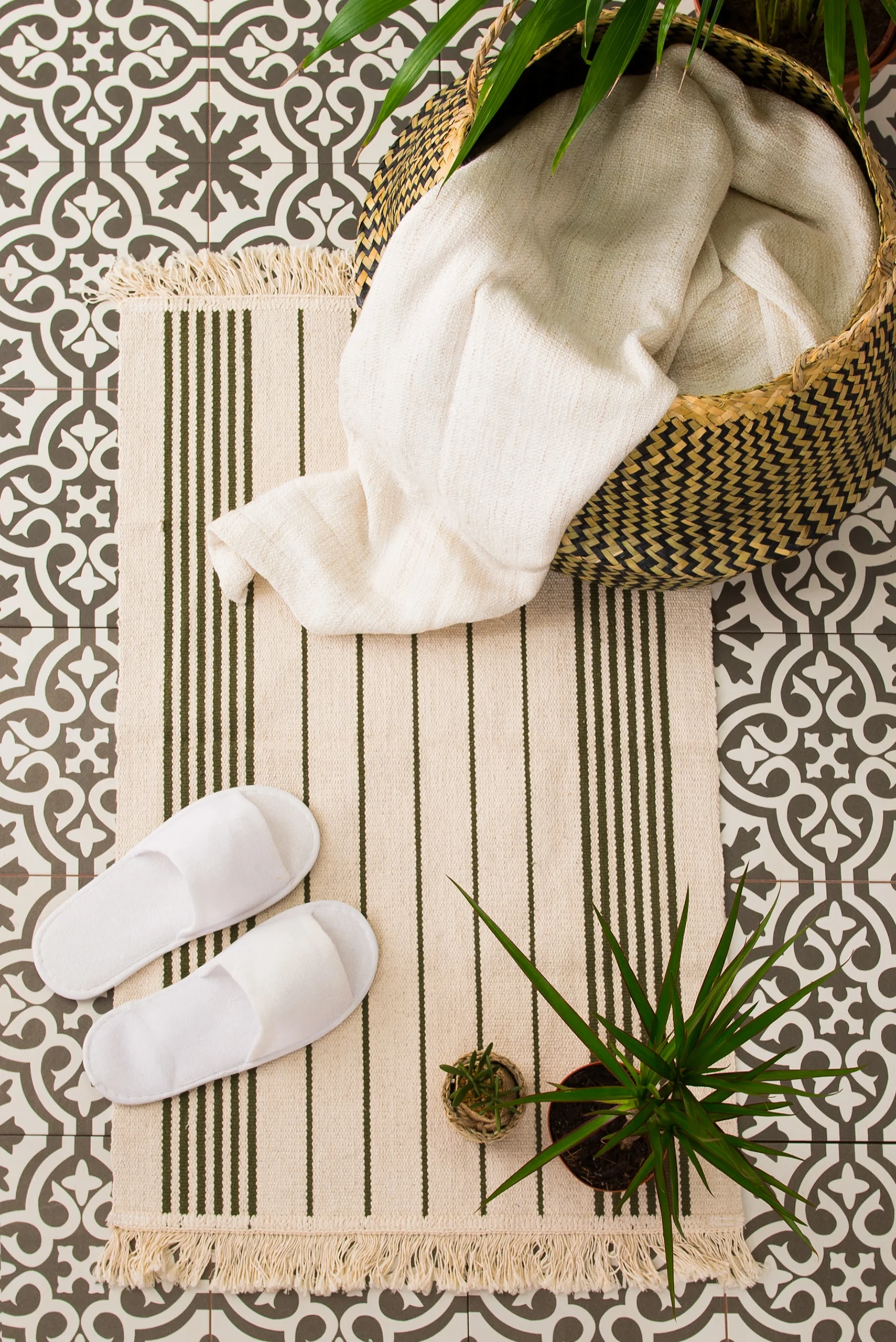
A recent UK Sunday Times investigation revealed the harm. if you took every slipper thrown away by just the top 100 hotels in London (and there are close to 1,500) and laid them end to end, you’d have a line stretching from Hyde Park Corner to Frankfurt. The research company Applied Sciences calculated that high-end hotels in the US are discarding more than 10 million pairs of slippers every month. The most popular types – known as non-woven disposables – are composed mainly of ethylene-vinyl acetate (EVA) and usually come in a non-recyclable plastic wrapping. Research from Nike – which uses the same material to make trainers – reveals that EVA can take up to 1,000 years to degrade.
The cost can be appealing to mid-range hoteliers, with a pair of slippers costing just five pence (sterling). Four and five-star hotels are more likely to offer slippers with a fleece upper made from polyester on an EVA sole and priced at about 30p a pair. But these, too, are designed to be worn once and discarded. Those that aren’t incinerated are dumped in landfill. A 2022 report in the International Journal of Environmental Research and Public Health points out that EVA never really disappears. It breaks down into micro and nano-plastics that are carried by the leachate — or drainage from landfill — into groundwater. From here it can easily be absorbed by plants or consumed by marine species, thereby entering the food chain.
One defence for the provision of slippers is on health and safety grounds, due to the large number of claims for slipping (no pun intended) against hotels. It’s not an argument that sways Ellie Ashton-Melia, from Sustainable Events Consultancy Not All Green. “If slippers were genuinely a health and safety necessity, you’d expect to see higher slip-and-fall claim rates in non-luxury hotels that don’t provide them.”
While meetings and events planners are doing their utmost to make their conferences more planet-friendly, the efforts can be undone when delegates return to their hotels. Some providers who target the meetings markets have taken steps. In 2020 Accor, which operates 5,800 hotels across 45 brands ranging from Ibis to Fairmont and Raffles, was disposing of more than 200 million pieces of single use plastics (SUPs) – including slippers – a year. By 2025, 88% of those properties had replaced SUPs with sustainable alternatives. However, Accor declined to respond to a request for an update on the current state of affairs.
Mandarin Oriental claims to be offering reusable footwear in some rooms. Marriott and Hilton have agreed to set SUP reduction goals, but only after pressure from the activist investment fund Green Century. It seems some groups are dragging their (slippered) feet.
“The Sunday Times article is both interesting and frightening,” commented Fiona Pelham, CEO of Positive Impact and a leading voice in the world of meeting industry sustainability. “It’s a powerful indicator of how we need systems change. If we keep meeting the way we know how to meet, then we won’t make a shift that makes a difference for the planet or the people on it.” Fiona’s latest contribution is an on-demand webinar series and a live workshop on human connection which will address many of these challenges (https://www.positiveimpactevents.com/register-human-connection-economy-2026)
As with similar contentious issues there may be other factors at play. While AA-rated hotels in the UK are not required to supply slippers, the Hotelstars Union, which awards standardised star ratings across Europe, lists slippers as a mandatory requirement for a five-star hotel. And even choosing not to use them may not help; turn-down staff may leave them at the side of your bed, based on rules in the standard operating procedure manual. And if they’re unwrapped, they’re heading for the bin.
More pressure is heading for hoteliers and, by extension, meetings planners, to tackle some of these problems. In February this year the EU introduced the ‘Packaging and Packaging Waste Regulation’ (PPWR), specifically targeting the hospitality sector to curb the rising tide of plastic waste. Coming next is the ‘Empowering Consumers for the Green Transition’ Directive (EU) 2024/825, which will come into effect from 27 September 2026, and will change how environmental claims can be presented. The directive applies to all consumer-facing communications, including marketing, branding and promotional materials and will ‘require all environmental-based claims to be clear, specific, evidence-based and not misleading.’ Those rules even apply to drawings and diagrams.
In response, organisers might like to get their hands on a toolkit published by – among others – the Global Destination Sustainability Movement. “Proof, not Promises’ is offered as a practical guide to the new EU Directive, written specifically to help destinations, convention bureaux, venues and event organisers better communicate sustainability-related information to their customers.
There are options to the great slipper scandal. Six Senses, which is owned by the InterContinental Hotels Group plc (IHG), now offers reusable slippers made from felt. They’re made by the Slovenian manufacturer Kaaita from recycled plastic bottles. However, these retail at £4.25 a pair, which is 85 times more expensive than a pair of the cheapest disposables.
But if you’re planning responsibilities extend to room blocks then maybe it’s time for an adult conversation. Ask the accommodation provider not to include slippers for your guests or take the opportunity to source something memorable and planet-friendly, to get the message across.
And for the rest of us; we also have the power. Don’t unwrap the hotel slippers; decline the turndown service. And taking everything in the hotel room that isn’t bolted down may not be such a wise practice. And if you do receive one of those coveted invitations to my place, bring your own slippers.