Australia wants to double the value of its visitor economy inside a decade. Business events are central to how it plans to get there.
Its 10-year tourism strategy, running to 2035, puts the visitor economy at between A$61bn and A$69bn. The starting point is A$33bn.
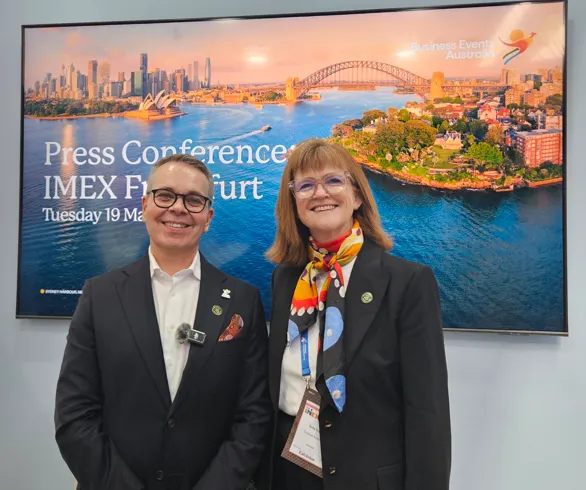
I sat down with Tourism Australia‘s managing director Robin Mack and executive general manager, industry and business events, Sally Cope, to ask what has to happen in between.
The supply-side problem
Mack was direct about the gap: “We’re at A$33 billion today, so that gives you an idea of where we need to go.”
The first constraint is aviation. Mack said: “We believe we need about 4.4 million new international incremental seats coming into Australia from around the world over the next decade.”
The second is conversion. Australia’s Bid Fund Program has been extended to 2032, giving bureaux and organisers a longer runway when they compete for internationally contested events.
“It’s a fund that works, and we love that we’ve extended that out”
Since its launch in 2018, the programme has delivered 221 wins worth A$1.5bn to the visitor economy – before any legacy value is counted.
Qantas
Middle East disruption, and what the data says
About 10% of all seats into Australia come via the Middle East, which made this year’s disruption a live concern rather than a distant one.
“There’s obviously been immediate disruptions as it unfolded in March or late February,” said Mack. “People had to rebook.” Carriers routed passengers through Southeast Asia, North Asia, the US and, in some cases, South Africa. Middle Eastern airlines are now largely back, though some are flying smaller aircraft than before.
The numbers, so far, have held. March arrivals data showed growth from every market. Seat capacity, tracked with data partner Cirium, tells a similar story.
Mack said: “Even with the adjustments of flights cancelled and the disruptions that we’ve had, as of today, there are still more seats into Australia for the rest of the year than they were at this time in 2025.”
The clearest proof point was Women Deliver in Melbourne. The Melbourne Convention Bureau win, supported by the bid fund, drew 6,000 international delegates from 189 countries – the event’s largest global footprint to date, and a record for the city.
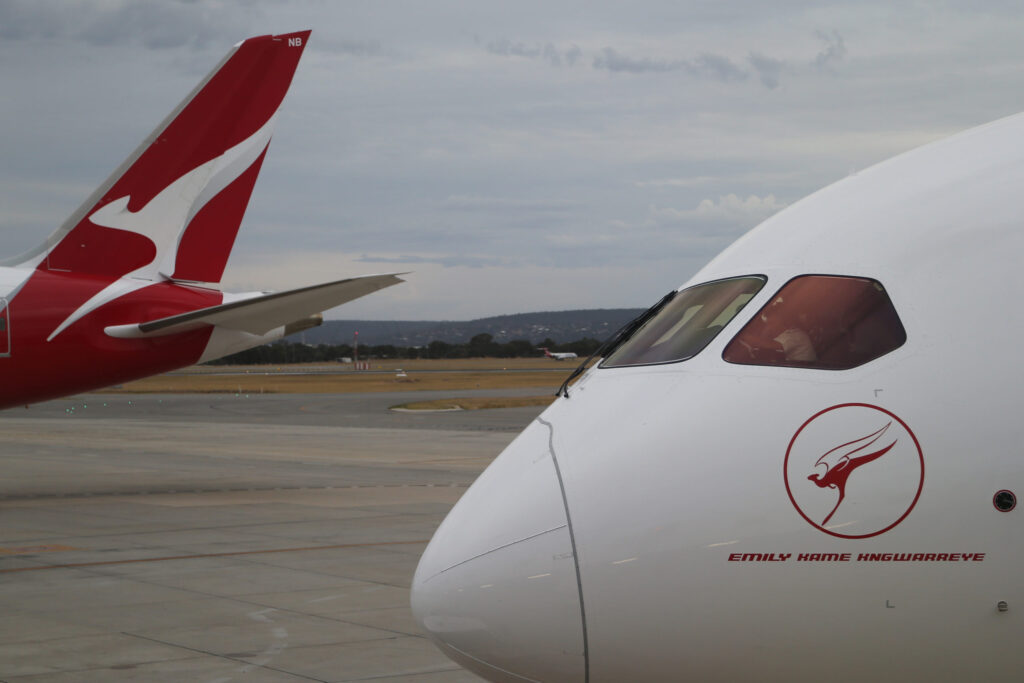
There is more capacity coming. Finnair will be flying Helsinki to Melbourne via Bangkok, British Airways has added a London–Melbourne service, and Qantas’ Project Sunrise reaches fruition in 2027 with non-stop connectivity between New York and Sydney, and London and Sydney. Qantas has not confirmed which route launches first.
Green is our Gold
Australia’s sustainability credentials are not new. Every convention centre in the country is EarthCheck accredited. The problem, Cope suggested, has been telling anyone about it.
“Sustainability is important to the sector, delegates expect it, and it is our way of telling the Australian story,” she said. “‘Green is our Gold’ is a way to unify the story of what Australia has been doing so well for so many years.”
It is a storytelling platform rather than a certification scheme – but it connects to something with teeth. Every bid fund application is assessed against the same two criteria.
Cope said: “We look immediately at two things: what are the sustainability goals for the event, and what are the legacy goals for the event?”
Delivery, she added, sits with the wider network of bureaux, DMCs and PCOs: “It’s a true partnership.”
Green is our Gold – industry-wide initiative for responsible tourism
New product, new airport
Tourism Australia works 16 markets to varying degrees, with the UK, Europe, North America, North Asia, Southeast Asia and New Zealand its priorities for association and incentive business.
The infrastructure pipeline is doing some of the persuading. More than 4,000 new room nights are coming online nationally, roughly half in the five-star category. The Nyaal Banyul Geelong Convention and Event Centre recently opened in Geelong, an hour from Melbourne. The world’s first Ritz-Carlton Lodge opens at Wolgan Valley in New South Wales next year.
“There’s been a lot of investment in Australia in recent years,” said Cope. “There’s real optimism.”
The bigger structural change is Western Sydney Airport, which opens in October, with Air New Zealand and Singapore Airlines among the first carriers signed up.
That matters for what comes next. Australia Next ran in Melbourne this year and returns to Sydney in December 2027. Mack was unsentimental about why it exists: “Any event we do has to have commercial outcomes for our industry.” Leads from the Melbourne edition are still converting – business events being, as he put it, a long-lead game with a one to two-year horizon.
Recent bid fund wins include the International Conference on Intelligent Robots and Systems in Sydney in 2028 and the World Cancer Congress in Melbourne in 2029.
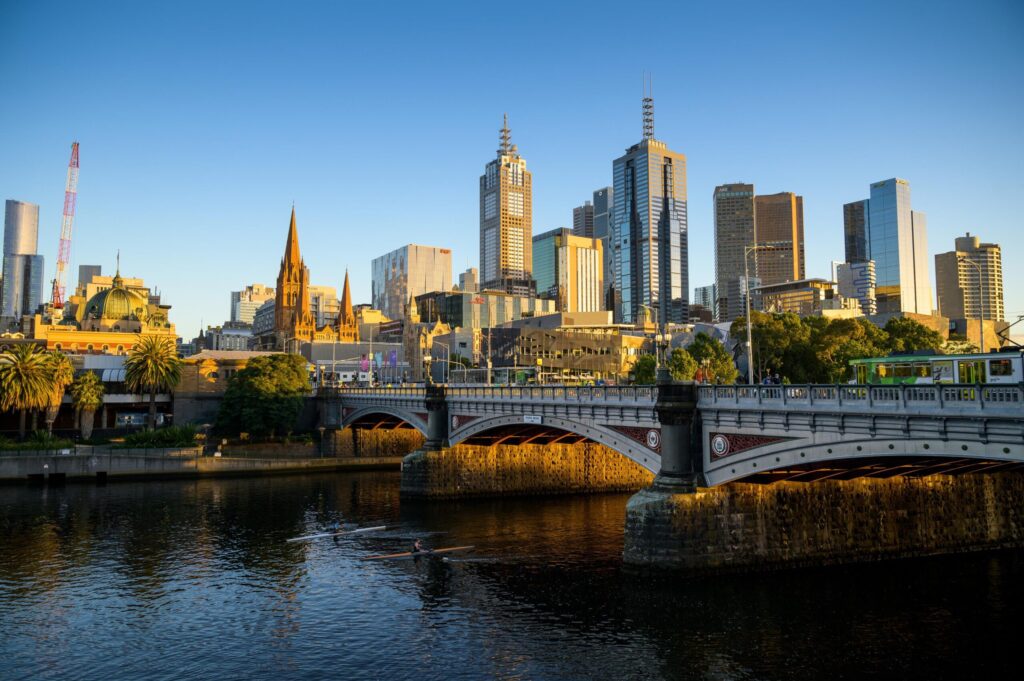
Business, corporate and incentive events in Melbourne. Skyline.
Staying ahead
Ask what Australia has to do differently over the next two years and the answer comes back to competition, not geography.
“It is such a competitive environment out there to attract delegates and the decision makers for business events,” said Mack. The response is demand generation – IMEX, owned events, familiarisation programmes and educationals. “We love to show not tell, so we can get more advocates and ambassadors for Australia.”
“We have big landscapes that can inspire big thinking”
The other differentiator is one no competitor can replicate. First Nations culture is a stated priority, and Cope said organisers are now asking for it rather than being sold it.
“It is the world’s oldest living culture – 65,000 years,” she said. “They know their delegates want to immerse in a destination.” It can shape a welcome, a food and beverage programme, or a delegate experience – and it links directly back to the legacy conversation.
Then there is the part Australia has always traded on. “We say mateship – you come in, you’re going to leave with mates for a lifetime,” said Mack.
The economics support the pitch. Around 20% of business events spend lands outside the major cities, in Australia’s regions – which is where a 10-year target stops being an abstraction and starts looking like a distribution strategy.