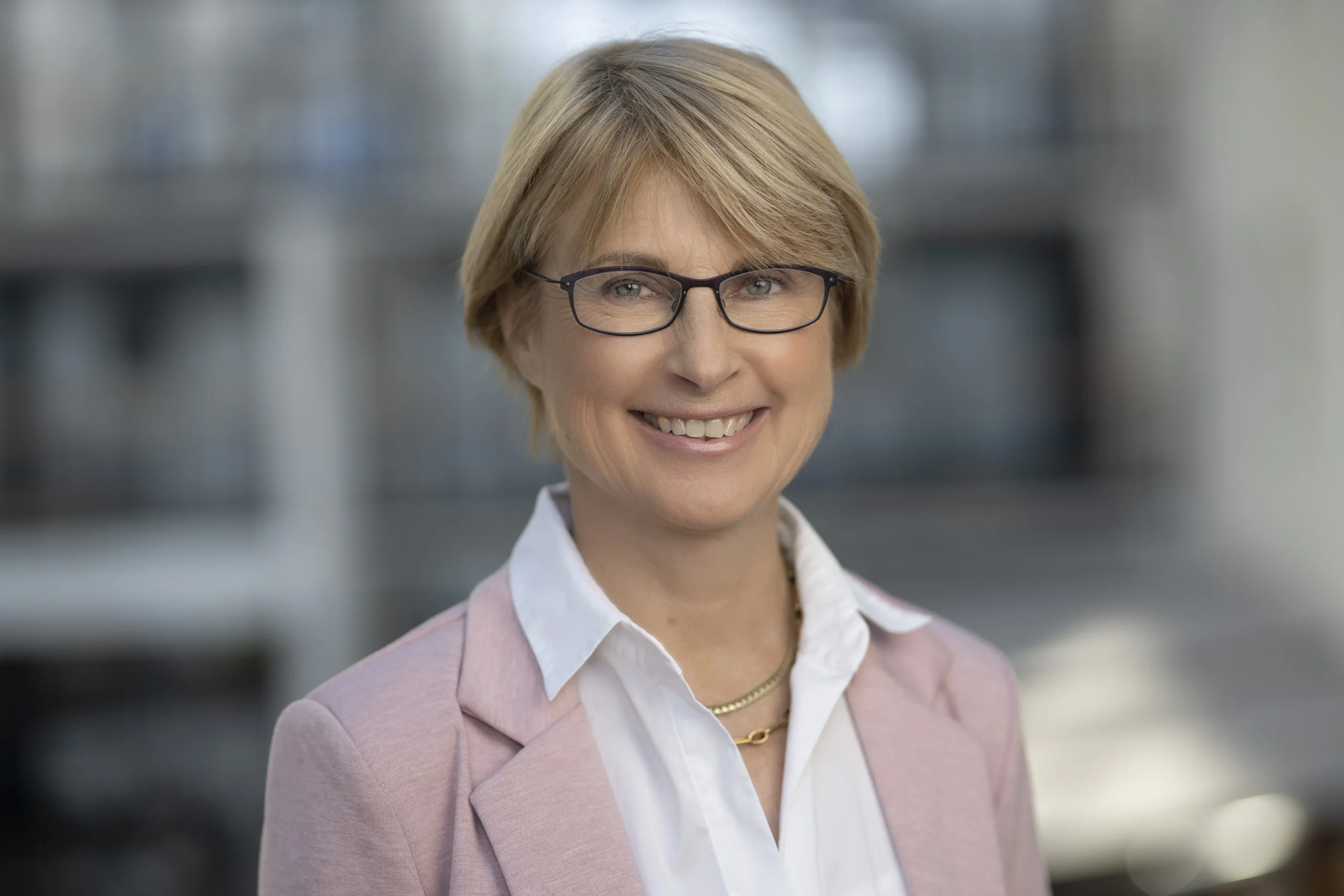
By Stephanie Murray, head of marketing and communications, ICC Belfast: The events and conference industry is notably female-dominated, with an estimated 70/30 gender split. The demands of the sector – international travel, long hours, and high stress – can make work-life balance challenging, especially for women juggling careers with parenting or caregiving.
Earlier this month I attended IMEX Frankfurt and a panel to discuss the challenges and rewards of combining leadership with motherhood, something I have first-hand experience of. Born and raised in Northern Ireland, my own career has spanned both domestic and international roles.
After three years at ICC Belfast, I joined PCMA – the global events industry association – and helped build networks across EMEA and travelled extensively. With the birth of my son Jonah in spring 2023 I felt the pull of home and family and returned to take on a new challenge at ICC Belfast. Now, I’m learning to balance the fast-paced demands of a leadership role with the irreplaceable experiences of early motherhood.
IMEX Frankfurt is often described as the events industry’s “class reunion,” as it draws professionals from around the globe – many of them female. During the panel discussion, titled ‘From caregiver to changemaker – how care work fuels leadership potential’, speakers explored how caregiving responsibilities can, in fact, enhance leadership capability.
Katharina Path of Frankfurt Convention Centre opened the session with a strong statement: “Gender equality can only be achieved if professional development and family responsibilities go hand in hand. Care work fosters empathy, resilience, and adaptability – qualities we must begin to value as powerful assets in the workplace.”
For me, navigating life as a working mum is far from plain sailing, mostly due to feeling so conflicted. Before Jonah, I was extremely driven, and I still am. But I grew up with an amazing stay-at-home mum as my role model, so I felt I needed to do the same to be a ‘good’ mother.
At the same time, I wondered: what about my career? Am I a bad mum if I pursue a role I love? I was really determined to find a way to make it work. This internal struggle pushed me to find my own version of balance.
The key was accepting I can’t ‘do it all’, but I can do what works best for me. That balance is unique for every individual, and having a strong support system makes all the difference. I’m lucky to have my husband, my mum, and my in-laws, plus a very supportive CEO and leadership team.
One of the most critical tools I’ve discovered is setting boundaries. I insist on dropping off and picking up my son at least twice a week (and for non-working parents I realise how ridiculous this might sound). I block that time in my shared calendar, label it clearly, and the team respects it.
It felt vulnerable to do at first – but it’s made a huge difference. While physical presence is often needed in events, there’s flexibility, too. I can do focused work remotely or outside normal hours, allowing me to stay present in both roles.
Stephanie believes that, while her awhile my approach is different from my mother’s, the strength resilience and drive passed down from her are what make this new model possible. It’s a crazy busy juggle, but it’s everything I want and more.
The IMEX panel also discussed how caregiving strengthens leadership skills. Parenthood made me realise you never really know what someone is dealing with outside work. That brings empathy and human understanding to leadership.
We’re not machines. Everyone has life going on, and we need to show kindness, to others and to ourselves.
For me, becoming a working mum sharpened two essential leadership skills: prioritisation and delegation. When you can’t do everything, you have to focus on what matters most – and empower your team to excel. Trusting your team is powerful, and it builds their confidence, too.
International events like IMEX also offer a lens into how different countries support women and caregivers and I found the global perspectives eye-opening. One peer from the US said she had only three weeks off after a C-section. In the UK, you’re not even allowed to drive for six weeks after one!
German women, by contrast, have six weeks’ compulsory leave before their due date and up to a year after birth. And support doesn’t just fall short for new mothers. There’s very little support for those caring for elderly relatives, either.
Many women drop out of the workforce at that point and don’t return, which means we lose so much experience from our female-heavy industry. We really need better frameworks across the board – maternity and carers’ leave included.
Women make up half the population and nearly two-thirds of the events sector. We need systems that recognise and support our unique care-giving roles while enabling career continuity.
The benefits of supporting female workers come in high performance and productivity, and in retaining happy fulfilled team members who feel valued and respected. This shouldn’t be so hard to achieve.