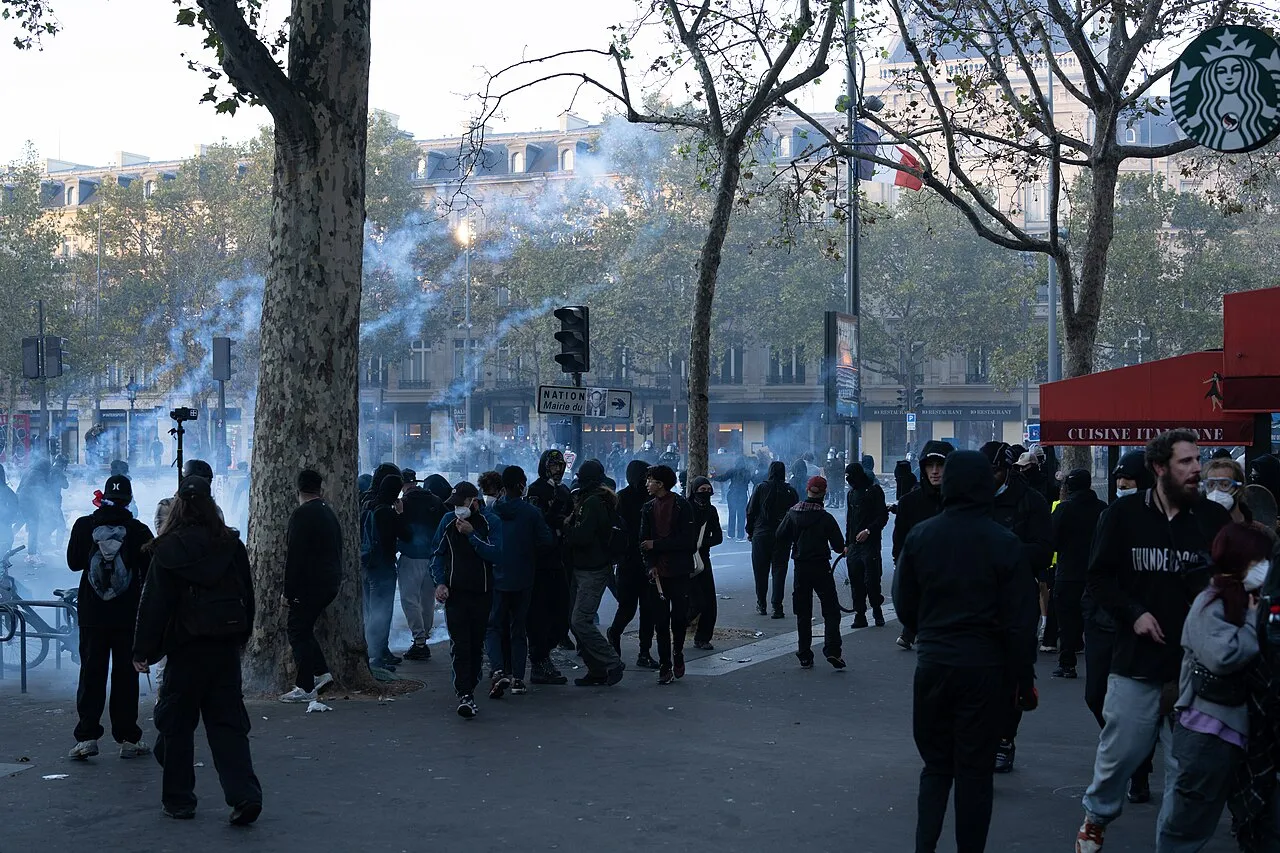
Film footage of the historic 143-year-old town hall in Limoges in flames at the weekend provided a stark image of the violent protests that have swept across France resulting in arson, looting and nearly 2,400 arrests (according to France 24).
While the current chain of protests began peacefully in September, in response to the deplorable conditions of some public schools, it has since snowballed. Many unhappy with the rising cost of living, and the price of petrol, joined in.
After a weekend of looting and arson, prime minister Sébastien Lecornu moved to give cities the power to implement partial curfews to protect people and shops.
Lecornu said in response to the disorder on the streets of many cities: “We will not be dictated and ruled by the breakers, the thieves, by the thugs”.
He added that the movement was being led by “ultra-left, radical groups” hoping to “create chaos” before the 2027 French presidential elections.
Interior Minister Laurent Nuñez admitted police had lost control, as France’s Chamber of Commerce and Industry chief said 2,000 businesses had been directly impacted by the unrest. A partial unemployment fund is being set up to support those who cannot work because their businesses are out of action.
Town halls and tourist office targeted
In Lyon, protesters set fire to a tourism office. In Marseille, shops were looted and some rioters forced their way into the city hall. Protesters also forced entry to the town hall in Lille.
International markets have been spooked with France’s debt sending bond yields to their highest level in 24 years. Public debt is now a record $4 trillion, or 119% of GDP. France is borrowing at rates higher than even Italy.
So, event planners may be wise to check their insurance policies and to carefully consider any event planned to take place in French cities in the near future.
Chris Lewis, director of Crisis Communications Audits, a consultancy specialising in advising on security and safety at major events, said monitoring continually for new threats and their potential impact is an essential element of the role of both an event’s security and communications teams. “If there is a CVB for the destination, the organiser should keep in close contact with it about intelligence from the police.
“In addition, the organising team may well have a flood of incoming enquiries from exhibitors and delegates – and their own staff and contractors questioning how safe they will be in the city and whether visitors are already cancelling hotel bookings. The CVB should again provide insight into this.
“Based on the intelligence, the security and communications teams should take an ultra-cautious approach to any possible issues and brief the event organiser and team on how to prepare to prevent or minimise the threat and how to respond if it does occur. That might be to cancel depending on the intelligence.
“Every event must have a crisis comms plan with communications templates covering the most likely issues, especially potential cancellation or change of destination, which can be tailored to add specific details for any new developments. The communications team should be ready to act quickly.”
The President’s night out
President Emmanuel Macron and his wife certainly appeared to be backing Hospitality and taking the Marie Antoinette approach, attending Céline Dion in the VIP section of a sold-out concert hall in Nanterre, west of Paris at the weekend.
Will concern mean cancellation?
CMW asked Hasan Dinc, president, of global Society of Incentive Travel Excellence (SITE) 2026, for a view on the likely effect of the disorder on France as an incentives destination.
“Organisers are, perhaps, more subtle in their destination decisions than they’re given credit for. They know how to tell the difference between a passing disruption and a deeper, more lasting one. So, yes, scenes of civil unrest in France playing out on screens will cause concern, and organisers will watch developments closely. But concern is not the same as cancellation.
“That said, this year’s Incentive Travel Index leaves no room for doubt: the safety of qualifiers and delegates is the number one priority for organisers, in both the corporate and agency sectors. The moment there is any real concern on that front, decisions to move elsewhere will be taken swiftly and decisively,” said Dinc.
On the ground in Paris
CEO and founder at Handdels London, Event Logistics, Iain Andre posted on LinkedIn that, with some of his team currently working in Paris, they were having daily check-ins.
He also reported the company closely followed local authority alerts and the UK Foreign Office’s travel advice for France.
“Route and venue planning. Deliveries, collections and on-site work are replanned around demonstrations and likely flashpoints, with alternative routes agreed in advance,” the company said.
“Our standing instruction is to avoid protests and areas of police activity, and to follow the guidance of local authorities. Anyone can pause a job if they feel unsafe, with no questions asked and our full backing.”
Andre also recommended using secure accommodation with hotels located well outside flashpoints.
“Unrest in a foreign city can be unsettling, so we encourage open conversations, flexible scheduling where possible, and a direct line to management. If anyone wants to come home, we’ll arrange it.
“No delivery is worth putting our people at risk. We’ll keep our clients informed of any impact on schedules, and our customers can be confident their freight and event logistics are in careful hands.”