There are conferences you attend, and there are conferences that stay with you. The CityDNA International Conference and General Assembly in Helsinki was firmly the latter. Over two days of richly layered conversations, case studies and candid exchanges, one word consistently surfaced: trust.
Trust between destinations and their residents. Trust between cities and their visitors. Trust between alliance members willing to share what worked and, perhaps more valuably, what didn’t. For an organisation built on the principle that cities are stronger together, the theme felt entirely fitting and, given the moment our industry finds itself in, entirely necessary.
The conference brought together destination management organisations (DMOs) from across Europe under the theme The Human Pulse of Place and Purpose – a deliberate shift away from the metrics and dashboards that so often dominate our industry conversations. The subtext was important: beyond the numbers lie the people, and it is people – their behaviour, motivations, emotions – who ultimately shape the success or failure of any city’s visitor economy. Helsinki itself was a fitting host. Clean, considered, quietly confident. A city that earns trust without demanding it.
A knowledge alliance in full voice
I’ve been around enough industry gatherings to know the difference between an event that talks about knowledge-sharing and one that actually delivers it. The sessions were substantive, the conversations in the coffee breaks no less so, and the willingness of members to be genuinely open — including about failure — was refreshing.
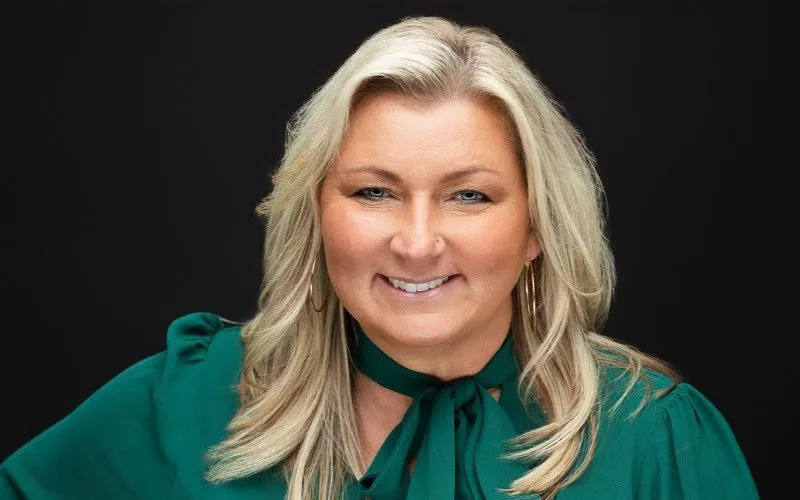
That openness is very much by design, according to Barbara Jamison-Woods, the current president of CityDNA. “We’ve covered lots of topics that are really relevant to our DMOs, which is the reason that we meet. It has given a platform to our knowledge groups — whether that’s sustainability, research and insights — and we’ve developed some of the work they’re doing,” she said.
 But for Jamison-Woods, the standout theme of Helsinki was trust. “One of the big focuses this year was really about the trust between our cities,” she said, “because we are in a period of flux. It’s very difficult, with the global situation, to plan ahead — whether you’re organising a marketing campaign, whether you’re looking at investment, whether you’re looking at what direction you’re going to be going in within your cities.”
That fragility of forward planning is familiar to anyone who has tried to map a three-year strategy against a geopolitical backdrop that seems to rewrite itself quarterly. What struck me in Helsinki was that it wasn’t treated with the usual corporate bravado. People admitted uncertainty. And somehow, in doing so, the room felt more honest than most industry gatherings I’ve attended in recent years.
The human side versus the data
The conference theme wasn’t merely poetic framing — it captured a genuine tension that Jamison-Woods believes is reshaping how cities think about their visitors.
“Today’s traveller, business or leisure, is looking for something that is meaningful,” she reflected. “They’re travelling through different lenses. It’s not just all about the data. It’s much more about personalisation, and about understanding your visitor and why they should be coming to your city.”
This was played out compellingly in the two sessions I moderated — Copenhagen and Linz — each presenting a case study in putting human values at the heart of destination strategy, albeit through entirely different doors.
Copenhagen: legacy as a living thing
Gerda-Marie Rise, head of Copenhagen Legacy Lab at Wonderful Copenhagen, presented a session that fundamentally reframed what business events can mean for a city. Rather than treating congresses as economic transactions, Copenhagen has been asking a far more ambitious question: what if a medical congress could actually improve public health? What if a gathering of scientists could shift European policy?
Through three global legacy initiatives linked to major medical congresses, the approach shifts the framing entirely. It’s not about what a congress delivers to the city, but what the city, together with its academic and civic institutions, can deliver through it: influencing policy, sharing best practice, improving citizen health at Danish, European and global levels.
It is a model that demands trust. Associations must be willing to embed legacy thinking not just into individual programmes but into their governance. And cities must be willing to invest in outcomes that are genuinely hard to measure. The traditional ROI toolkit simply doesn’t stretch this far. But the alternative — continuing to count only what is easy to count — risks leaving the most meaningful value entirely invisible.

Linz: trusting the unexpected
Marie-Louise Schnurpfeil, managing director of Visit Linz, arrived with something altogether different. A new brand positioning: ‘Take a risk. Visit Linz’. It is deliberately counterintuitive. And it works precisely because it trusts visitors enough to be honest about what it’s offering: not the perfectly curated itinerary, but the authentic surprise.
Linz has developed an ecosystem bringing together stakeholders from culture, business, education, administration and tourism – and crucially, the city’s own residents. The community here isn’t backdrop; it’s architecture.
The AI-powered campaign that brings the strategy to life doesn’t try to predict the visitor’s journey. It invites them to swap rigid itineraries for genuine discovery. Trade expectations for the unexpected. It is, at its core, an act of institutional trust.
Honesty as a feature
What makes CityDNA distinctly valuable is something Jamison-Woods described as the willingness of members to be honest about what hasn’t worked.
“And you see a city like Rotterdam lifting a programme that Helsinki were doing, able to take that and readapt it and use it in their own city. We are a knowledge-sharing platform first and foremost.”
As she enters her final year as president, Jamison-Woods is clear about her priorities for CityDNA: strengthening the head office team, deepening commercial partnerships and ensuring the alliance’s voice carries genuine weight where decisions are made, including in Brussels. Her guiding philosophy is refreshingly direct. If there’s an elephant in the room, talk about it immediately.

What Helsinki told us
Walking away from two days in the Finnish capital, I kept returning to that word — trust. It is not, as it turns out, a soft concept. It is a strategic one. It is what allows Copenhagen to ask associations to embed legacy into their governance. It is what allows Linz to tell visitors to abandon their plans. It is what makes a fellow DMO say “Don’t do what we did” in a room full of peers.
Helsinki itself reinforced the point quietly. Ranked number one in the Global Destination Sustainability Index for two consecutive years, it is a city where sustainability isn’t an add-on but built into infrastructure, supply chains and mindset. Its Nordic design principles — clarity, functionality, wellbeing — shape a destination that feels effortless for delegates and purposeful for planners. Walkable, intuitive, calm and creative, it was the ideal setting for a conversation about what it means to put people at the centre of everything we do.
The CityDNA International Conference & General Assembly 2026 took place in Helsinki, 22–24 April.