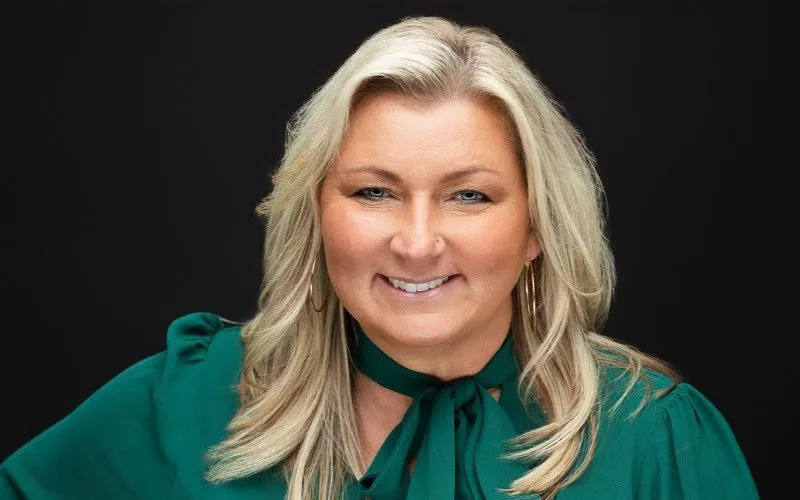
Francesca Pollicini, general manager of institutional events at the International Council of Museums, tells Oliver Thomas about the importance, challenges, and social responsibility of organising events in 2022
Tell us about what sorts of events you run for the Museum industry?
The International Council of Museums (ICOM) is an organisation of museums and professionals with more 49,000 members, which operates in 138 countries. Among the various events we organise, the most important is the ICOM general conference, a worldwide hub for the museum sector.
Since 1948, every three years we gather the international museum community to facilitate cultural exchange, promote international cooperation, and inspire local action to continue their public mission to society.
The last edition, held in Kyoto in 2019, saw 4,600 museum professionals from all around the world come together to attend, debate, conduct roundtable panels, network, and socialise. We organised more than 200 activities for a one-week event. The next edition, the 27th ICOM general conference, will take place in Prague, 20-28 August.
Have you pivoted to virtual during the pandemic?
The ability of funding models, the role of culture, empowering the community and how our members can experience our events has completely changed.
When the pandemic broke out in March 2020, we had just started the preparation of ICOM Prague 2022 and launched the call for applications to host the conference in 2025. It was a particularly important and crucial moment for long-term planning.
We soon realised the necessity to introduce more digital activities in our programme to keep the ICOM community active and united. This underlined how virtual could be an indispensable tool for inclusion at an international association like ICOM.
Do your members still see value in face-to-face?
The face-to-face value for our community all around the world is irreplaceable. The strength of ICOM is to be a network of almost 50,000 professionals and the human relationship that exists between our members is the secret ingredient for having a successful project.
The crossroad in front of us was not between in-person and digital, but between in-person and hybrid. Therefore, we have decided to rapidly put in place the hybrid format for Prague 2022 and update the call for the 2025 application. Having this hybrid format is a guarantee of getting together the museum community after Covid.
While digitalisation can be a tool for inclusivity, we have to remind ourselves that our network is global and not everywhere has a good internet connection. In the future, we have to think about other integrated means of communication that are accessible in regions where there is a lack of connection.
How do you use event technology?
Digitalisation has enabled us to achieve three goals.
First, offer an inclusive event in which everyone can participate. The expenses to attend an event for the registration fees, like travel and accommodation costs, have been reduced to zero. So, we can say that this is a contributing to an indirect democratisation of access to events.
Secondly, with technology we are able to extend the life of the events after its official ending, offering on demand access to content on the digital platform and this could lead to potential development in pricing policy.
Thirdly, with digital we can increase the partnership possibilities thanks to the multiplication of commercial spaces made available by the digital infrastructure.
How is the museum industry approaching sustainability? How is this mirrored in the events you organise?
Sustainability is normally defined as meeting the needs of the present, without compromising the ability of future generations to meet today’s expectations. Museums have their own part to play in sustainability. Because if we think that the main mission of a museum is to preserve history and knowledge for future generations, you can see how caring for the environment is a natural extension of the of the role of museum.
We organise large scale international events, such as the General Conference, only once every three years to try to limit members’ intercontinental travel and encouraging our delegates to use green means of transport. We select conference centres with sustainable standards and use local suppliers to keep the production chain as short as possible.
But also, diversity and inclusion are at the heart of our programme. For example, gender and geographical balance is considered when selecting speakers. We offer simultaneous translation in at least three languages (Spanish, French and English) in addition to the local language of the host country.
Additionally, social sustainability of an event is not only measured by the benefit you can offer to the participants, but also to consider the impact events have on the local communities. We think about the cities in which our conferences are located and the legacies that we leave behind.
What do you see as the biggest challenges to organising events over the next 12 months?
It’s a very intense work period, as we are only seven months away from the General Conference. This is an unprecedented challenge. We are working very hard to provide our members with an unforgettable event experience, to bring the world community together both physically and remotely.
But this means from an organisational perspective, we’re organising three different events at the same time. We have to plan the physical event, the digital event and also coordinate the osmosis between the two.
I think the work has doubled from the organisational point of view. But what is very crucial for us is to have an event that allows collaboration between our members and facilitates discussion between leading players
Click here to read the feature in the CMW March/ April 2022 Magazine.