Iain Stirling meets president and CEO of Destination DC, Elliott Ferguson, keen to get the capital’s conferencing call across. In an era where destination selection for business events requires careful consideration of political climate and practical infrastructure, Washington DC stands out as a city that offers far more than its federal identity suggests. We asked Elliott Ferguson, president & CEO of Destination DC, to share his insights on why the US capital remains a compelling choice for meeting planners worldwide.
Two cities in one
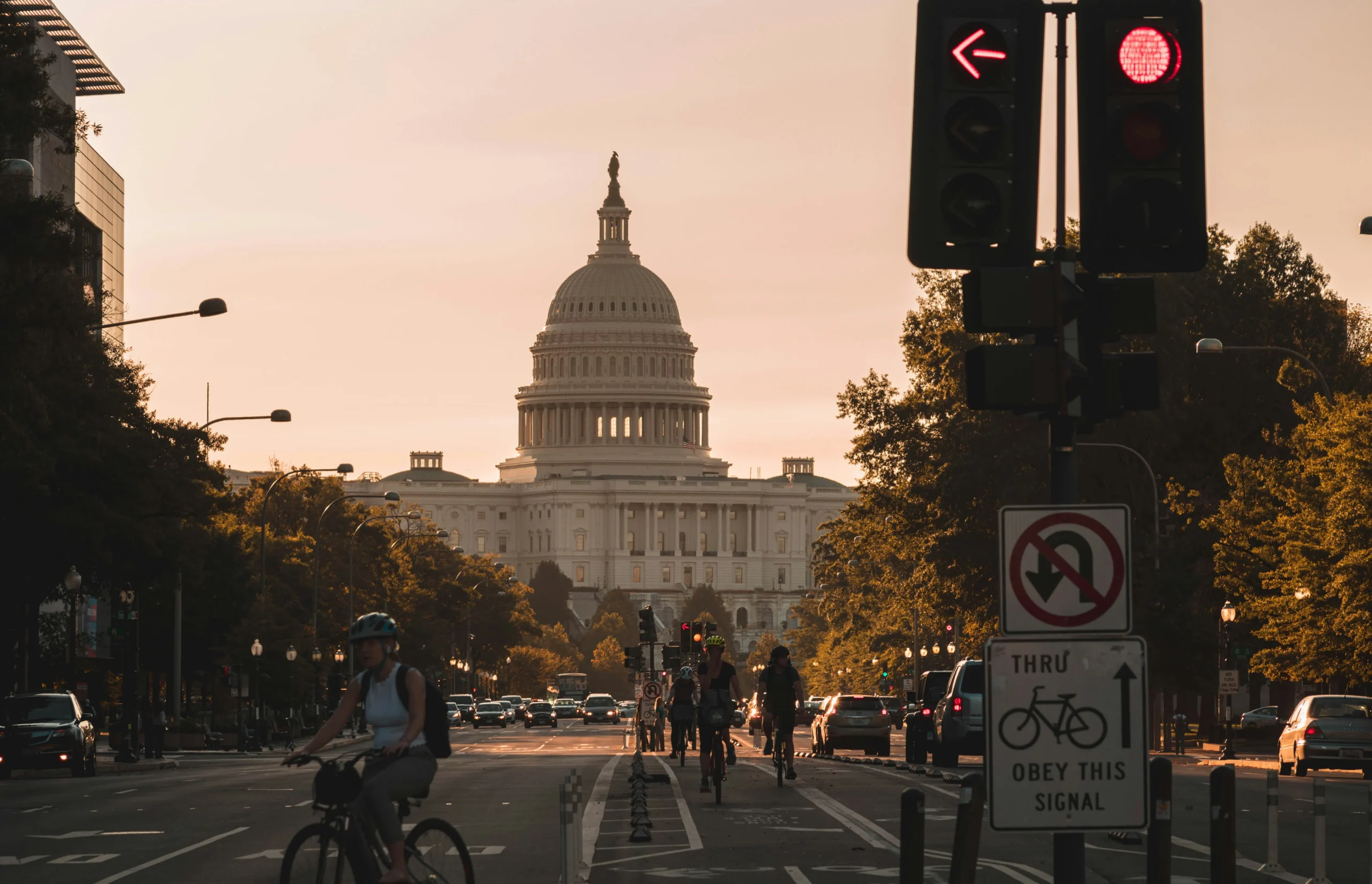
For those hesitant about booking events in DC due to the current political environment, Ferguson emphasises an important distinction: “There are really two cities. It’s Washington DC, the city that I represent, the city that I promote. And then, of course, there’s the federal experience, the 535 people sent to Washington that are elected officials that speak on behalf of the country.”
This separation between political Washington and the actual city experience is crucial to understanding DC’s appeal. “When you think about the neighbourhoods here, the history of this city, there is a perception that we’re talking about politics all the time,” Ferguson notes. “That could not be farther from the truth.”
Living just blocks from Capitol Hill, Ferguson describes a different reality: “These are real people. We’re walking our dogs, we’re taking care of our neighbourhoods, and we’re eating in cafes no matter what our politics are. And that may not resonate as much with the global community that’s just watching the news.”
DC’s competitive edge in the business events landscape begins with what Ferguson calls “the low hanging fruit” of infrastructure. “Our airports are positioned to host and welcome visitors from all over the world,” he explains, highlighting Dulles International Airport, Reagan National Airport (both served by the metro system), and nearby Baltimore/Washington Thurgood Marshall Airport.
The city’s metro system, “one of the safest in the world,” connects these transportation hubs to a high-quality convention centre and a range of accommodations. Ferguson points to the pride taken in maintaining these facilities: “There’s always a sense of pride in regards to how well our hotels are kept up and the investment made by the ownership groups to make sure that we have a great product.”
Knowledge economy: The DC advantage
Washington’s dense concentration of academic institutions, think tanks, research organisations and NGOs creates an ecosystem well suited for knowledge-based events. With prestigious institutions like Georgetown University, George Washington University, and the Brookings Institution headquartered in the city, planners have access to exceptional intellectual resources.
Elliott Ferguson“We’re leaning into key industry sectors where we already have a competitive advantage,” Ferguson says. “That includes medical research, cybersecurity, climate science, and education. Events that align with these sectors are not just well-supported, they thrive here.”
Destination DC has developed a sector-specific approach to sales and marketing, aligning with the city’s economic development strategy to attract events that complement local industries. This strategic alignment ensures that meetings generate meaningful outcomes for both attendees and the local economy.
This knowledge economy feeds directly into what Ferguson calls the ‘Connected Capital’ programme. With the nation’s highest concentration of experts across numerous fields, the city offers meeting planners access to local thought leaders who can enhance event programmes.
“If there’s an AI convention looking at North America, we’ll have an expert on AI meet with that meeting planner,” Ferguson explains. “The benefit for the planner and for the association or group is that you don’t have to fly speakers in because you have a huge pool of talent here in our own backyard.”
This approach extends beyond technology to engineering, medical, and various other sectors, allowing Destination DC to customise support based on evolving industry trends.
Sustainability focus
As global awareness of environmental concerns continues to grow, Washington DC is working to meet rising expectations. “Not having a sustainability plan is probably a good way of not booking business.”
“We are catching up to the rest of the world,” Ferguson admits, but emphasises the city’s commitment to meeting planner expectations in this crucial area.
Diverse event portfolio
While DC has traditionally been known for hosting large association meetings, Ferguson emphasises their work to diversify the events portfolio. “We host different types of events all the time,” he notes, pointing to sports-related conventions and upcoming major sporting events.
The city is particularly focused on the corporate market, including pharmaceutical and technology sectors. Ferguson identifies their “sweet spot” as groups requiring about 2,500 rooms on peak or approximately 4,000 attendees, though they welcome larger congresses as well.
DC is preparing to host two major international events: World Pride and FIFA’s Club Cup, which Ferguson sees as opportunities to showcase the city “through a different lens” to global visitors.
For meeting planners seeking to connect attendees with authentic local culture, Destination DC leverages its network of over 1,050 member organisations to create meaningful experiences beyond the traditional “monuments, memorials, and museums.” Ferguson says there are plenty of hidden gems in the city that visitors can take advantage of, referring to Washington’s history dating back to is foundation in 1790.
The organisation also works closely with local music and culinary scenes, as well as Business Improvement Districts representing different parts of the city.
Value proposition
Ferguson highlights an often-overlooked aspect of planning events in DC: value. “There’s something to be said about a city that has 17 free Smithsonian museums,” he points out.
Apart from the Smithsonian institutions, there is also the likes of the National Gallery of Art, the Holocaust Museum, the monuments and memorials – all of which offer cost-free experiences for attendees.
“The value of coming to a city like Washington and bringing your family, your dollar goes a lot further, your currency goes a lot further in a city like Washington than it would in other cities,” Ferguson notes. This value extends beyond the city limits to nearby attractions like Virginia’s wine country, just an hour away, offering “multiple layers of fun” for visitors.
For meeting planners seeking a destination with robust infrastructure, intellectual capital, diverse experiences, and surprising value, Ferguson’s message is clear: Washington DC offers far more than what appears on the evening news.