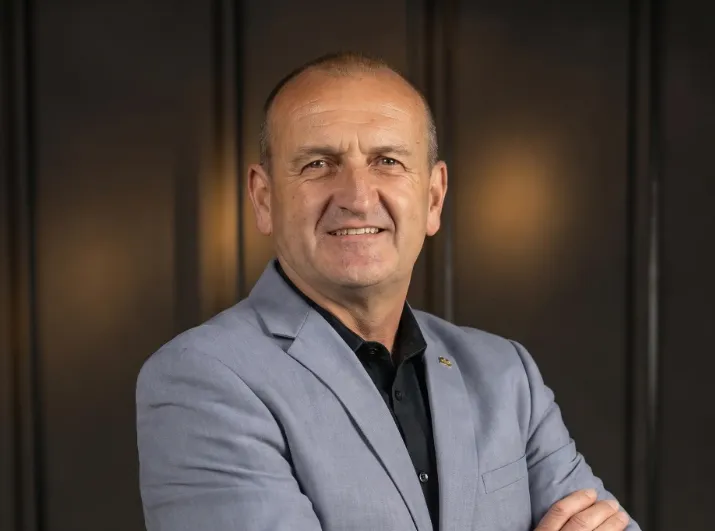
In this exclusive interview for CMW, Iain Stirling sat down with Julia Swanson, CEO of the Melbourne Convention Bureau, to discuss the city’s remarkable trajectory in the business events sector. Melbourne has cemented its position as a global business events leader, and according to Swanson, the city is entering its most transformative period yet.
With unprecedented conferences, prestigious incentive programs, and renewed emphasis on sustainability and strategic impact, Melbourne isn’t just hosting events, it’s revolutionising the global business events landscape. “2024 was tremendously successful for us,” Swanson states confidently. “But 2025 is already shaping up to be even more remarkable.”
Swanson highlights the Asia Pacific Incentives and Meetings Event (AIME) as fundamental to Melbourne’s continued achievements. “This year delivered another record-breaking AIME,” she notes. “It’s become an industry favourite that consistently expands year after year. Witnessing this growth is incredibly fulfilling, not just for our team but for everyone throughout the business events ecosystem.”
AIME, hosted annually at the Melbourne Convention and Exhibition Centre (MCEC), stands as the region’s leading meetings and incentives trade exhibition, uniting thousands of global and regional industry professionals for networking, education, and business development. MCB particularly values the post-event outcomes, including confirmed business and economic contribution.
“We’re intensely focused on delivering measurable ROI,” Swanson elaborates. “When participants depart with valuable business connections, and we can demonstrate concrete economic returns, we know we’ve achieved our objective.”
Melbourne Convention & Exhibition Centre (MCEC)Key events
Among 2025’s headline events, the Amway China incentive program stands out for its extraordinary scale. “In April, we hosted 16,000 delegates from Amway China,” Swanson reveals. “The event generated an economic impact of AUD$100 million, which is Australia’s largest-ever incentive program.”
The six-week program utilised 10-11 hotels and numerous iconic Melbourne venues. This represented a significant milestone in Chinese outbound travel recovery and symbolises Australia’s renewed relationship with one of its most crucial tourism markets.
The prestigious World Chambers Congress will arrive in Melbourne in September 2025, following a successful bid against Chengdu in 2022. “It’s an extraordinary achievement, what we consider the Olympics of business,” says Swanson.
Organised in partnership with the Victorian Chamber of Commerce and supported by the Australian Chamber, the event is coordinated by the International Chamber of Commerce in Paris. It will unite business leaders from over 100 countries, addressing challenges from geopolitics to technology, trade, and sustainability. “With strong Victorian Government backing, we’re transforming this into a showcase of Victoria’s innovation, investment opportunities, and global connections,” Swanson explains.
That same month, Melbourne will host the World Gastroenterology Conference, expected to attract approximately 3,000 medical professionals. “These major conferences transcend economic benefits,” Swanson emphasises. “They establish international research connections, create collaboration opportunities, and contribute lasting legacies to Melbourne’s health and research sectors.”
Looking forward, MCB is preparing for Australia Next, an exclusive, tailored event showcasing Australia to key international buyers. While planning continues, Swanson is clear about its significance. “We’re creating something intimate and premium – telling Australia’s story with a distinctive Melbourne perspective,” she explains. “We’re finalising the program, but our aim is to craft experiences that resonate with different markets and align with their specific interests.”
With abundant venue options and experiences spanning fine dining, cultural immersion, and First Nations storytelling, Swanson acknowledges that Melbourne is “exceptionally well-positioned.”
Sustainability, social impact, and gender equality
Beyond event execution, Swanson highlights a deeper commitment: aligning Melbourne’s business events strategy with UN Sustainable Development Goals. “There’s no universal approach,” she states. “We identify strategically important events that complement sectors and initiatives crucial to Melbourne – from renewable energy and infrastructure to gender equality and health.”
The city’s infrastructure development is flourishing, with major road, rail, and biomedical projects underway. A new Infectious Diseases Research Facility will further strengthen Melbourne’s world-class capabilities in immunology and vaccination research.
This reinforces Melbourne’s position as a hub for medical and health events, which represent 45% of the city’s total business event pipeline. “We compete with cities like Boston and London,” says Swanson. “It’s about the depth and connectivity of our universities, research institutes, and hospitals – all centralised in the Parkville precinct, just north of the CBD.”
This interconnectedness is one of Melbourne’s key advantages. “Everyone is connected – researchers, clinicians, educators. When bidding for conferences, we bring the entire ecosystem to the table.”
Women deliver and purpose-driven leadership
Swanson also emphasises Melbourne’s success in securing the Women Deliver conference in 2026, one of the world’s largest multi-sectoral gender equality events. “It’s not conventional, it’s grassroots, global, and community-focused,” Swanson explains. “We’re collaborating with the Victorian Government to showcase policies replicable worldwide, from domestic violence prevention to First Nations inclusion.”
Australia is recognised as a gender equity leader through initiatives like Victoria’s Gender Equality Act, requiring all publicly funded organisations to submit measurable plans. “Globally, people ask ‘how did you accomplish this?’ We want to bring that dialogue to Melbourne, so delegates leave with implementable ideas.”
Melbourne skylineMelbourne’s competitive edge
When asked about Melbourne’s formula for successfully delivering large international events, Swanson responds without hesitation. “It’s our infrastructure, certainly, but equally our operational approach. Our collaborative spirit. That ‘Team Melbourne’ philosophy.”
She describes the city’s service blueprint, an integrated network of venues, suppliers, academics, policymakers, and tourism operators – all functioning cohesively. “It extends beyond excellent venues. It’s about understanding client objectives and connecting them with the right stakeholders across the city. That’s where we innovate. That’s how we deliver meaningful impact.”
As Melbourne continues breaking records and leading purposefully, it’s evident the city isn’t just open for business, it’s actively shaping the global future of business events.