Uncertainty has not slowed Dubai down.
While much of the Middle East events market has spent 2026 recalculating risk, Dubai World Trade Centre (DWTC) has gone the other way. Its calendar from August to December runs across two venues – DWTC in the central business district and Dubai Exhibition Centre (DEC) at Expo City – and covers tourism, technology, sustainability, healthcare, food and beverage, energy, construction, automotive, education and consumer goods.
That is not a defensive programme. It is a bet that international buyers will keep travelling, and that the ones hesitating need a reason not to.
The two-venue calculation
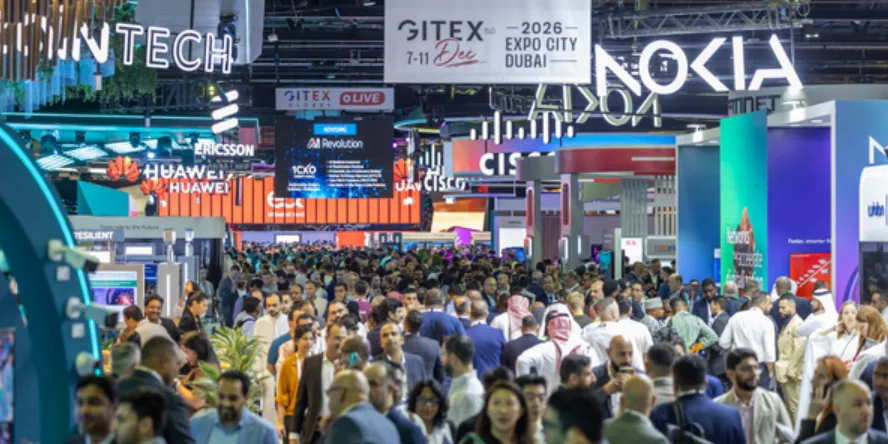
Look at the concentration. November alone brings Gulf Host, Gulfood Manufacturing, ISM Middle East and Private Label Middle East in a single week (3-5 November), Automechanika Dubai at DEC (10-12 November), and the Big 5 Global cluster with GeoWorld, HVACR World and LiveableCitiesX (23-26 November). December is anchored by GITEX Global, which runs 8-11 December at its new home at DEC.
Mahir Julfar, executive vice-president at DWTC, said the priority for organisers is to provide: “the scale, flexibility and support they need to deliver successful events.”
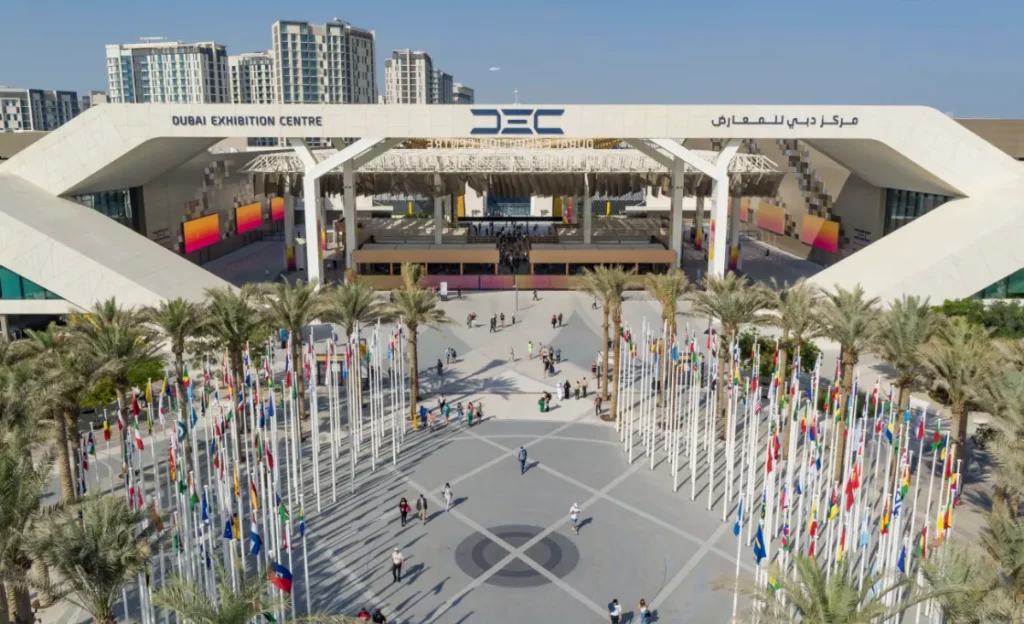
Two complementary venues is how that gets delivered. A calendar this dense would force date conflicts in a single-venue city, and a show that outgrows its hall would have to leave. In Dubai it moves across town.
The association business is in there too, and it is worth noting. The 44th ICAI Annual International Conference lands 14-15 November, the UITP Conference on 9-10 December, and the International Symposium on Electronic Art (ISEA) runs an unusually long 7-18 November. MEIDAM, the 11th international congress on dermatology and aesthetic medicine, takes 24-26 September. These are rotating international congresses choosing Dubai in a difficult year.
Emirates has priced the risk
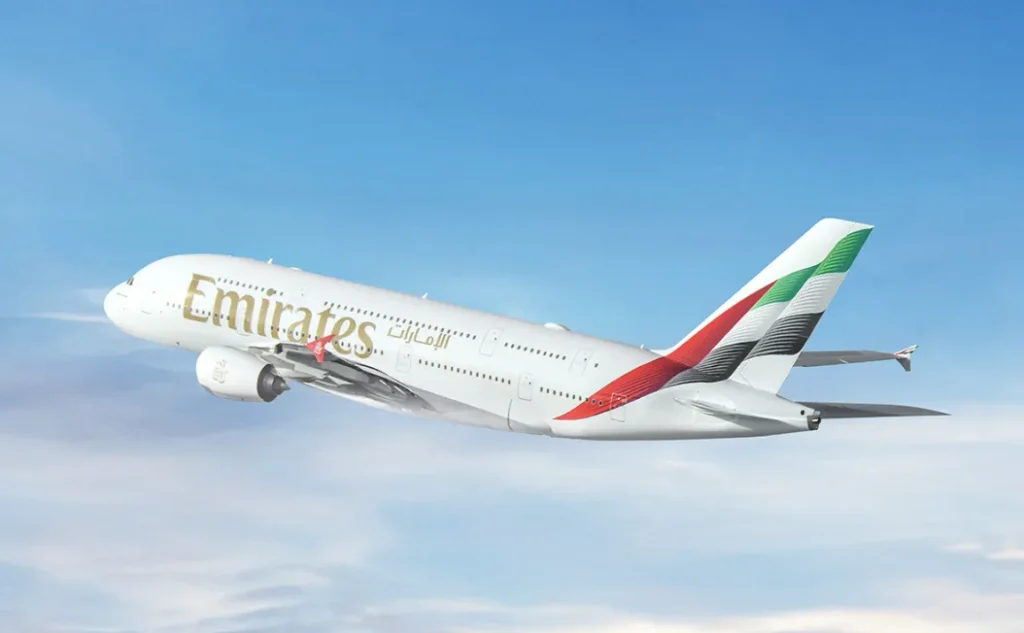
The bigger signal for organisers came from the airline. On 11 August, Emirates set out five measures aimed squarely at travellers who are hesitating.
From 10 August 2026, passengers travelling to Dubai can change their dates as many times as they need, free of charge, across every fare type – Saver through to Flex in Economy, and Special, Saver and Flex in Business Class. Refund fees on flights to Dubai have dropped to US$50 on Saver fares and US$25 on Flex. Network-wide, customers get one free date change on tickets booked from 2 April 2026, and can hold a fare for 24 hours at no charge.
Then there is the insurance. Emirates’ Comprehensive Travel Cover, available in 27 countries, includes conflict cover reimbursing medical expenses up to US$25,000 and a free trip extension of up to 30 days. Critically, the cover is not restricted by government travel advice.
That last clause deserves a second read. Advisory-driven cancellation is the mechanism that empties a congress: a foreign ministry updates its guidance, corporate travel policies follow automatically, and delegations withdraw regardless of conditions on the ground. An insurance product that keeps paying through an advisory removes the trigger.
Emirates has also committed to rebooking customers to their destination at no extra cost where onward connections are affected – including cancellations caused by airspace disruption – and to arranging accommodation directly where flights are disrupted.
For anyone building a 2027 attendance forecast, that changes the maths. The variable that damages registration is rarely headline airfare. It is the perceived cost of committing early and being wrong.
Capacity is following demand
Route data points the same way. flydubai has added a second daily service between Dubai and Bangkok after strong demand on the route, which only launched on 1 July 2026. With the extra flight from 18 July, the airline runs up to 21 weekly flights to Thailand, and its codeshare with Emirates offers single-ticket itineraries and through baggage check across a combined network of more than 240 destinations.
Sudhir Sreedharan, divisional senior vice-president of commercial operations at flydubai, said the additional service reinforced: “our commitment to enhancing connectivity.”
Read that as a signal for Asia-Pacific association business, historically one of the harder delegate pipelines for Gulf destinations to prove in a bid.
On the ground, Dubai Airports and Uber have opened a dedicated rider lounge at DXB Terminal 3, beside the main Uber and Careem pickup area, with air conditioning, luggage-aware seating, work tables, charging points and PIN-dispatch queueing. Minor in isolation. But arrival is the first touchpoint a host destination controls, and ground transfer is reliably among the most complained-about parts of any congress.
What the economy underneath is doing
Infrastructure only holds attention if the business case justifies the trip.
Dubai ranked second globally in Boston Consulting Group’s first Intelligent Cities Index, which assessed 61 cities across 39 countries using 35 indicators across 14 dimensions of digital transformation. It placed first worldwide for adoption of AI and smart-city solutions – the strongest single performance recorded across the index’s five domains. BCG also found that Middle East cities show particularly strong enthusiasm for AI adoption.
Separately, Dubai ranked first globally for new greenfield foreign direct investment in the cultural and creative industries for the fourth consecutive year, according to 2025 Financial Times fDi Markets data: 754 projects, 19,304 jobs and US$3.756bn in capital inflows, ahead of London, Singapore, Riyadh and Bengaluru.
Helal Saeed Almarri, director general of the Dubai Department of Economy and Tourism, said the result reflected: “the enduring confidence that Dubai inspires among global investors.”
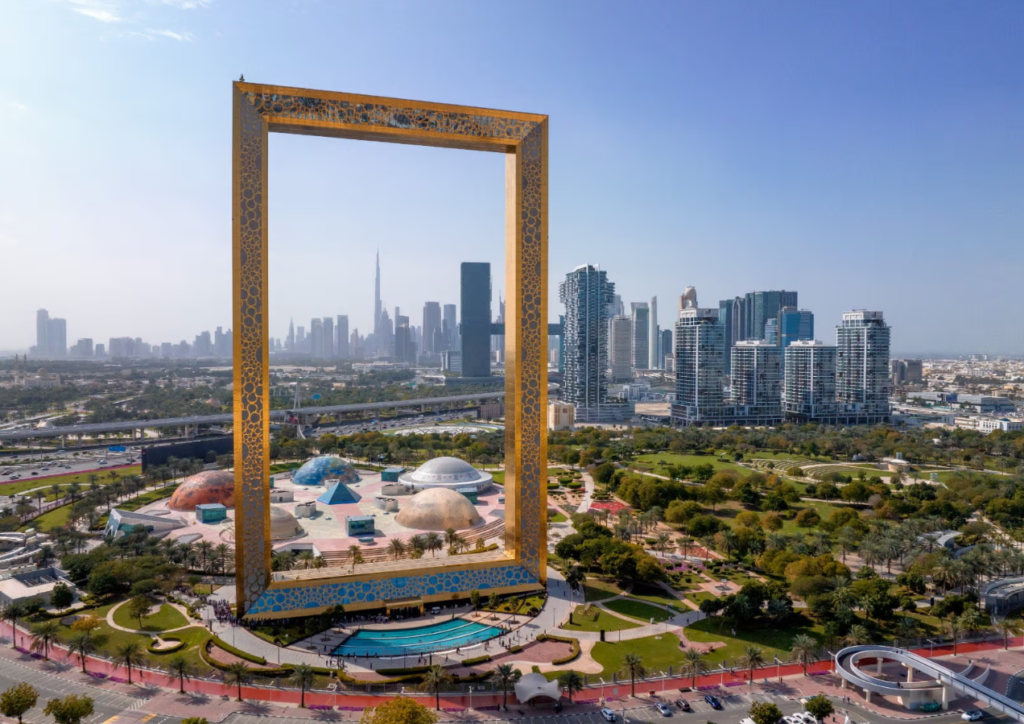
Dubai Frame Observatory
Why it matters for organisers
Sector density is the quiet driver of congress bidding. Association boards do not choose on venue specification alone. They look for local chapter strength, sponsorship depth and a delegate base reachable without a long-haul budget. A city adding 754 creative and technology projects in a year is building exactly that base, in exactly the sectors that generate conference content – which is also why GITEX moving into a bigger home matters beyond the tech calendar.
None of this makes the region’s geopolitics disappear. What it does is move where the risk sits. Dubai has spent the year making it cheaper to change your mind, easier to arrive, and harder to argue the business case has weakened.
For organisers still holding 2027 and 2028 decisions open, that is the calculation to run.