“In each case, something needed to be addressed, clarified or decided, yet a suitable space to do so had not been created.”
Business events do not become successful overnight. From concept to delivery, much of the industry works through long planning cycles, bringing each event to life through preparation, coordination, and strong professional relationships.
At the same time, business events bring together a global ecosystem. Event professionals, organisations, destinations and partners collaborate to deliver gatherings that drive economic activity, accelerate innovation and strengthen connections across industries and borders.
This is also why so many of us value working in this industry. Success is collective, not individual. As the event date moves closer, different realities begin to meet. Timelines narrow, decisions become immediate, and priorities that may have developed separately now need to come together.
These situations take different forms, across regions and across organisations.
In one executive team, two senior leaders had been working together under increasing strain. Differences had built over time without being addressed directly. The situation became visible when a disagreement escalated into a public argument in the office, in front of colleagues. From that point on, it was no longer just a difference in perspective, but something that began to affect the wider team.
In another case, a project team delivering an international congress found themselves misaligned on how they worked together. Expectations around availability, ways of communicating, and how to collaborate had never been made explicit. Over time, tension grew. During the delivery phase, communication broke down, meetings became strained, and there was even consideration of restructuring the team.
In a different situation, a formal complaint about inappropriate behaviour led to an internal investigation. Once the process concluded, both individuals returned to work, but the situation remained unresolved. Trust was affected, communication became cautious and limited, and uncertainty remained around how to interact while continuing to work together. In each case, something needed to be addressed, clarified or decided, yet a suitable space to do so had not been created.
These situations are often handled in an unstructured way, under time pressure, or not at all. Conversations happen in passing, in short exchanges between meetings, or are postponed to
Mediation
formal settings such as performance or review discussions where they are no longer timely. This can work for a while, but it rarely holds when pressure increases.
The impact is not always dramatic at first, but consequences slowly grow. A decision is revisited. A handover becomes harder than it should be. Someone steps back, another fills the gap, and the same issue keeps resurfacing in slightly different forms. What began as a small misunderstanding starts to affect timelines, relationships and, eventually, the outcome of an event.
That is partly because business events leave little room for repair once delivery is underway. Deadlines do not move, visibility is high, and many people depend on each other at the same time. By the time tension becomes visible, attention is already elsewhere. What might have been manageable earlier can escalate quickly when time is short and everyone is exposed.
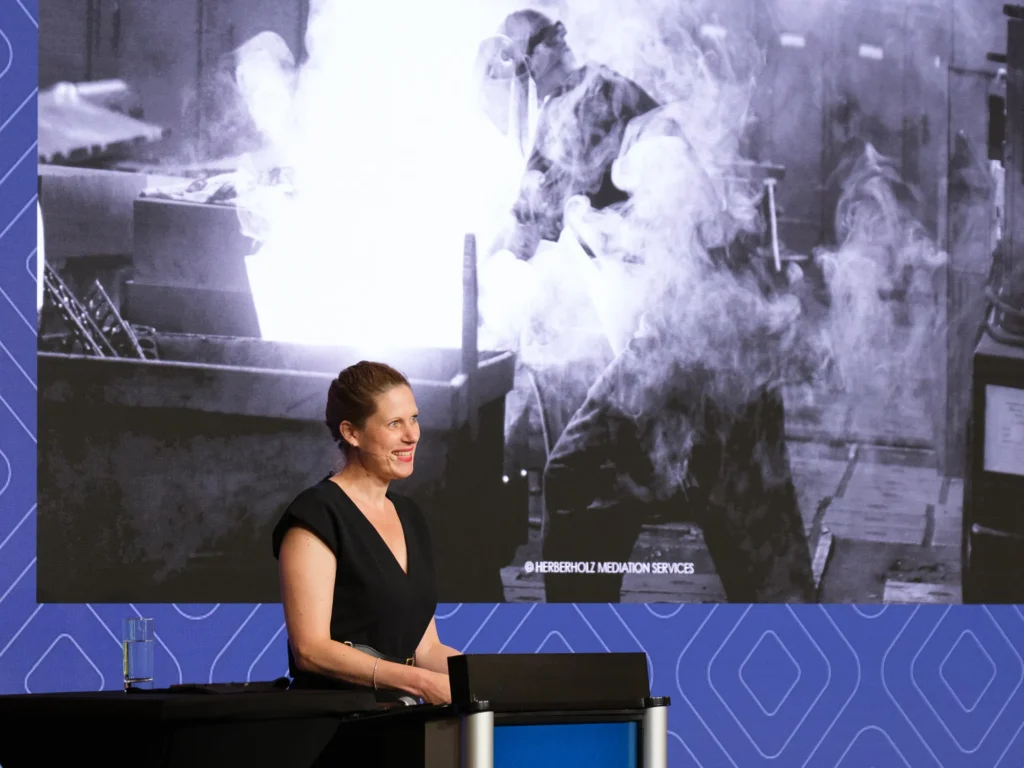
Findings from the 2025 Navigating Workplace Tension survey by HMS (Herberholz Mediation Services) show that unresolved workplace tension can cost managers in the business events industry close to four working hours per week. Beyond time, the impact is felt in reduced engagement, increased absence, and in some cases people choosing to leave altogether.
The alternative is to create intentional spaces for these conversations. Not as an additional layer of process, but as part of how work gets done and how concerns are addressed early. These are situations where the right people come together, expectations are made explicit, and there is time to understand what is needed to move forward.
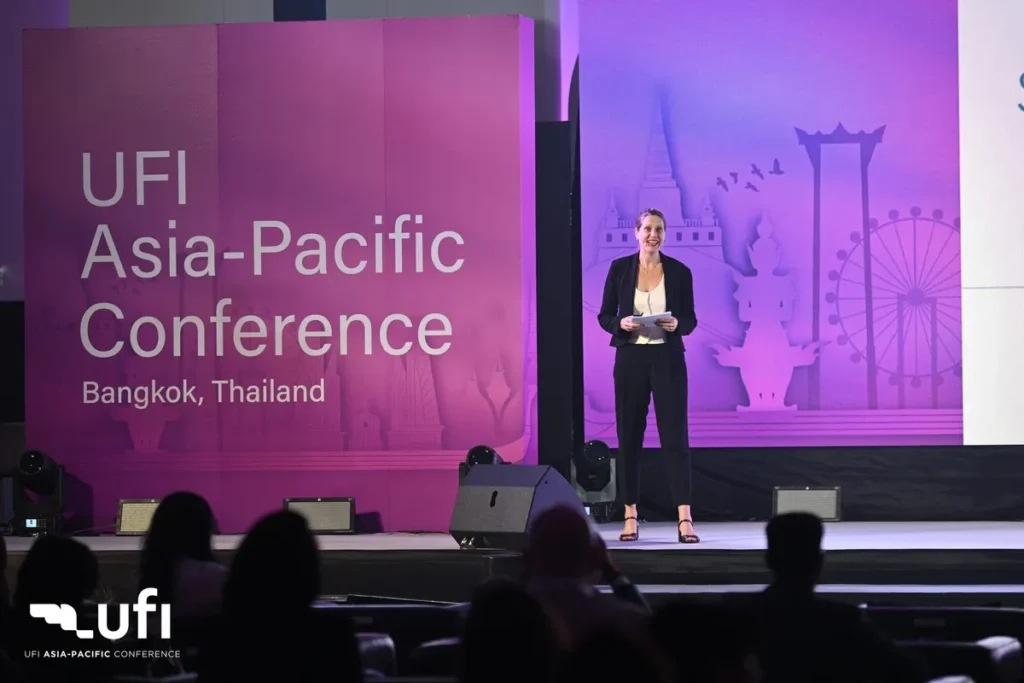
UFI APAC 2026
Mediation and facilitation
In my work, this often takes the form of mediation and facilitation. Not as a last step, but as a structured and confidential setting that allows professionals to address what matters to deliver a successful event. In some cases, this
prevents situations from escalating. In others, it helps address tensions that have already built. It can also support decision-making and governance when different perspectives need to be brought together in a way that allows for clarity and shared understanding.
Mediation and facilitation create the conditions for conversations that support clear decisions, professional working relationships, and a solid foundation for the work ahead. Business events are built to bring people together. What happens behind the scenes is no different. Success remains collective.
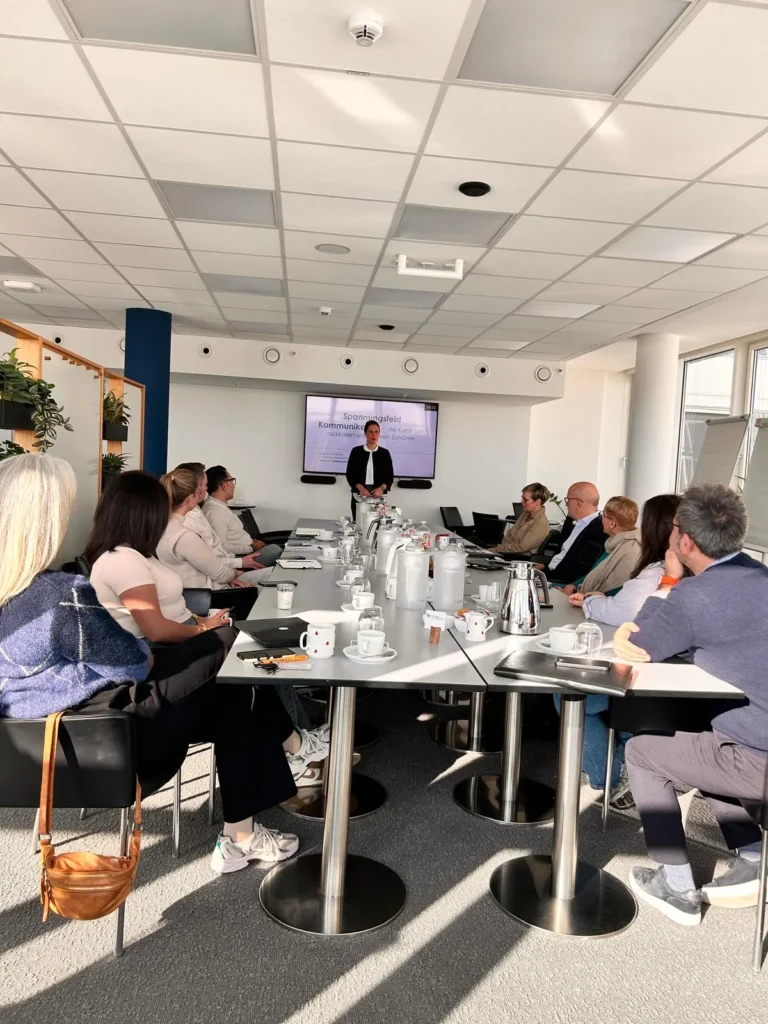
Angela WiE DACH Workshop
The ability to align perspectives, address differences, and take decisions in a way that people can stand behind is part of what allows teams to deliver, edition after edition. This ability is not separate from the work. It is part of how strong professional relationships, clear ownership and consistent performance are built over time.
More organisations are beginning to approach interpersonal differences more intentionally through mediation and facilitation. HMS 2025 research shows that, compared to 2023, the business events industry has increased its use of professional mediation and facilitation support by 10%. Creating structured and confidential spaces for dialogue allows people to address what matters before it escalates, to take ownership, and to establish a clear and workable foundation for collaboration.
This is not only about resolving tension. It influences how decisions are made, how relationships develop, and how people perform together over time. In an industry that depends on continuity, trust and collaboration, the way difficult conversations are handled is not a soft issue. It is part of performance.
Angela Herberholz is the founder of Herberholz Mediation Services and serves on the Board of Women in Exhibitions French Chapter. Visit: www.herberholzmediation.com