The evolving global climate has brought with it many shifts which the meetings and events industry needs to adapt to, according to a group of industry leaders speaking on Day 2 of IMEX Frankfurt. Among the changes discussed in the session, ‘2025 State of the industry: Intention to Action’ on the show’s Inspiration Hub, was the new skill set required for event professionals. Adaptability and critical thinking figured highly.
Industry consultant Kai Hattendorf, said: “The geopolitical climate is supercharging regionalisation – we’re moving to a more localised approach to events. I anticipate that future gatherings will consist of more intimate conversations with small groups.”
He also mentioned the continuing trend of ‘accidental event organisers’: “An increasing number of communities are evolving into live events. One example is SXSW which started as a community first then morphed into an event… a need to foster engagement and belonging sits at the heart of this approach.”
Fellow panellist, Reggie Aggarwal, CEO of Cvent, said: “The three main pillars of events are experience, content and human connection. All three are important and will remain so in the future. Regardless of the broader tech landscape, those fundamentals won’t change.”
The panel, which included IMEX CEO, Carina Bauer, also agreed it’s the responsibility of event planners to communicate and drive awareness of the value of in person connections among their attendees and teams.
Attendee Melissa Torres from the International Finance Corporation is a case in point: “I’m interested to see how other event planners are responding to the current climate – I want to stay up to date so that I can continue to support and counsel my clients. Seeing the industry thriving here at the show both invigorates me and gives me the energy to push forward.”
Elsewhere there were plenty of insights from a variety of speakers from different disciplines. In ‘Unveiling ELX: Leading global teams through uncertainty’, Chloe Richardson of ELX explained: “A workplace culture will exist regardless, so you have to ask, is it by accident or design? It’s up to leaders to build their own culture based on how they want their team to be.”
In ‘Lessons in Extreme Leadership’ former helicopter pilot, Sarah Furness, and former policeman, Rob Hosking, offered best practice tips direct from their own frontline experience. Hosking noted: “It’s not just leaders who create cultures. It’s all of us. Debriefs are vital, whether they’re informal or formal. Taking collective responsibility for all learnings is how we create a culture of safety and growth.”
In ‘Leading with Empathy, Lessons from Atlantic Crossings’, Matt Garman, CEO of The Corporate Adventurer and Josh Stinton, business design facilitator at Fieldwork, agreed that extreme acceptance combined with kindness goes a long way when teams are under pressure. He said: “Don’t underestimate the importance of being open and clear with your communication and practising how to behave in advance. We put code words and code behaviours in place, such as raising a hand when someone was having a bad day and just wanted to be left alone. These agreements reinforced our mutual sense of trust, belief and safety, and saved a huge amount of energy.”
A new IMEX report is set to explore this new leadership skillset. How to lead with impact in extreme times is due out next month.
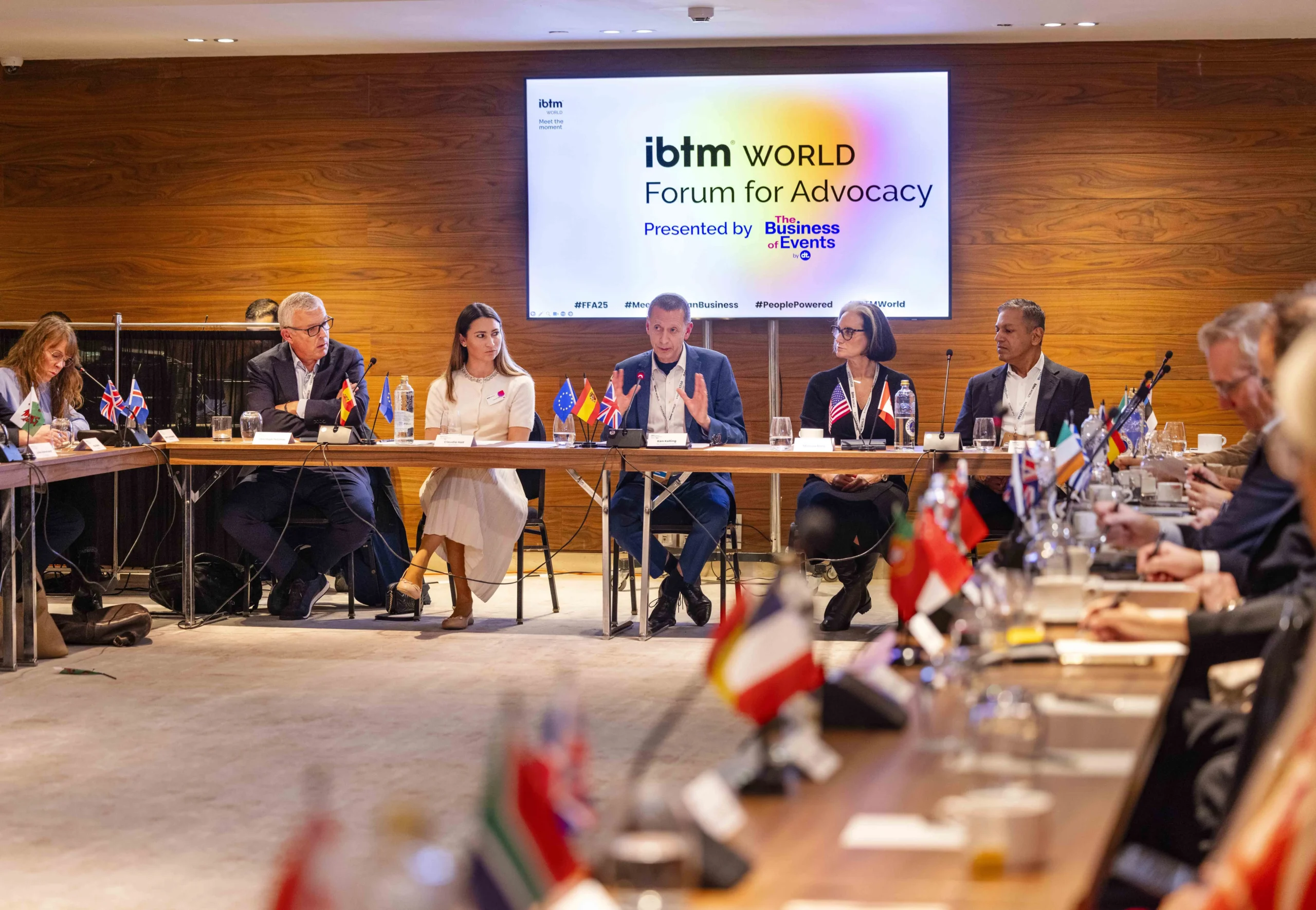
Photo: Inspiring learning at IMEX Frankfurt’s Inspiration Hub.
IMEX Frankfurt runs until 22 May. Next year’s IMEX Frankfurt will take place 19-21 May, 2026 IMEX America will take place 7-9 October, 2025 at Mandalay Bay, Las Vegas.