Iain Stirling explores how The Hague delivered the NATO Summit in June 2025 – and why it was a game-changer for high-security international meetings
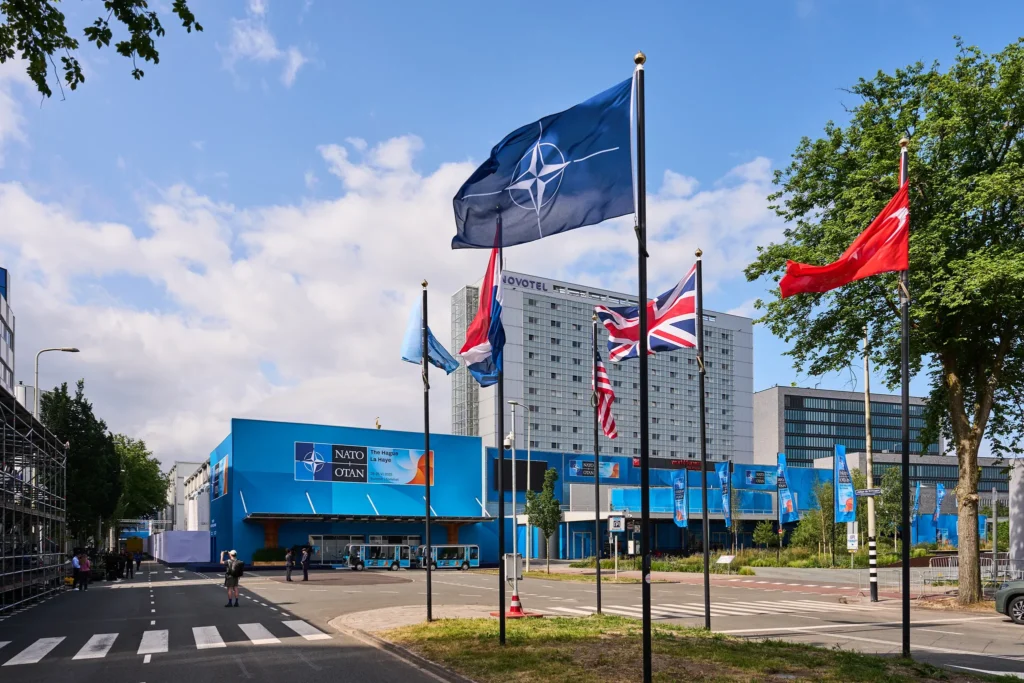
When the Netherlands hosted the NATO Summit, 24-25 June 2025 at World Forum The Hague, it was far more than a diplomatic gathering. With around 45 heads of state and government, 45 foreign ministers, 45 defence ministers, some 6,000 delegation representatives and 2,000 journalists, it was, by any measure, the largest logistical and security operation in the Netherlands in 80 years. It was also the first NATO Summit ever held in the country since the Alliance’s founding in 1949.
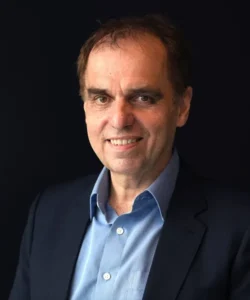
Robert Dingjan
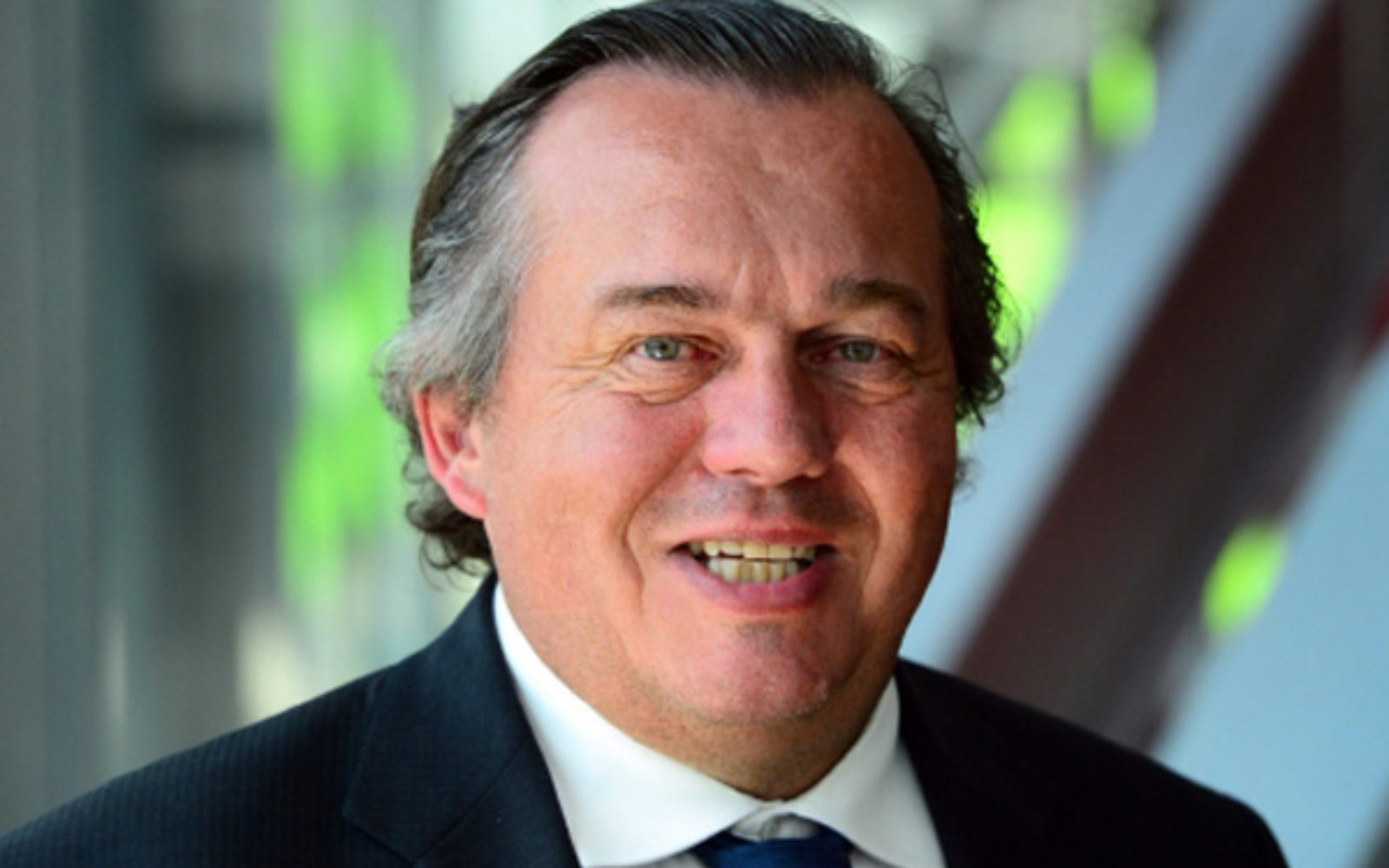
At the centre of that operation was Robert Dingjan, director of the Conference Department at the Ministry of Foreign Affairs and chief operating officer for the summit. With a track record that spans the 2014 Nuclear Security Summit with president Obama, the EU Presidency in 2016, and multiple high-level events across the US, UK, Germany, Japan, South Korea and Singapore, Dingjan is the person the Dutch government turns to when the stakes are at their highest. CMW sat down with him to explore what it really takes to pull off an event of this scale – and what meeting professionals can learn from it.
THE SUMMIT IN NUMBERS
- 9,000 total attendees
- 45 heads of state and government
- 2,000+ planning milestones tracked
- 7,000 m² of temporary venue space constructed
- 5 months road closure to enable venue expansion
- 18 months full planning cycle
Mapping the stakeholder universe
The first, and perhaps most foundational, decision of the entire planning cycle was getting the right people in the room, and doing it early.
One of the most critical structural decisions was mapping all stakeholders and bringing them together at an early stage. It was essential to clearly define the mutual expectations between the various stakeholders.
Those stakeholders were numerous: NATO itself, the Municipality of The Hague, Schiphol Airport, the police, the Ministries of Defence, Foreign Affairs, and Infrastructure and Water Management, security and intelligence services, and the embassies of allied nations stationed in The Hague – along with the security services of participating countries. Dingjan’s team then developed a comprehensive Project Execution Plan tracking more than 2,000 milestones.
“The most important milestone was selecting the venue,” he explains, “as this decision became the starting point for all further planning regarding transport logistics, hotel accommodation, and required adjustments to the venue itself.”
Transforming an existing venue
World Forum The Hague is already one of Europe’s leading conference venues, but hosting a head-of-state summit required it to become something else entirely. An additional 7,000sqm of space had to be constructed on an adjacent roadway, requiring that road to be closed for five months. The municipality organised resident information evenings to manage local impact, and the venue worked in close coordination with neighbouring international organisations in The Hague’s International Zone.
“Because The Hague is the international city of peace and justice, and World Forum The Hague is located right in the heart of the International Zone, hosting the summit required close co-operation with these organisations,” says Dingjan.
On the permanent side, the summit’s transformation of the plenary hall created a rare window for long-overdue maintenance. “During the transformation of the plenary hall for the summit, they also took the opportunity to restore all the seating,” Dingjan notes. “This turned out to be highly beneficial, as the hall is normally never available for closure over several months.” It’s a reminder that even temporary events can leave lasting infrastructure benefits if planned strategically.
The venue also received new power capacity, a full back-up system, and upgraded fibre optic data connections as part of the permanent upgrades required for the summit.
Security as hospitality
For most event professionals, security and delegate experience exist in tension. Get the security right and you risk making attendees feel processed rather than welcomed. Dingjan’s approach reframed the challenge entirely.
The way the summit was organised in the Netherlands made security itself a form of hospitality. A great deal of consideration was given to residents and local businesses, and significant effort was made to keep the city as open and accessible as possible while still ensuring maximum safety.
A Dutch liaison was appointed for each international security service, briefing their counterparts in advance on what measures would be in place and why. Access management operated through a system of facial recognition linked to accredited badge photographs, with tiered access zones for heads of delegation, delegations, media, and staff. The philosophy was one of transparency and communication – and it worked.
“Communication was key,” Dingjan emphasises, “not only about what measures were being taken, but also why. This communication was shared with all stakeholders, including local residents.”
Mobility, access and the city
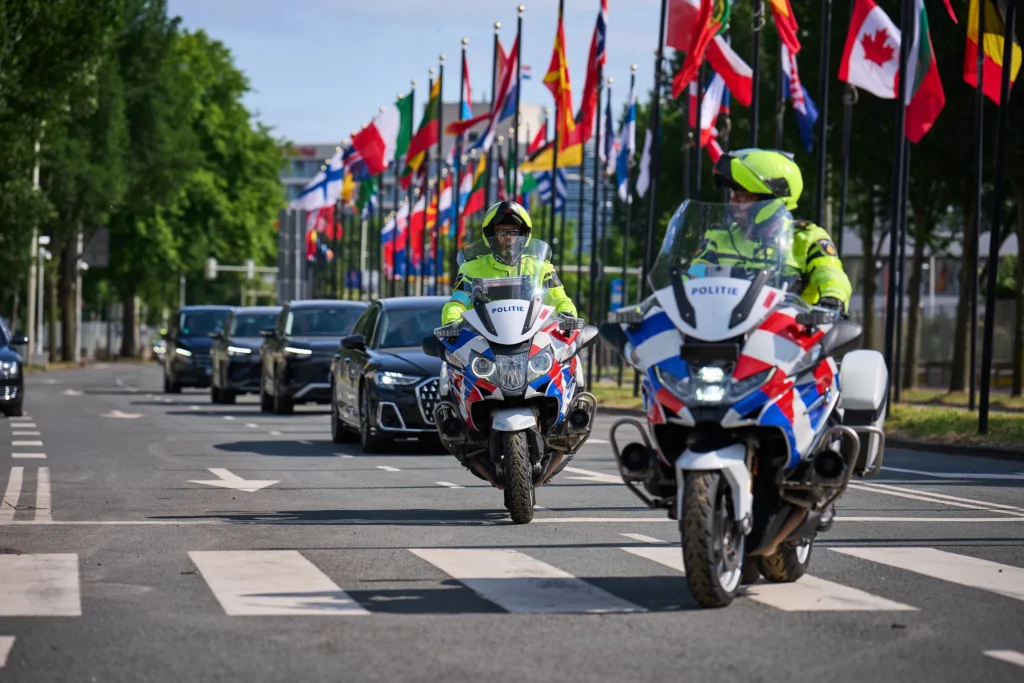
Managing the movement of 9,000 people, including motorcades for dozens of world leaders, through a city centre is a challenge with few precedents. Dingjan’s team established a controlled radius around World Forum and worked with public transport operators to introduce additional stops and deploy extra trams, minimising private vehicle traffic in the area. Government institutions across the city were advised to implement remote working policies for the duration of the summit.
“All access routes were closed off for heads of government and their delegations to ensure secure and efficient movement,” he explains. Within the perimeter, access was governed strictly by accreditation level – a system that had to be built from the ground up, and that required every attendee to be accurately and fully registered before arrival.
The multi-agency collaboration model
Perhaps the most instructive element for event professionals is how Dingjan and his team made the multi-agency collaboration actually work in practice. With so many organisations involved – each with their own priorities, protocols, and communication cultures – the risk of fragmentation was significant.
“What truly made the multi-agency collaboration work was bringing all stakeholders together early in the process. Maintaining continuous communication throughout the entire planning period was essential. Being open and honest with one another played a major role, as did consistently reinforcing the shared commitment to their objectives.”
The result, Dingjan says, was a genuine sense of collective ownership. “Creating a genuine sense that everyone was contributing to a collective effort proved vital in ensuring the collaboration functioned effectively in practice.” This principle – of shared investment in shared outcomes – is as applicable to a corporate conference as it is to a head-of-state summit.
Cybersecurity as an operational reality
One aspect of the planning that will resonate with an increasingly digitally-focused industry is the role cybersecurity played not just as a risk management measure, but as an operational constraint that shaped how the entire team worked. The Ministry of Foreign Affairs provided secure laptops to all stakeholders, and all communication throughout the 18-month planning cycle took place exclusively via secure channels.
“The nature of the summit meant that cybersecurity had a major impact on how we worked,” Dingjan explains. For event professionals considering secure government or high-profile corporate events, the message is clear: the security framework for an event of this nature begins well before the first delegate arrives, and it shapes everything from communication tools to file sharing to supplier briefings.
The legacy effect
The NATO Summit’s impact on The Hague as a destination extends well beyond the event itself. For Dingjan, it served as a reaffirmation of something the city already knew about itself – but now the world does too.
Hosting the NATO Summit served as a reaffirmation of The Hague’s positioning as the international city of peace and justice. The summit demonstrated that both the city and World Forum have the capability and infrastructure to successfully deliver an event of this scale and security level.
For international meeting planners, the summit has effectively put The Hague on a shortlist that was already distinguished. The city now has demonstrated experience of the most demanding category of event management, and the infrastructure – both physical and organisational – to prove it.
FIVE LESSONS FOR HIGH-SECURITY EVENT PLANNERS
- Map stakeholders early and define mutual expectations before planning begins. Ambiguity at the start costs far more later.
- Choose the venue first. Every other logistics decision – transport, accommodation, security perimeter – flows from this choice.
- Communicate the ‘why’ of security, not just the ‘what’. Transparency with delegates, staff, and local communities transforms compliance into co-operation.
- Build cybersecurity into the workflow from day one. Secure channels and devices are not a last-minute addition – they define how the team operates.
- Treat collective ownership as the project’s engine. When every agency genuinely believes in the shared mission, multi-agency complexity becomes multi-agency strength.