
You’ve built the 2026 programme around one question: how do event professionals thrive in an industry changing faster than ever?
Navigating disruption starts with staying curious, staying close to what people actually need and being prepared to evolve before you are forced to. The pace of change is extraordinary, whether we’re talking about AI, economic uncertainty, audience expectations or the pressure to prove ROI. However, the fundamentals of our industry haven’t changed. People still need to meet and create meaningful connections.
Three years into the role, I’ve become ever more convinced that thriving isn’t about chasing every new trend, but understanding which changes genuinely matter to your audience and then having the confidence to act on them. For IBTM World, that means protecting what has always made the show commercially credible, such as purposeful business meetings and high-quality networking, while evolving the experience around that.
The question we keep coming back to is: how can one conversation, one idea or one connection genuinely change what happens next for someone? If we can create the conditions for that, we’re doing something valuable.
What was the thinking behind The Skills Exchange?
Our audience doesn’t need more information for information’s sake. They are dealing with real pressures every day and they want to leave Barcelona with ideas and skills they can actually use.
That’s why we’re putting more emphasis on practical learning and peer exchange. We want planners to come away from the show’s Skills Exchange saying, “I can take this back and do something differently on Monday.”
We are testing new conference formats, keeping the expertise and big ideas, while making the way people learn more practical and relevant to a modern audience.
Beyond the education programme, what will a buyer walking the floor in November notice that wasn’t there in 2025?
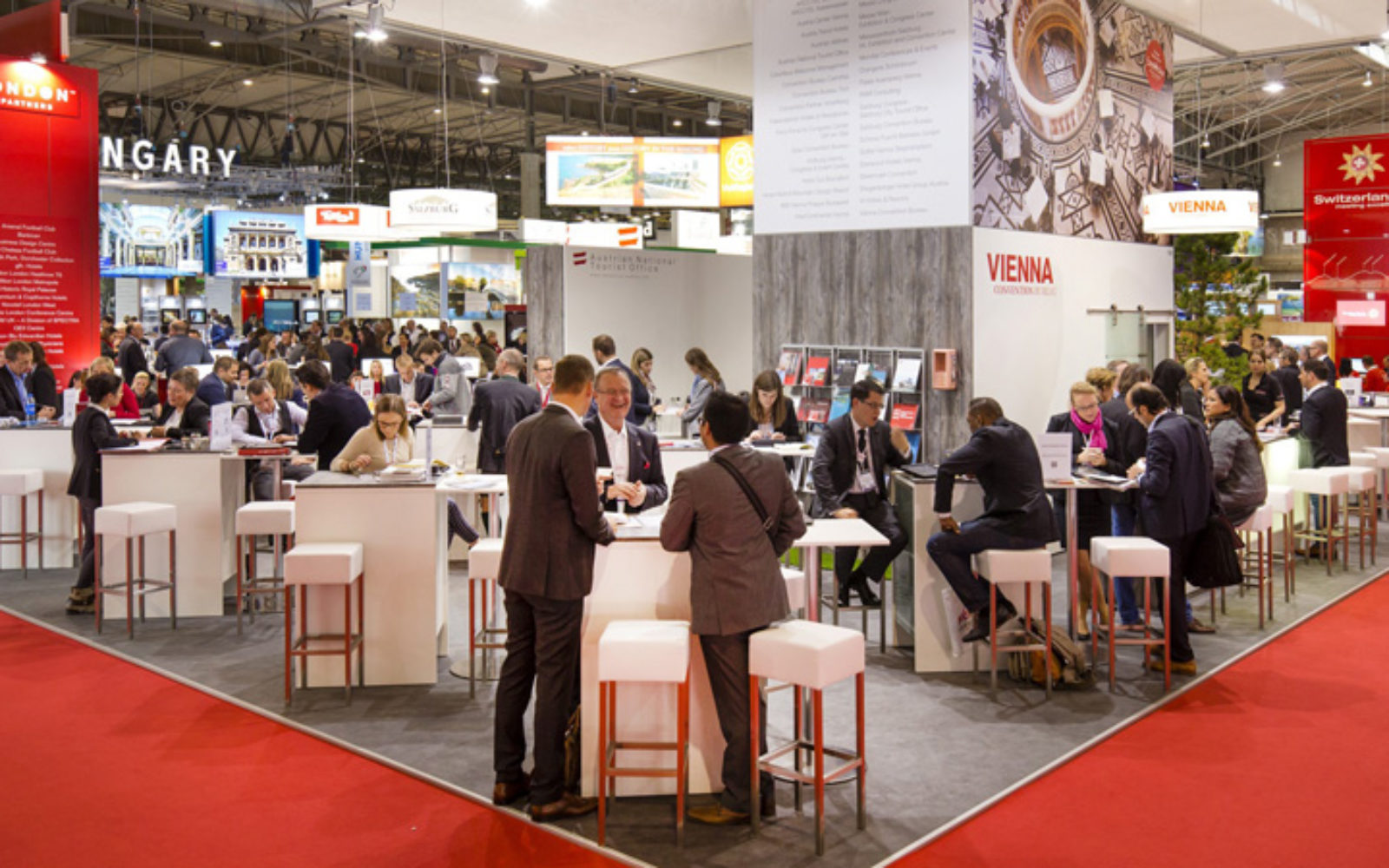
That the entire experience is becoming more connected, more immersive and easier to navigate. We are designing a modern exhibition for a modern audience, with more opportunities to learn, network and discover solutions outside scheduled meetings.
Event technology and services will have a much stronger presence. Buyers will be able to explore artificial intelligence, registration, production, engagement and data solutions in one place; see products demonstrated live and compare them directly. AI Demo Day LIVE with Boldpush takes the technology out of presentations and puts working solutions in front of the audience.
IBTM Ignite returns with a clearer focus on commercial outcomes. Many start-ups struggle to move beyond their first two years, so the programme brings promising businesses together with investors, potential customers and the wider events community.
We’re continuing to build around a precision matchmaking approach, based on detailed profiles and real procurement needs, while keeping the experience buyer-led. The objective is to make the meetings worth having.
We’ve also become much more disciplined about starting with the customer problem. What are they trying to solve? Where can we help?
What I have deliberately left alone is the commercial core of IBTM World. It has always been a place for business and purposeful meetings and that remains incredibly important. We’re not changing the fundamentals for the sake of appearing new.
What does IBTM World offer international association organisers in 2026?
Association organisers operate in a particularly complex environment. They’re not just procuring a venue or planning an event, they’re often balancing the needs of membership, a board, professional communities, sponsors, destinations and a much wider stakeholder group. Their events can also have a significant role in advocacy, knowledge exchange and the long-term development of a sector.
That means the value they get from IBTM World goes beyond supplier meetings.
That’s where forums such as the Association Leaders Forum and Forum for Advocacy are important. They create space for conversations that don’t always fit into a standard procurement meeting, such as how associations build influence, demonstrate value, engage communities and use events as a strategic tool.
We work closely with organisations including ICCA, EIC and MPI because IBTM World is a connection point for the wider industry ecosystem. There is great value in the combination of access, peer exchange and the ability to have conversations across markets and disciplines.
Where is the genuine growth in business events now, and where is the pressure? Are budgets keeping pace with the cost of delivery?
We’re seeing genuine confidence in the value of face-to-face events and there is growth in international business across several markets. There is also clear momentum in areas such as the Middle East, alongside continued demand from established European markets and growing interest across parts of Asia.
But, in many ways, expectations are rising faster than budgets. Attendees want more personalised, more memorable and more seamless experiences, while organisers are dealing with increased costs and greater pressure to demonstrate ROI.
Event professionals are being asked to deliver more impact, more measurement and often more innovation without a proportionate increase in resources.
That is one reason technology is becoming such an important part of the conversation, because the right tools can help people work more efficiently and understand outcomes more clearly.
Destinations are competing harder than ever for association business, and new convention centres keep opening. Is the market growing fast enough to absorb that capacity?
It’s too simplistic to look at it purely as a question of capacity versus demand. The market is becoming more sophisticated and destinations are increasingly competing on the total proposition rather than simply the size of a convention centre.
For association planners, factors such as accessibility, local expertise, legacy, sustainability, infrastructure and the ability to connect delegates with a destination’s knowledge economy can all be as important as the building itself.
Having said that, competition is absolutely increasing. New venues and new destinations are raising the bar and that creates pressure on everyone to be much clearer about what makes them distinctive.
The strongest destinations will be those that understand the kind of business they are trying to attract and can demonstrate genuine value beyond capacity. The question is: what can an association achieve there that it couldn’t achieve somewhere else?
The industry talks endlessly about sustainability, but far less about measuring it. What is IBTM World actually reporting on against its Sustainability Charter?
It’s easy to make broad commitments, but the real test is being clear about where you’re making progress and where there is still more work to do.
Our approach sits within RX’s wider Sustainability Pledge and Roadmap to Net Zero. We’re focusing on practical areas where events have a significant impact, including energy, production and waste, freight and logistics, and travel. RX has made its own commitment to reach net zero by 2040.
The direction of travel is towards embedding sustainability throughout the event lifecycle, rather than treating it as a standalone initiative.
If you could change one thing about how the business events industry operates, what would it be?
I would like us to become much better at valuing and measuring what events achieve.
We don’t always measure or articulate that impact consistently enough.