Three years of research and thousands of data points have produced one uncomfortable finding for organisers: impact fades unless someone plans for it. Iain Stirling caught up with Virginie De Visscher.
The industry has always counted the things that are easy to count. Room nights. Delegate numbers. Direct spend. Destination Canada has spent three years trying to measure everything else, and the results were recently announced.
The final instalment of its business events legacy and impact study was released at IMEX Frankfurt, completing a programme that has reported publicly at each stage since year one. Virginie De Visscher, executive director of business events at Destination Canada, was in Frankfurt with what she described as a strong Canadian showing: more than 33 destinations and 60 individuals from coast to coast.
The starting point was a frustration familiar to anyone who has tried to justify an event to a board or a government department.
De Visscher said: “For decades, we have measured what is easy: room nights, delegate attendance and direct economic impact.”
What that misses, she argues, is everything an event leaves behind once the delegates have gone home. “But we wanted to understand what events leave behind, including their contribution to talent attraction, investment, research and innovation,” she said. “Those areas are more complicated to measure, but they help explain why our work matters.”
No formula, but a blueprint
The research did not deliver what she originally wanted. De Visscher had hoped for something portable, a method any organiser could lift and apply.
“At first, I hoped we might find a formula that could be applied to any event,” she said. “We discovered that legacy does not work that way.”
What emerged instead was a blueprint. The study uses an eight-dimension framework covering cultural, built, natural, economic, political and intellectual factors, among others, and the finding is that no two events light up the same dimensions. A medical congress and a mining conference leave different things behind in the same city. “Different dimensions are more prominent depending on the event being hosted,” De Visscher said.
For organisers, that is the practical takeaway. There is no single legacy checklist to work through, which means the work of identifying what a specific event can realistically leave behind has to happen event by event, and early.
“Impact and legacy need to be engineered; they do not happen by chance.”
Early is the operative word. De Visscher is blunt that impact does not arrive as a by-product of a well-run conference.
“Conferences will have an impact on a destination, but the strongest outcomes come from events that are intentional about creating legacy,” she said. “You have to consider it before the event, during the event and afterwards. Impact and legacy need to be engineered; they do not happen by chance.”

Innovate Canada_CummingsSchoolOfMedicine_UofC_Calgary_credit to Destination Canada
The 18 accelerators
The study also identifies 18 strategic accelerators – the conditions that make legacy more likely to take hold. Several of them sit outside the organiser’s direct control, which is precisely why they are worth knowing about at the bidding stage.
“These are success factors and legacy drivers,” De Visscher said. “They include government involvement, the level of DMO engagement, and the relationships created within a destination. When those factors are in place, they can accelerate and strengthen the impact left behind.”
Asked how much depends on government, DMOs and universities pulling in the same direction, her answer is short. “It is critical,” she said. “If these partners are not working together, you do not achieve the same level of impact.”
The implication for association organisers is a sharper set of questions to put to host destinations. Not just what a bureau will contribute in subvention and support, but who else is already at the table.
The finding nobody expected
The research threw up one result the team had not gone looking for.
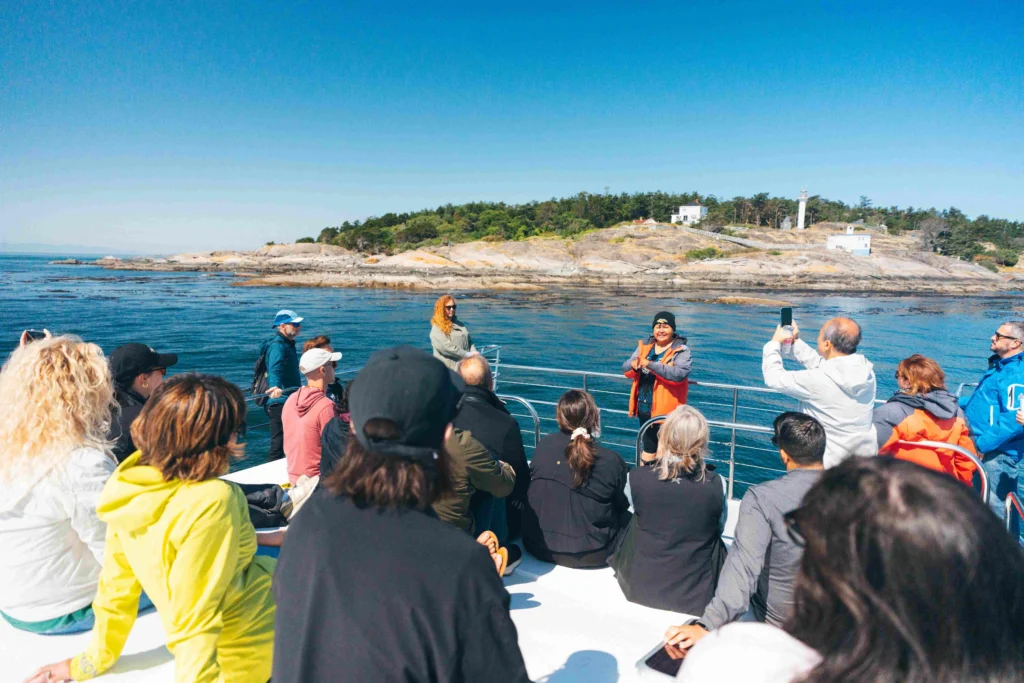
“One finding we did not expect was the power of inclusion,” De Visscher said. “The more diverse the voices involved in creating and delivering an event, the greater the outcomes and impact.” Government, Indigenous voices, DMOs and universities all amplify what an event leaves behind.
“The more diverse the voices involved in creating and delivering an event, the greater the outcomes and impact.”
Sustainability, meanwhile, turns out to be inseparable from the wider legacy question rather than a parallel workstream. “Legacy and sustainability work hand in hand,” she said. “You cannot have one without the other.”
From data points to framework
The next task is translation. Three years of research has produced thousands of data points and, so far, no single tool that partners can pick up and use.
“The next step is to turn the insights and thousands of data points into a framework that Team Canada partners can use,” De Visscher said. That work runs over the coming months, after which Destination Canada intends to share it more widely. Interest is already coming from destinations, media and partners well beyond Canada – the knowledge base is Canadian, but the questions it answers are not. Destinations everywhere are under pressure to prove the industry’s value to governments and stakeholders.
The other surprise, she said, was how much sustained effort legacy demands. “The level of intentionality needed was surprising, especially how early legacy needs to be engineered.” And it does not hold on its own: “Sustained effort is also needed to maintain impact over time; you cannot simply let it sit, or it will fade.”
As for the market itself, De Visscher is bullish. “Canada is doing well. Our values are resonating: being open to people and cultures, and offering a safe environment, are important to business events today.” The international pipeline, she added, is especially strong.