

Guide to Helsinki
For event organisers
Getting from airport to city centre
Venues and Hotels
Finding the venue for you ▶
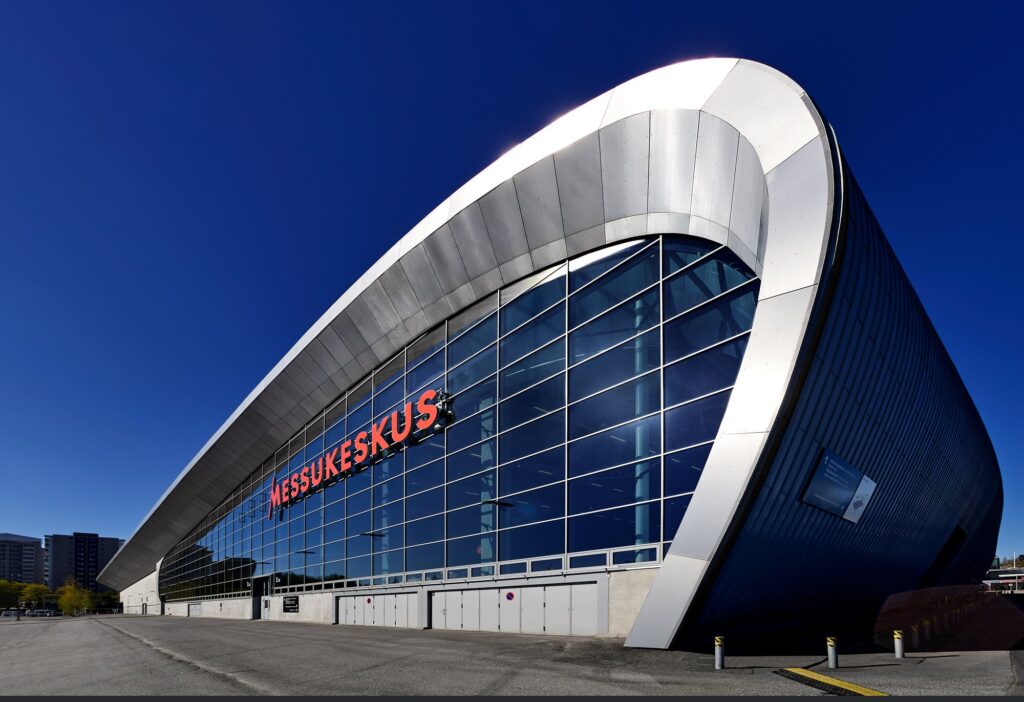
 Photo: Messukeskus
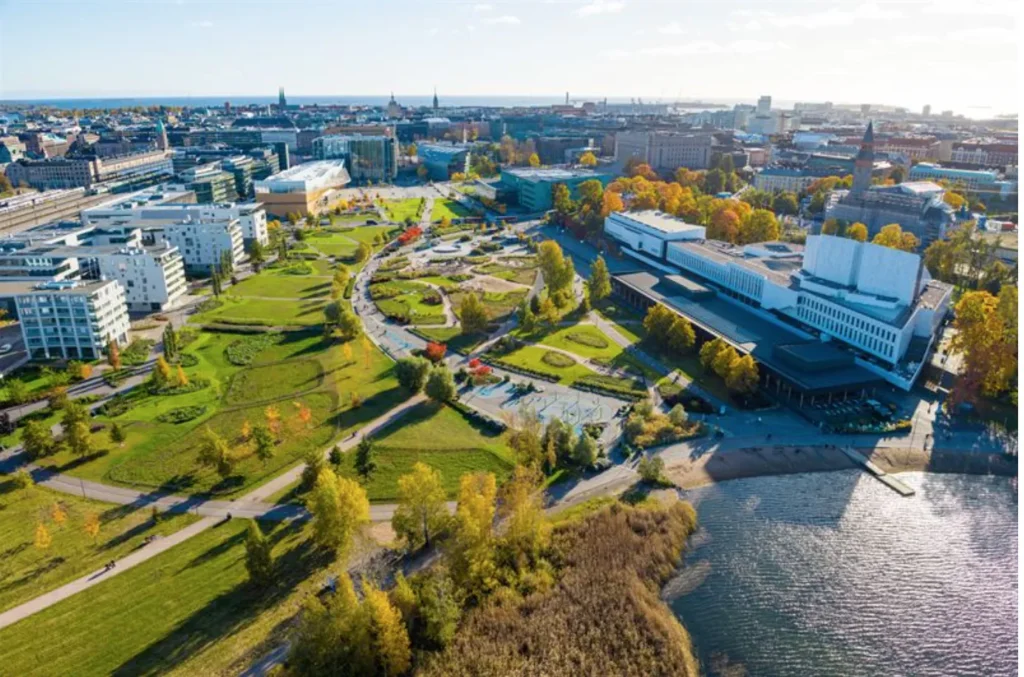
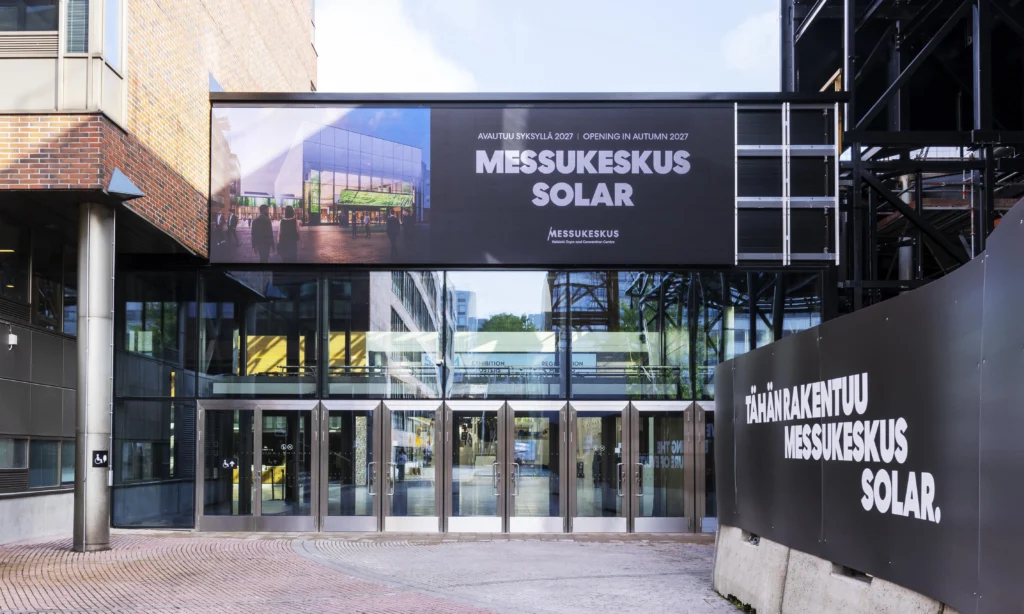
 Messukeskus Helsinki Expo and Convention Centre
Capacity: 50-4,400. Ideal for: large congresses and exhibitions. Finland's largest event venue, with 58,000sqm across seven halls, and a 4,400-seat auditorium. Five minutes from the city centre.
Read more >
Musiikkitalo – Helsinki Music Centre
Capacity: 1,693. Ideal for: large conferences and gala events. State-of-the-art concert hall in the city centre with world-class acoustics and…
 Photo: Alex Dumi
 Scandic Park Helsinki
Capacity: 550. Ideal for: conferences and corporate events. Business-oriented hotel adjacent to Finlandia Hall, with 16 meeting rooms, bay views…

Crowne Plaza Helsinki–Hesperia
Capacity: 1,500. Ideal for: conferences, congresses and gala dinners. Nordic Swan-certified conference hotel with 15 meeting rooms, a 518sqm Hesperia…
 Photo: chengcheng huang
 Kulttuuritalo – Helsinki House of Culture
Capacity: 1,700. Ideal for: conferences and galas. 1958 landmark with a 1,700-seat Aalto Hall, ten meeting rooms and an in-house…
Finding the hotel for you ▶
 Photo: Solo Sokos Hotel Torni
 Solo Sokos Hotel Torni
Rooms: 147. Opened in 1931 as Finland's first skyscraper, with Art Nouveau and Art Deco rooms, and a rooftop bar.
Read more > Photo: Solo Sokos Hotel Pier 4
 Solo Sokos Hotel Pier 4
Rooms: 164. Luxury wooden-architecture waterfront hotel on the Katajanokka shore, with 360-degree rooftop sea views.
Read more > Photo: Solo Sokos Hotel Torni
 Solo Sokos Hotel Torni
Rooms: 147. Opened in 1931 as Finland's first skyscraper, with Art Nouveau and Art Deco rooms, and a rooftop bar.
 Photo: Solo Sokos Hotel Pier 4
 Solo Sokos Hotel Pier 4
Rooms: 164. Luxury wooden-architecture waterfront hotel on the Katajanokka shore, with 360-degree rooftop sea views.
 Photo: Toivo Torkki
 Lapland Hotels Bulevardi
Rooms: 181. Luxury boutique hotel with Lappish-themed rooms, private saunas and the Kultá restaurant serving Nordic cuisine.

Radisson Blu Seaside Hotel
Rooms: 348. Mid-range cost eco-certified business hotel with sea views, two restaurants and strong links to the centre. 15 meeting…
Stats you should know
66%
of congress organisers said they would host in Helsinki again
93%
of organisers rated their overall congress organisation experience as "good" or "excellent"
83%
of delegates said their experience made them more likely to return to Finland for a holiday
Latest news from Helsinki



How hands-on is the CVB?
The Helsinki Convention Bureau (HCB) is the city's official convention bureau, operating under Helsinki Partners, the city's international marketing and investment organisation. It is the primary point of contact for international congress and association event organisers, offering a comprehensive package of free-of-charge support services. The bureau sits within a wider ecosystem that includes the City of Helsinki itself, which can extend official hospitality to qualifying events. Services Helsinki provides:
Bid support – assistance with bid books, promotional materials and preliminary venue and hotel bookings, tailored to each congress
Venue and supplier matching – connections to venues, DMCs, PCOs and local suppliers across the meetings industry
Delegate boosting – custom-printed postcards for congresses over 200 participants; free photo and video assets via the Helsinki Material Bank
On-site tourist information – available on request for congresses with over 1,000 accredited participants
City hospitality – official receptions at City Hall's Banquet Hall, hosted and funded by the City of Helsinki, for up to 1,200 guests on weekday evenings
Academic/industry connections – introductions to local networks in research, academia and business relevant to the congress
Legacy and sustainability – the Event Legacy Programme Toolkit and Sustainable Meeting Guidelines provide ready-to-use frameworks for organisers
FAM trips and site visits – tailored familiarisation programmes for organisers and agency partners
At a glance
60%
of congress organisers said the event held greater value because of the location
95%
of congress participants rated Helsinki 4 or 5 out of 5 (with the score of 5 climbing from 57% to 72% since 2023)
Key sectors in Helsinki
Healthcare
A leading healthtech hub anchored by top universities and Finland's fully digitised national health data. The sector comprises over 440 healthtech startups nationally.
Deeptech
Fast-growing ecosystem spanning robotics, advanced materials and cybersecurity, with major corporates including Wärtsilä, KONE and Nokia driving R&D in partnership with local universities.
Clean energy
With 94% of Finland's electricity generated from emission-free sources, Helsinki has a strong cluster network in hydrogen and smart energy, supported by progressive national energy policy.
Quantum technology
Nearly 60 years of research underpins Helsinki's quantum expertise, with organisations including Quantum Technology Finland and the Finnish Quantum Institute driving work in quantum information and materials.
Artificial intelligence
Home to over 300 AI companies and the former base of Europe's largest private AI lab (Silo AI, acquired by AMD in 2024), Helsinki leads the EU in generative AI adoption, with 66% of Finnish companies using AI tools against an EU average of 37%.
Foodtech
A growing ecosystem focused on circular food systems, with innovations ranging from air-based protein production to automated vertical farming.
How sustainable is Helsinki?
Helsinki ranked first in the Global Destination Sustainability (GDS) Index in both 2024 and 2025. In 2025 it became the first large city in the world to receive the Green Destinations certificate, and in 2026 was awarded the national Sustainable Travel Finland label. Finland ranks first in the UN Sustainable Development Report with a score of 86.35 out of 100.
94% of Finland's electricity comes from emission-free sources, with over half of Helsinki's specifically from renewables. Helsinki is targeting carbon neutrality by 2030 and net zero by 2040. On the venue and hotel side, 100% of major conference venues hold environmental certifications including ISO 14001, and 88% of hotel rooms carry third-party sustainability certification.
Getting around sustainably is straightforward: nearly 50% of all trips in Helsinki are taken on foot or by bike across 3,200km of cycling routes, and much of the public transport network runs on renewable energy.
The main challenge is access. Almost all international delegates fly in, making the flight the single biggest carbon cost of any Helsinki event. Visitor numbers also concentrate heavily in summer, putting pressure on residents – Helsinki is actively working to spread events across the year to address both issues.
From Helsinki's perspective, the main challenge is seasonality. Visitor numbers increase significantly in summer – when leisure travel and the majority of international congresses coincide. While not strictly "overtourism", this concentration creates pressure. Residents broadly view tourism positively, but spreading events across the year is both a commercial goal and a quality-of-life one – and something the CVB reports it is actively working on.
1st in the world
A snapshot
94%
of Finland's electricity is generated from emission-free sources
100%
of major conference venues in Helsinki have environmental certifications
88%
of delegates get around by walking, cycling or public transport
Local projects organisers can get involved in
Entertaining your delegates in Helsinki
 Photo: Roberto Carlos Cortes
 Helsinki Cathedral
Finland's most recognisable landmark – a neoclassical Lutheran cathedral with a distinctive green dome overlooking Senate Square. Free entry.
Read more > Photo: Claus-Peter Englhardt
 Löyly Helsinki
Award-winning modern waterfront sauna on the Baltic Sea in Hernesaari, with wood-fired and smoke saunas, a sea plunge pool and a Nordic restaurant. Book in advance.
Read more > Photo: Risto Tuomarla
 Finnish Parliament
Finland's 1931 neoclassical parliament building, open for free guided tours offering a rare inside view of Finnish governance. Book in…
 Photo: HAM Helsingin taidemuseo
 HAM Helsinki Art Museum
Helsinki's civic art museum with 10,000 works including Tove Jansson's frescoes and rotating contemporary exhibitions.
 Photo: N G_MISSOURRY
 Kiasma – Museum of Contemporary Art
Finland's leading contemporary art museum in a landmark Steven Holl building, with 8,500 works, rotating exhibitions and performances.
 Photo: Natural History Museum
 Finnish Museum of Natural History
Finland's natural history collections near Parliament House, spanning geology, flora, fauna and Baltic ecosystems. Entry fee applies.
Things to be aware of in Helsinki
Helsinki is perceived as a very safe congress destination. Around 90% of Helsinki residents report feeling safe in their own neighbourhoods. Delegates can expect a low-crime, high-trust environment; in a Reader's Digest lost wallet study, 11 of 12 wallets dropped in Helsinki were returned – the highest rate of any city tested.
25.4
ranking on the Numbeo index
Placing Helsinki among the safest cities in Europe. Comparable to Prague, Seoul and Copenhagen.
90%
of Helsinki residents
Report feeling safe in their own neighbourhood.
11 out of 12
Wallets were returned in a Reader's Digest "Lost Wallet Test" – the highest rate of any city globally.
2nd
Place in ranking of most peaceful and stable countries in the world, according to the Fragile States Index 2024.
Useful Information
Visas – EU, EEA and Swiss citizens do not require a visa and can move freely within the Schengen Area. Visitors from outside the EU/EEA will likely need a visa or residence permit depending on nationality and length of stay. Non-EU visitors should also note that the EU's Entry/Exit System (EES), which registers biometric data at Schengen borders, has been operational since October 2025. Full guidance at migri.fi.
Currency Euro (EUR). Cards and contactless payments are accepted almost universally – in taxis, cafés, market stalls and restaurants.
Electricity Two-pin Europlug. UK, US and many Asian visitors will need an adaptor.
Time zone Two hours ahead of London in summer, one hour ahead in winter; seven hours ahead of New York (EST); six hours behind Tokyo.
Language Finnish and Swedish are both official languages. English is widely spoken across Helsinki, particularly in hotels, venues and tourist areas.
Emergency services 112 for all emergencies.

Public transport in Helsinki
Getting to Helsinki
Helsinki Airport connects the city to over 145 direct destinations, with the city centre reachable in 30 minutes by train.
Getting around
Helsinki's compact geography means most congress venues, hotels and attractions are within a 20-minute radius of the city centre, and much of the centre is walkable. Public transport – covering tram, metro and bus – runs at frequencies of between two and ten minutes across the network. Tickets and journey planning are handled through the HSL app.
The city operates 3,200km of cycling routes, and city bikes are available from April through October via a dedicated hire scheme. Around 88% of delegates at Helsinki congresses report getting around by walking, cycling or public transport.
Helsinki also sits at the centre of a busy Baltic ferry network. Up to 20 daily departures connect the city to Tallinn in around two hours, with additional services to Stockholm and a year-round route to Travemünde in Germany.
Bus serves
85%
of all central municipalities
Metro runs
Every 5 minutes
During peak periods
Trains/ferries run
Every 15 minutes
During peak periods
When’s the best weather window?
Cold climate. The best periods are spring and start of summer.
For event organisers, the two most practical windows are May to June – mild temperatures, long daylight hours and the city at its most energetic before peak summer tourism – and September to October, when the summer crowds have thinned and conditions remain comfortable before the onset of winter.