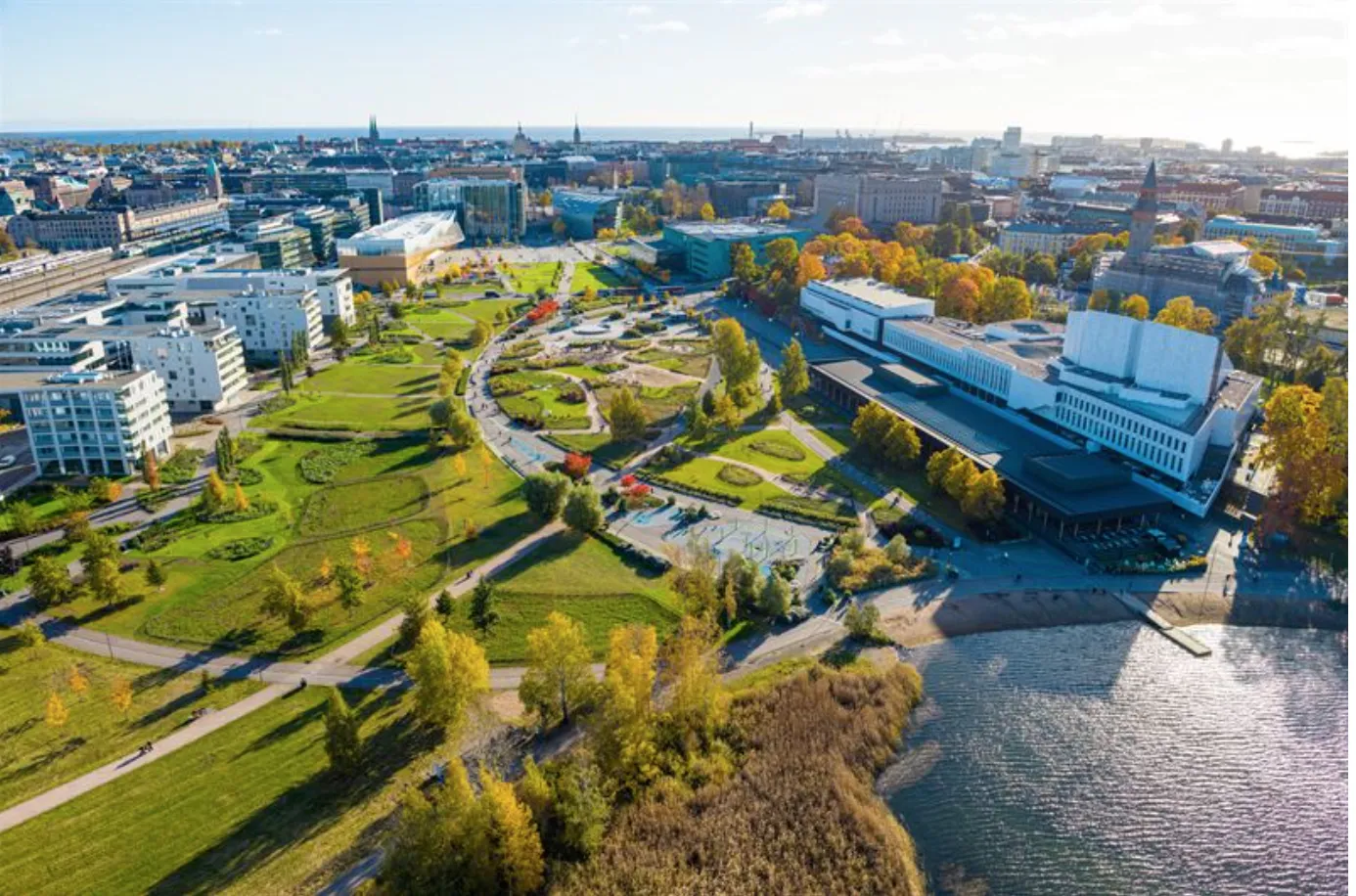
Ute Jacobs, managing director of Estrel Berlin, has spent three decades at the venue. She talks to CMW about its step-by-step expansion, the new Estrel Tower, sustainability and what a planned arena means for Berlin’s congress market
When the Estrel opened in the mid-1990s, Neukölln was not where anyone expected Europe’s largest hotel to be built. What did you and Ekkehard Streletzki see in that site that others did not?
Back in the 1990s, Mr Streletzki was frustrated by high hotel room rates in Berlin and wanted to offer an alternative. The slogan was “Four stars for the price of two” – the size of his hotel made it possible to offer affordable room rates.
Several factors favoured the location, including its excellent public transport connections, with bus and S-Bahn services directly outside the hotel, and the opportunity to acquire additional land next to the hotel.
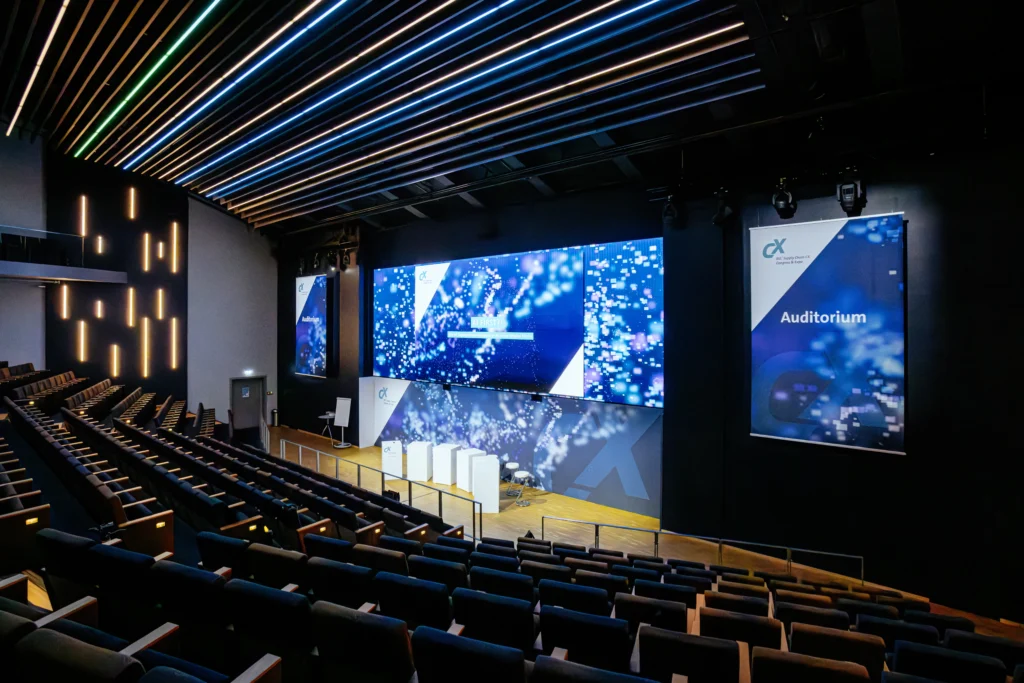
Looking at the milestones since – the show theatre in 1997, the convention centre in 1999, Convention Hall II in 2015, the Auditorium in 2021 – was there a master plan all along, or has each expansion been a response to what the market was asking for at the time?
There was no master plan. Step by step, we developed ideas to expand the hotel’s range of services and amenities.
To attract guests from Berlin and across Germany to the Estrel, a former warehouse on the neighbouring property was converted into a show theatre, where the live show Stars in Concert premiered in September 1997. The show has been running there ever since and is now one of the longest-running productions of its kind in the world.
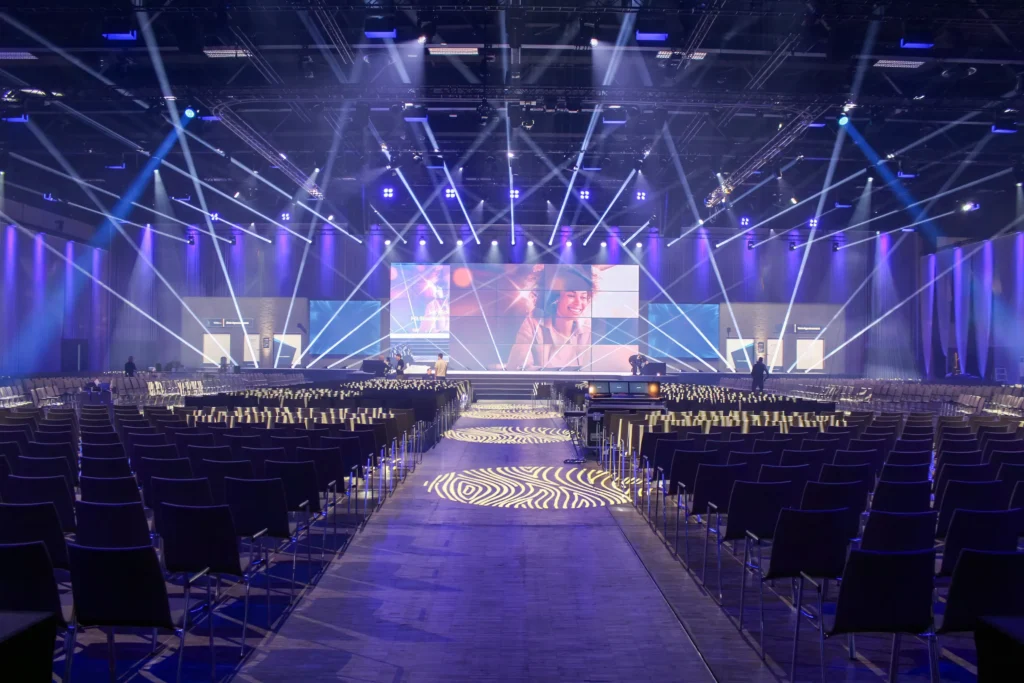
When the Estrel Hall could no longer meet the growing demand for conference space, Mr Streletzki planned and built Convention Hall I, modelled on American convention centres. Growing demand for larger conference spaces then led to the planning of Convention Hall II, and later to the planning and realisation of the Auditorium.
You have marketed Stars in Concert since the very beginning, reportedly signing your first Elvis after seeing him perform in Las Vegas. Is there a story behind that trip, and what does entertainment bring to a congress venue that meeting rooms alone cannot?
The trip to Las Vegas was planned to establish a partnership with the entertainment company Legends in Concert, and to find talented performers for the Estrel’s show theatre.
Beyond the significant PR value, the show creates several synergies. These include packages combining hotel stays with show tickets, more business for the restaurants and bars before and after the show, and family and Christmas parties.
For galas at the Congress Center, our shows are often booked exclusively as part of the entertainment programme. The Stars in Concert team also creates customised entertainment concepts for individual events.
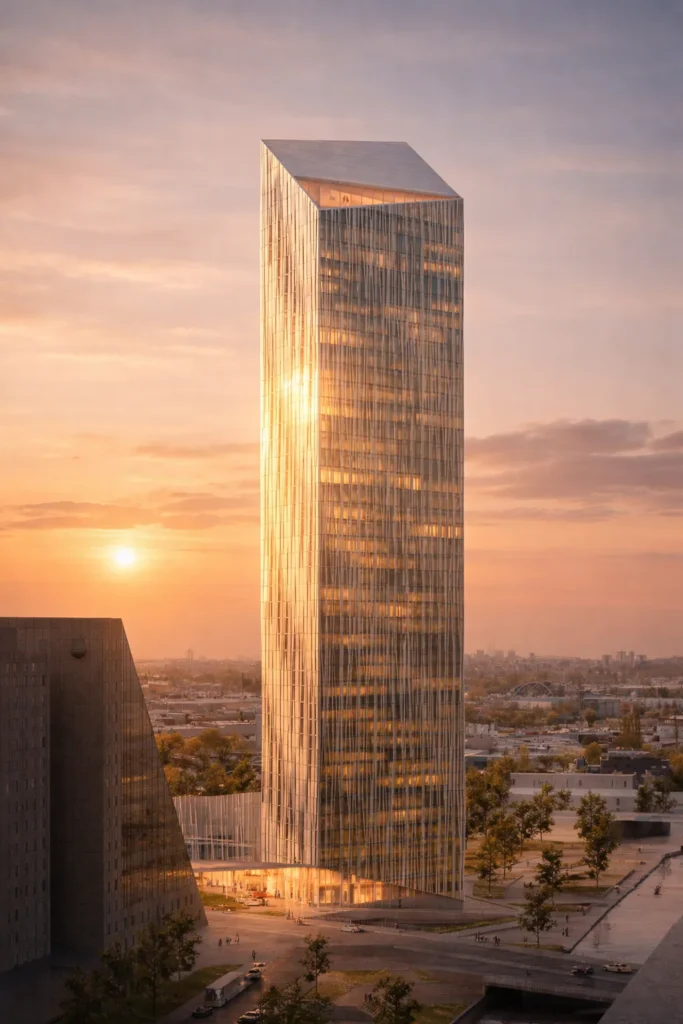
The Estrel Tower is a different proposition from anything the Estrel has built before – 522 rooms and serviced apartments, 3,800 sqm of event space and 9,300 sqm of coworking in one building. What is the thinking behind that mix, and who is it designed for?
Combined with the existing hotel, the Tower allows our major clients to accommodate all their participants in one location, rather than across several different hotels. The sheer number of rooms supports the hosting of international congresses at the Estrel.
At the same time, we want to attract new clients who are looking to host small and mid-sized events of the highest standard. We would like to attract companies from the tech sector, start-ups and the creative industries to the Tower.
The hotel’s proximity to the airport also makes it particularly well suited to business meetings. Individual guests and business travellers are also part of the target audience.
“The Tower is primarily intended for C-level meetings without a large accompanying trade exhibition”
How did the pandemic change the brief? The Tower was conceived well before 2020, so what was redrawn once you understood how meetings and work had shifted?
During the pandemic, the number of hotel rooms was reduced to make room for additional office space.
Sky Spaces and a grand hall for 1,000 give planners something genuinely vertical to work with. How do you expect organisers to use a congress venue that goes up rather than out?
The Tower is primarily intended for C-level meetings without a large accompanying trade exhibition. If a large event space is needed, the event is more likely to be held in the existing Estrel facilities.
The building is targeting LEED Platinum and sits within your wider climate-neutrality goal. Is sustainability now a deciding factor when international associations choose Berlin, or is it still a nice-to-have on the RFP?
Sustainability is important to many international associations when choosing a congress destination, and is therefore a relevant competitive factor for Berlin. However, it is not the only criterion.
Accessibility, suitable venues, hotel capacity, costs, academic and business networks, and support from the destination are also important. Sustainability is particularly relevant to associations because many organisations have their own ESG, climate or sustainability goals.
“Our concept also brings new, major clients to the city”
Berlin already has the CityCube and the Messe, and Germany’s events sector has faced flat budgets and pressure on public funding. What does an investment of this scale do for the city’s position against Barcelona, Vienna and Copenhagen – and does it grow the market or simply redistribute it?
With its combination of hotel, congress facilities, the Tower and entertainment, the Estrel complex is unique in Europe and has many advantages over traditional convention centres. On the one hand, there is competition for existing business, but our concept also brings new, major clients to the city.
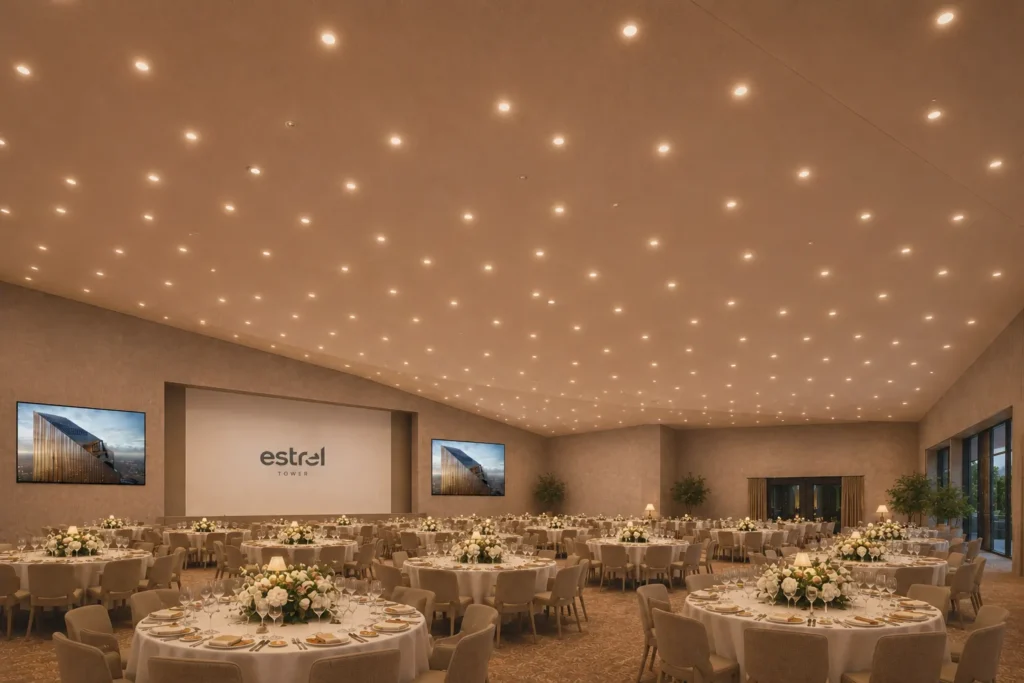
Beyond the Tower, there are plans for a multipurpose hall for up to 10,000 guests and a public park, taking Estrel World towards a capacity of 25,000. How far into the future are you already planning, and what does that mean for the Neukölln around it?
The Arena is scheduled to open as early as 2030 and is designed for major concerts and large-scale events. The Estrel complex will also bring greater attention to the entire district and attract further investors to the area.
“The Estrel is not part of a hotel chain. It is family-owned and operated”
Thirty years in the same building, in an industry where directors typically move every three or four. What has kept you at the Estrel – and what will it feel like to walk into the Tower on opening day?
Being able to help shape the ongoing development of the property, and to bring my ideas to the table, are the reasons I have been with the company for so many years. Having the opportunity to build and lead a great team is another.
These factors motivate not only me, but are also reflected in the exceptionally long service of many of our employees, which is quite unusual in the hospitality industry.
And, most importantly, the Estrel is not part of a hotel chain. It is family-owned and operated, which allows us to work closely together and make decisions quickly and efficiently.