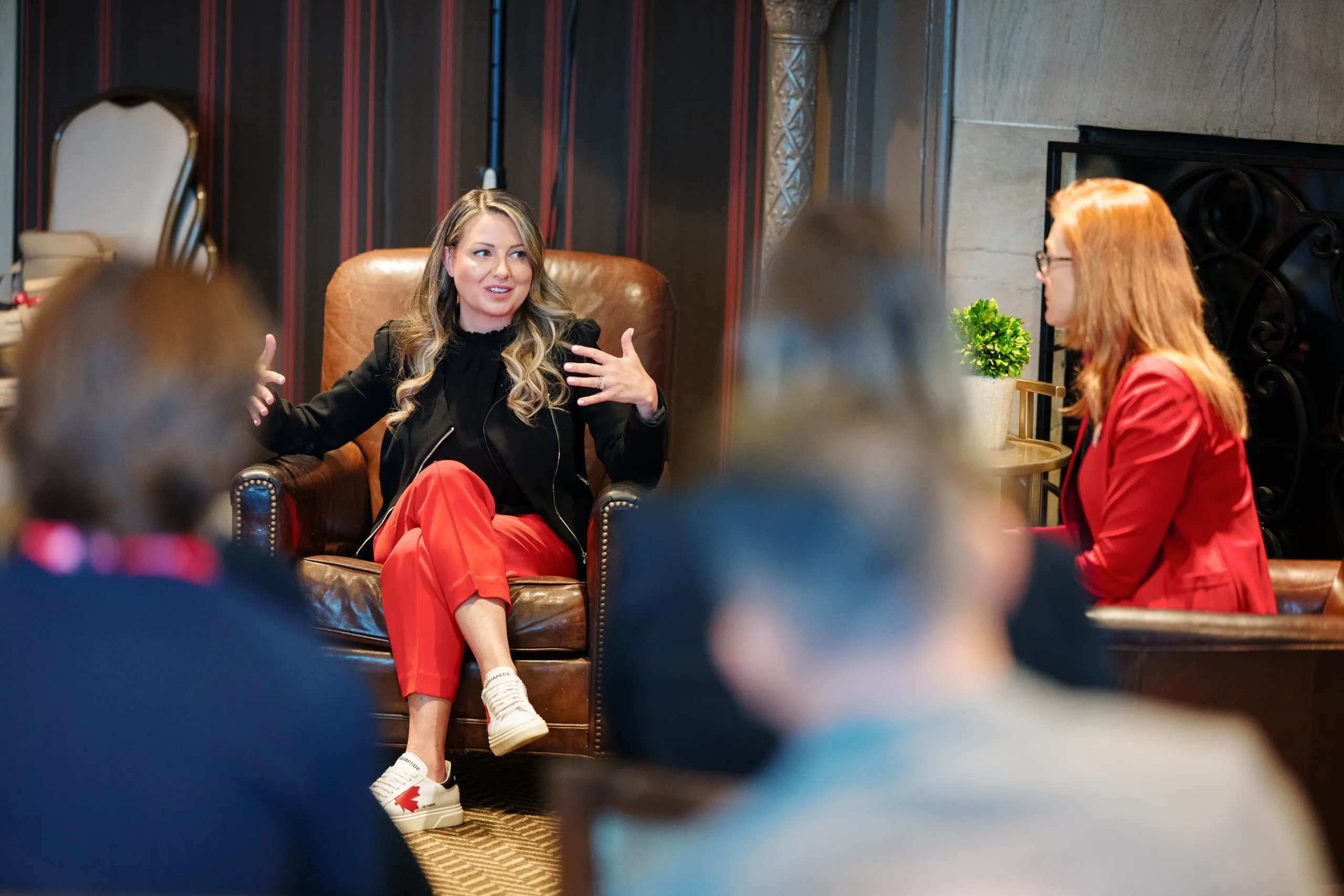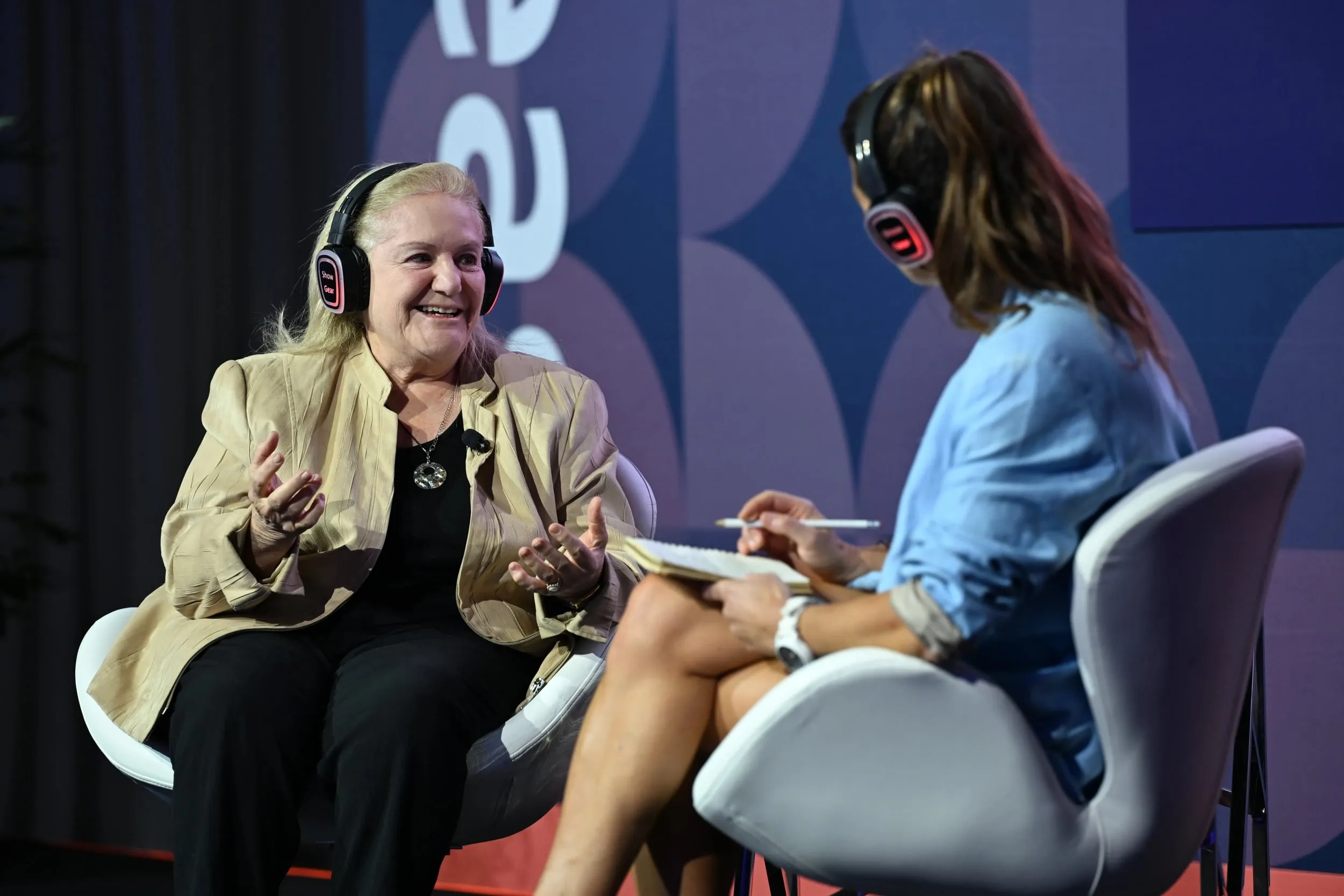
She learned to fly at 38, took up endurance rallying in her 50s and built a house from scratch in the Outer Hebrides. Iain Stirling sat down with Claudine Bloom to talk preparation, teamwork, risk – and why she never leaves home without common sense.
To much of the business events industry, the Bloom name means IMEX. Claudine Bloom is married to Ray Bloom, founder and chairman of IMEX Group, and is mother to IMEX Group CEO Carina Bauer. Yet by her own account she has never been involved in day to day running of the shows.
Her own story is something else entirely. When she spoke to IMEX staff at an International Women’s Day session, her tales of cockpits, classic cars and Siberian dirt roads made such an impression that the team invited her to the show. CMW caught up with her at IMEX America in Las Vegas.
Iain Stirling – You learned to fly in your late 30s and started endurance rallying in your 50s. How did it all begin?
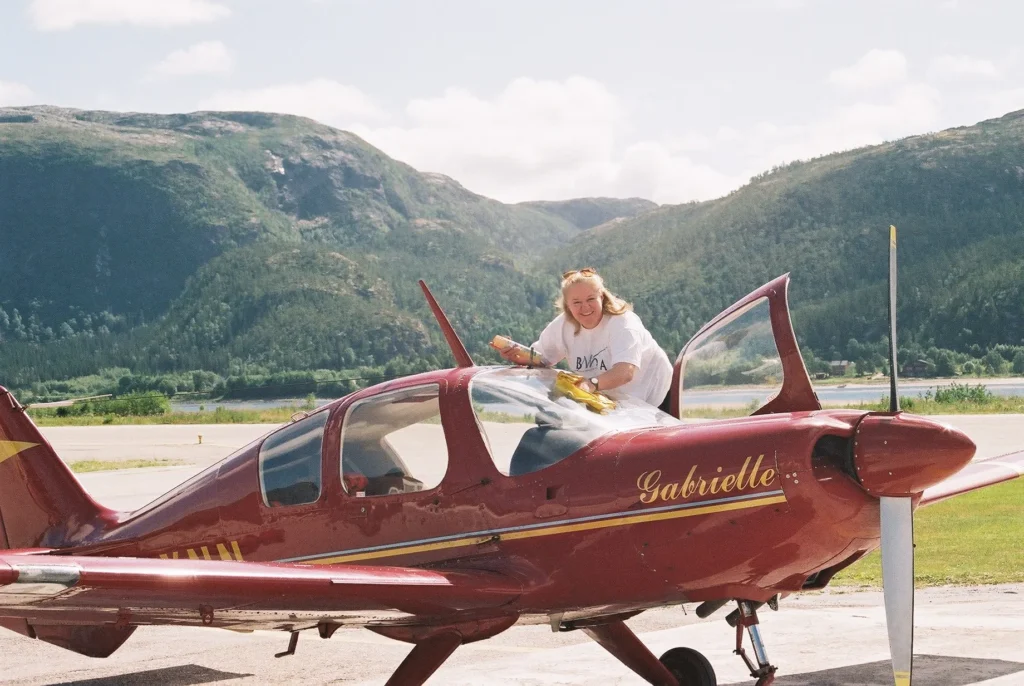
Claudine Bloom – It was completely by accident. I had a young family – the children were ten and 13 – so it was school runs and everything that goes with that. Then one lovely May day I was in the garden and saw a small aeroplane overhead. I’d travelled on aeroplanes, of course, but I thought: where is it going? What’s it doing? What’s it all about?
I booked a trial lesson and thought, why didn’t anyone tell me? I was truly hooked. 37 years later I still am.

IS – Was learning hard?
CB – Extremely hard. I was juggling a young family, juggling life really. Flying takes a lot of concentration and dedication – it’s like rubbing your tummy and patting your head. There are about five million bits of information, abbreviations and new vocabulary. At that age my brain was also carrying a lot of the excess baggage of life, and I had to put that to the back of my mind to get through the course. Ninety-nine per cent of us aren’t born natural pilots or pianists. We have to learn it the hard way.
IS – Did you have a technical or maths background?
CB – Not at all, and that was the challenge. I had to learn to study again. There were six written exams – there are nine now – all the books, the questions. RTBQ – read the bloomin’ question! I didn’t have any of that background. I just learned it and went on from there.
IS – Where did flying lead?
CB – It opened up a world of possibilities, adventure and opportunities. I met unbelievable people from all walks of life fighter pilots, admirals and the like. I was invited onto a Royal Institute of Navigation committee to explain what it was like to be a pilot starting out, and there I worked with Ann Welch, an Air Transport Auxiliary pilot from the Second World War. Her husband had been in Colditz, and together they re-started the gliding movement in the UK. She took me under her wing, and I worked with her on that committee for ten years.
That gave me confidence. What did I know about aeroplanes, or gliding, or anything? But I embraced it and didn’t overthink it. Whatever came along, I would try. I always like to keep my feet on the ground. I assume I don’t know anything, and then I learn. I aim for the highest standard; I don’t know how far I’ll get, but I’ll try – and I’m happy where I land.
IS – You also built an aeroplane.
CB – The first aeroplane I bought (a 1945 vintage Piper Cub) wasn’t in good condition, so an engineer rebuilt it for me. Through that process I learned how an engine is put together and how an aeroplane is built, and that gave me the desire to build one from scratch. It was a single-seater – really an educational tool for me. I’m not an engineer, but I watched, I learned and I built it. It was inspected and signed off, and it flew, although I wasn’t allowed to do the first flight. I already had two other aeroplanes, I didn’t need another toy, so I donated it to a flying charity.
IS – How did rallying come about?
CB – Again by chance. I saw an Austin-Healey outside a hotel and thought I’d like one, but it was too expensive, so I bought an MG Midget and started doing UK historic road rallies. After 10 years I got bored and wanted something more exciting. I saw a plaque on a wall for the Peking to Paris and thought, what’s all that about? The next event was three years away. So – what did I need? A car. Then I needed to prepare the car. An competitive endurance rally not a tour Could I do that?
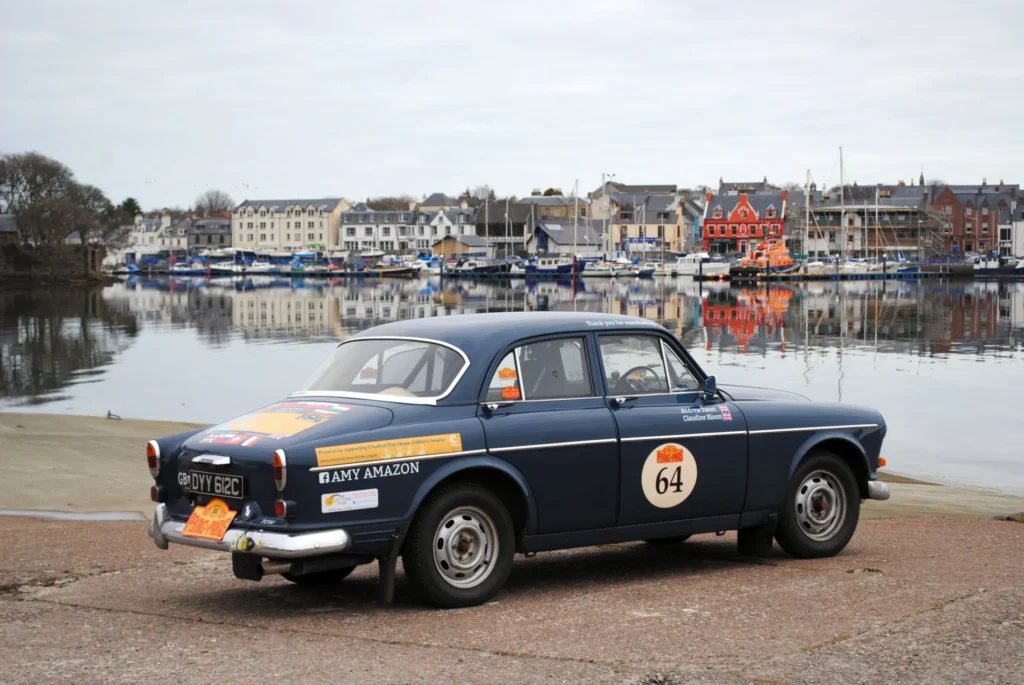
We found a car in a barn in Wales. A 1965 Volvo Amazon. The engineer who had rebuilt my aeroplane helped, he stripped it down and we built it up together to the regulations set by the rally organisers. The event is 36 days from Peking to Paris, through Mongolia, Siberia and Russia, on dirt roads with no tarmac. There were around 115 classic cars, all pre-1980 and all to factory specification. I thought we’d finish 60th or 70th. We came 11th, second in class, with a gold medal.
I’ve now done 15 endurance rallies around the world; Africa, the Far East, Europe, New Zealand, Alaska to Mexico. The most recent was the Nordic Challenge this summer. After every rally the car is completely dismantled and rebuilt for the next one.
IS – How do you and your co-driver divide the work?
CB – Preparing for Peking to Paris took three years, and in that time we tried every permutation. He’s stronger, he can handle the car and I trust him implicitly, so he drives. I don’t get car sick and he does – if he reads a map on his lap, he’ll be sick – so I navigate . When we build the car, I do the interior, and he does the engine and the exterior.
IS – What has rallying taught you about teamwork?
CB – It is unbelievably important. He has to trust me to give him the right instructions, and I have total trust in his ability to drive. In the car we never argue and never raise our voices, because that changes the dynamic, you get upset and likely to make mistakes . Getting the navigation right and driving the car properly is vital – we’ve seen a lot of horrors on these rallies. So, everything is calm. If I don’t know something, I ask.
In some ways it’s like an orchestra. There’s a conductor, a first violin and everyone else, and if the team hasn’t gelled and practised, one mistake from the drums and the whole thing doesn’t work. It’s the same in a car or an aeroplane.
IS – Preparation seems to run through everything you do.
CB – It’s so important – in these disciplines and, I think, in a show like IMEX. You hope things are going to go right, but you don’t know what could go wrong, so I try to minimise the risks. Before flying I plan meticulously the day before, even if it’s just round the block, because the weather and the conditions are different every day. Sometimes I wake up and think, not today.
I’m very meticulous with paperwork – my co-driver isn’t – and I want everything logged in my head so that if something surprises me, I’m prepared. And I actually dislike technology, because instruments are man-made and they can go wrong. I’m much happier with basic flying. For someone like Ann Welch, who flew in the war, that was the basic training.
I tell everybody: never leave home without common sense.
IS – Have you had moments when the preparation wasn’t enough?
CB – A couple of years ago we did a rally in Madagascar. There are no roads to speak of – it was dreadful – we couldn’t take our own car and had to hire one. It broke down in a dry riverbed that was like quick sand. It was getting dark, all the other cars had gone, there was no mobile signal, we didn’t have a sat phone and no way of contacting anyone. Then, from nowhere, we were surrounded by bandits with machetes.
We held firm and sat in the car. They took what they wanted. I just thought, whatever happens, just let it end. After three hours the rally organisers came back to look for us and pulled us out. I didn’t plan for that – but those things happen.
In Mongolia, young lads on horseback had strung a rope across a rickety bridge to stop cars and rob them. My co-driver wanted to just drive straight through. I said, no, think – what are the alternatives? We had a lot of knick-knacks in the car, so we cracked the windows open and threw them out as we went through. The young lads dropped everything to grab them, and we were away. It’s about understanding the culture and how people think.
On rallies through remote parts of the world, I always get the numbers of all the embassies and contacts before I go. I’ve never needed them, but it’s just in case. I never think, I won’t do this because it’s risky. I minimise the risk, see the possibilities and use common sense.
IS – And you built a house too.
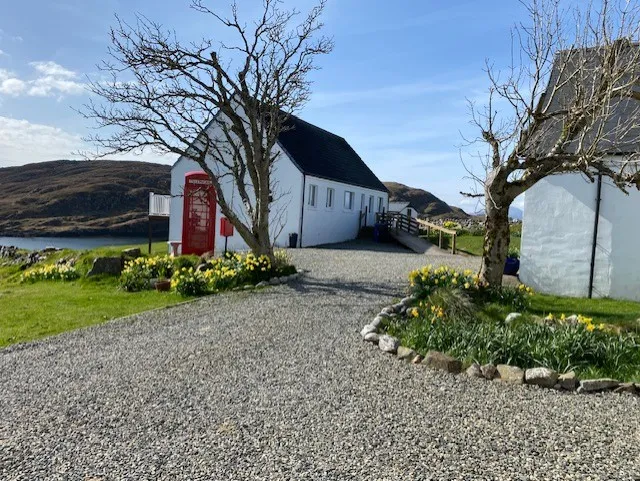
CB – Around 2004 I was doing a lot of walking in Scotland, and the engineer I knew had moved with his family to the Outer Hebrides. It felt like a throwback to another age – remote and desolate. It still is. I saw a house advertised for £5,000 and thought I’d renovate it, but I didn’t understand the system and lost out on more than 20 houses. Then I thought, I’m not going to let anyone tell me I can’t do this.
I ended up with the tenancy of a croft (a parcel of land) and asked, what do I do now? He said, you build a house. Being so remote, you can’t get anyone to help, so we asked the planners whether we could submit our own drawings. They said yes, as long as we followed the Scottish Building Regulations. I bought a digger – as you do – and we started. Neither of us had ever built a house. It took five years, partly because the wind damaged it during the build. Everyone said that was it, finished. I said no way- I don’t give up that easily. We propped the roof up, took the walls down and started again.
We did everything, including the plumbing and electrics. At the end, the building control officer came to give me the Completion certificate. I asked if he wanted to check the house . He said no – it was perfect – and he now uses it as an example for self-builders. There’s a barn there too, which houses the rally cars.
IS – What would you say to events professionals who feel it’s too late to start something new?
CB – It’s never too late to start, whatever your age. Don’t dwell on it too much. It’s very easy to take the easy way out by saying it’s too difficult. We’re only on this planet for a nanosecond, so let’s go for it. Not every opportunity will be for you, but some might be. Nothing’s impossible. If they’ve gone to the moon, it’s possible.
IS – Our industry has a very strong female workforce. What advice would you give women who want to claim their space and reach the top?
CB – Women have a lot to offer. They tend to concentrate on the minutiae, which perhaps men often don’t, and they can feel undervalued for that. But everyone’s different. They need to go out there and put themselves forward.
IS – You’ve watched IMEX grow from the start. What has stayed the same?
CB – I’ve seen it built up from the beginning, and technology has come into it in a big way, along with the effort that goes into the show. But it’s not only Ray or Carina – it’s the whole team. The staff are like our family, and the exhibitors and visitors are like our guests. That has never faded. We have staff who have been with us for more than 20 years. We value them, give them the opportunity to flourish and to share ideas, and tell them never to be scared to ask a question. So yes, it’s changed, but it’s still the same.
From the outside, what strikes me about the business events industry is that the people are different from those in other industries. They all help each other and they’re trying to bring the new generation in. I don’t know all the nuances, but it’s fascinating.
IS – Are you competitive?
CB – I’m competitive because I want to do better for me, not because I want to win. Some people will do anything to win a rally, and I don’t want to join the all or nothing squad – I’ve seen some horrific things. I minimise the risks because I want to get from A to B, preserve the car so I can enter the next rally. And I hate not completing something. Once I start I have to see it through to the end.
IS – Did anyone try to talk you out of it?
CB – My mother was very risk averse. She lived in Geneva, and when she saw me with my head in the flying books she said, you’re still doing that? You’re going to die. Before one exam she told me, for the first time ever, I hope you don’t pass. But when I got my pilot’s licence she was very proud to tell people I was a pilot.
It’s about not letting external factors change what you want to do. I’ve tried not to pass that worry on to my own children – though I worry like hell about what they’re doing.
Before that little plane in the sky, I wouldn’t say boo to a goose. Now I quite often do.
IS – Does Ray share your love of adventure?
CB – His passion is football. When I found my passion, I understood his, so I let him enjoy it – even though it doesn’t mean much to me. Don’t tell him! I live football through him and he’s lived the rallies through me. The family came to meet us in Paris at the end of Peking to Paris. Rallying takes you through countries in a way a tourist never does and it made me want to see more of the world – driving it myself.
IS – What’s next?
CB – I should have been on a rally in France right now, but it clashed with IMEX America. There’s a young lad in Scotland who works on the North Sea rigs, who I spotted as being a bit different from the crowd and brought in to help build my second rally car. So, I gave my place to Chris, and he’s doing the France rally with my co-driver as we speak.
Next June it’s Bavaria for two weeks, then the United States next October for the 28 STATES RALLY – a whole month Boston to Savannah. It takes place just after IMEX America so I plan to hire a car, drive Route 66, then meet AMY Amazon, my rally car, in Boston.
The body is getting older, and I love a cup of tea in front of the TV or with a newspaper. But I know that if I sit down, I’ll never get up again. So I just keep going.