The eventual passage of the current financial crisis is going to leave a changed meetings industry in its wake, and one area that will likely feel a great deal of impact will be the financial equation.
The results, while not entirely predictable at this point, will be of considerable interest to both convention centres and their clients as primary players whose decisions and circumstances will ultimately impact a lot of other industry suppliers and participants as well.
Nobody really knows how all this will play out. But there are already some key factors that can at least narrow the range of possibilities. They include:
- Most governments are now financially strapped and likely to be living with the hangover resulting from lower revenues, stimulus funding and increasing service expectations for some time. This means they are going to be less inclined to make investments in anything they don’t see as an urgent priority (which may or may not include convention facilities) and, at the same time, less likely to support attendance by government officials at professional and/or business events.
- Overall event attendance (and the revenues that accompany this) will probably be increasingly challenged. First, because fewer employers, government or otherwise, are likely to be very interested in supporting meetings participation unless they can see immediate benefits to their most pressing issues, mainly around managing financial challenges. Secondly, because there is a residual concern around the perceived sustainability of meetings-related travel, which alone might not be enough to tip the balance but, when combined with factor number one, could become a formidable impact. Finally, there are plausible alternatives available including better virtual technologies that offer a more feasible option than anything available in the past.
- Next, while association events have been the ongoing strength of the industry during recent troubled times, even their finances will eventually start to show the strain. The trade shows that often accompany them are facing more targeted online promotional opportunities, new restrictions such as those now facing the pharmaceutical industry and, in some cases, a reduction in exhibitors due to structural issues like industry consolidations.
- Finally, there are fundamental changes taking place in client/supplier relationships and the overall financial equation as a result of downsizing, outsourcing and the retaining of intermediaries. It is a situation that creates stresses.
Any one of these issues could present a real challenge to the survival of the industry as we know it, but, taken together, they suggest that a major transition may be on the cards.
While the existing formula can be stretched for a while, it’s not realistic to think a few members of the industry can continue to prosper at the expense of others. Fundamental changes are required, potentially including the whole distribution of risk and reward among all players.
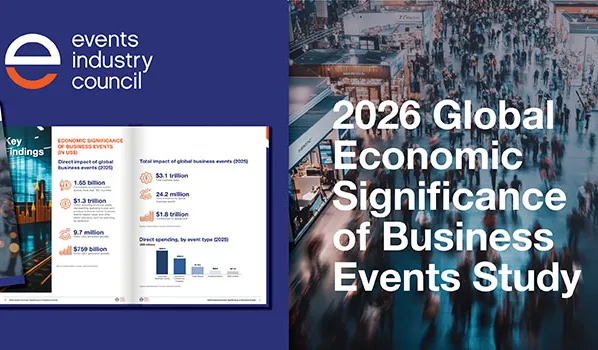
But one very positive area for re-examination – which is also something common to all the factors noted above – is the need for a better job of recognising, measuring and promoting our value to the overall economy and adjusting the financial picture accordingly.
Governments are more likely to keep investing if they see meetings as contributors to their most urgent priorities – like economic recovery and innovation, employment and economic transition.
Similarly, delegates and their sponsors are more likely to make participation a priority if they can more clearly see just what they will get out of their attendance.
While the financial challenges we face have the potential to turn various sectors against each other in their striving to achieve a bigger slice at others’ expense, the more effective choice is to co-operate more than ever on building the value proposition. That way, everyone can win – and we will be better equipped to face whatever kind of future the ongoing global uncertainties may deliver.
This feature was first published in Issue 67 of CMW.
Any comments? Email cmw@mashmedia.net