An event going ahead tells us less about a market than we assume. During the 2026 disruption, a smaller gathering could sit alongside a cancelled international programme. Both belonged to the same economy. From my perspective in Dubai, the important question was which demand could still translate into a gathering.
The conflict exposed how differently events depend on travel. Some international clients and delegates could not come, putting pressure on programmes built around their participation. The effect reached beyond attendance. When the expected audience becomes uncertain, the original scale and timing become harder to justify. For the industry, that brought a revenue shock.
Local businesses faced the same unsettled environment, but their customers, colleagues and commercial obligations were still here. They had operations to run and relationships to maintain. That gave them reasons to keep meeting, even when the gathering they could support was smaller than intended. This local demand helped sustain part of the market.
Concealed adjustments
That distinction gets lost when we describe a destination as resilient. The word can conceal the adjustments behind continued activity. A smaller event may keep a business conversation alive while generating less work for the industry around it. Continuity matters, but it should not be mistaken for a return to previous trading conditions.
Nor does local demand mean that every international event can be replaced with a domestic version. Some programmes depend on bringing people across borders; their purpose changes without those participants. Others serve a community already present in the UAE. Those are different business propositions, and the response to disruption needs to recognise the difference.
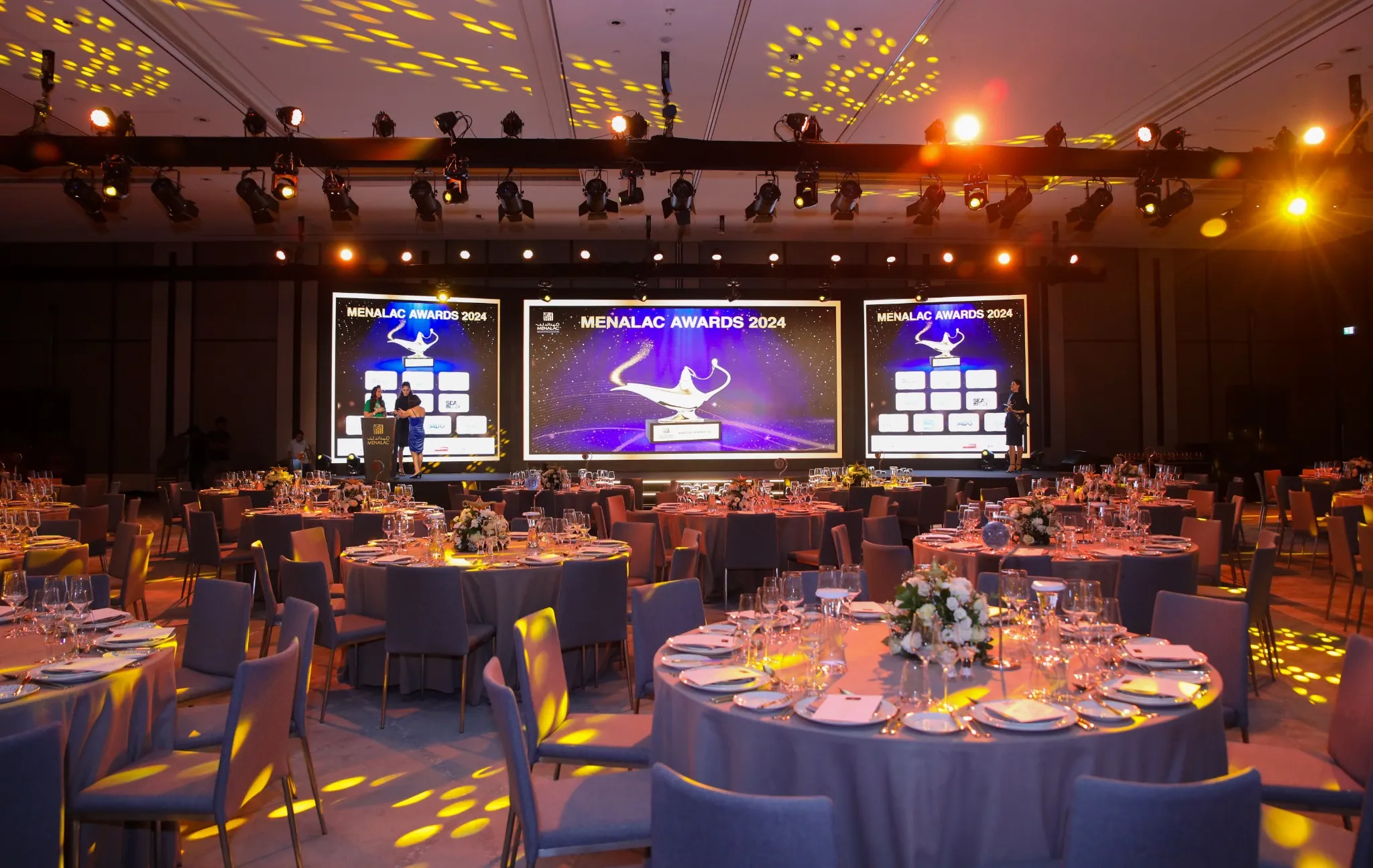
The MENALAC Awards provide an illustration. The 2026 Dubai edition proceeded at a smaller scale than the 2024 Dubai gala. Its timing also changed: an April gala was initially advertised before a May awards gathering was announced. The useful observation is that the event continued in an adjusted form, rather than on its original terms.
For me, the planning question that follows is whether the revised audience still gives the event a reason to happen. A smaller room is a workable response only when the people in it can achieve something worthwhile together. Otherwise, reducing scale merely preserves an entry in the calendar. The business purpose needs to survive the adjustment.
Timing calls for similar judgement. Moving an event can create breathing space, but repeated postponement may also move it beyond the point when the business needs it. Organisers and clients have to weigh that cost against the value of waiting for wider participation. There is no single answer that applies to an international conference and a local corporate gathering.
How we read demand
The broader lesson is about how we read demand. International participation is an important measure of Dubai’s events economy, but it cannot explain every part of it. Businesses already operating here generate their own need for meetings and events. During this disruption, that demand supported activity at a scale the local market could sustain.
I would, therefore, judge continuity by asking what changed, whose needs were served and what activity remained possible. That gives us a more honest account than either uninterrupted growth or complete standstill. Dubai’s local market helped some events proceed through difficult conditions. Understanding the limits and the value of that contribution is useful work for an industry making decisions under uncertainty.
Ankur Agarwal is managing director of Purrple Orryx, a Dubai based corporate event management company. His work spans corporate gatherings, awards and conferences in the UAE and wider region. He writes from a practitioner’s perspective on the business decisions behind events, including audience needs, changes in scale and the challenges of planning during periods of uncertainty.