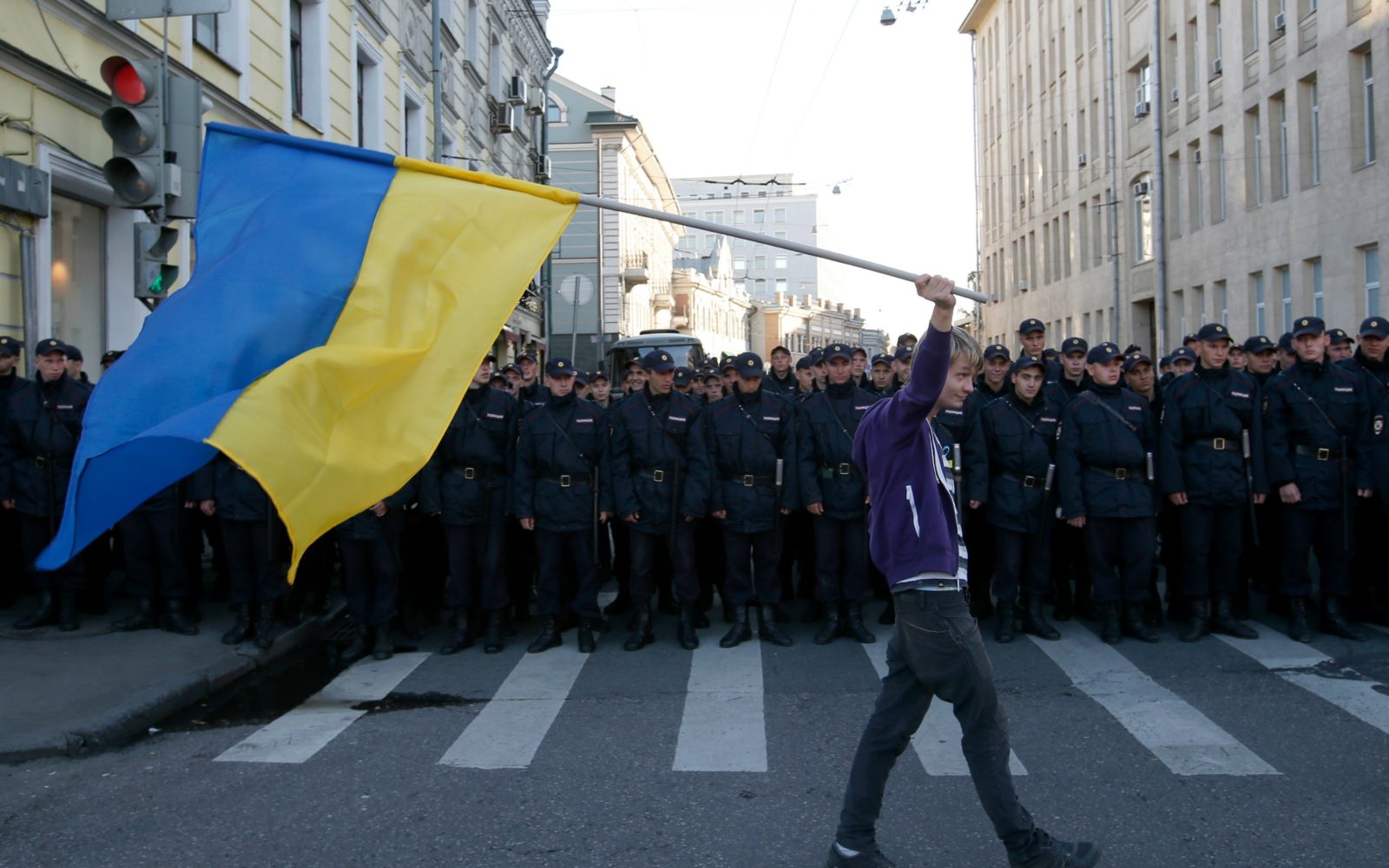
CMW takes a closer look at the impact of Russian alienation on one of the region’s most prominent organisers of business events Winston Churchill once said, ‘never let a good crisis go to waste’, and, although a political statement, it’s a sentiment that has since been taken and reissued in a commercial context by others including, most famously, Chicago Mayor Rahm Emanuel. Rahm’s Rule, as it is commonly known, tells us major crises can provide a diversion for distributing benefits to special interest groups. The bigger the crisis and the shorter the period in which it is in effect, the greater the opportunity to capitalise on the moment. In February, City analysts at Westhouse Securities downgraded its rating for international exhibition and conference organiser ITE Group to ‘neutral’ rating, cutting profit forecasts for the year by 15%. In a note issued to investors, 22 January 2015, the group’s stock price target was revised down to US$2.42 (from $2.92). The group is heavily exposed to the weakening Russian market from where 60% of its revenues come. With the weakening of the rouble and the oil price squeeze and Western sanctions on Moscow, there are considerable anxieties in the market. In the case of ITE, Rahm’s rule can be seen in the way Russia’s economic decline and political isolation is dissuading fair-weather internationals from conducting their business in the country. While attendance at the company’s international events in Russia may be in decline, business must still be done and those who are there – in Rahm’s terms, the special interest groups targeting business events in the country – will be the ones who cannot be deterred. “As with any of the emerging markets you should be expecting these downturns and these few lost years, and then a good recovery,” explains ITE group digital director Baris Onay. “Russia is one of the biggest energy suppliers in the world, the market is so big that that when political stability returns, it will recover really fast and become another boom for us.” As Onay explained to the audience gathered at Mash Media’s International Confex event, at Olympia in London in February 2015, this has happened so many times before in the history of ITE. “Just as recently as during the 2008 [global financial] crisis we had the same thing, and it recovered,” he says. “That’s why we still believe in – and are looking at opportunities in – the Russian markets. We are still looking at these opportunities.” Across the withering border in Ukraine, the applicability of Rahm’s Rule is more apt still. “I had a fantastic conversation with our Ukrainian CEO,” says Onay. “He told me, on the contrary, that his events are much better than they used to be. Because now in Ukraine if you’re going to a major event, you have to be desperate to buy something. The visitor quality, he says, is off the scale.” The same rule applies to anybody travelling to business events in Ukraine, or for that matter Russia, because if they are to progress their business in these countries, then few of the conversations at the conference are likely to be paying simple lip service. “There are still a lot of Russian or Ukranian companies on the ground who have to continue doing business,” says Onay. “They keep on attending our events. We haven’t cancelled a single event in the past three years, even as this conflict was escalating.” And those are of course the serious ones, not those put off by the often-justified but nonetheless sensational headline-stealing reports. “I was in Ukraine last February, eating in a fancy restaurant with our CEO, when I had an update on my phone from the BBC telling me Kiev was burning,” says Onay. “Sometimes the reality of things is very different on the ground compared with on television.” Onay finishes by pointing out the international nature of the ITE Group’s business means that while it is exposed to the markets in and around Russia, it is not exclusively a local player and can sit it out until the time is right once more. This cannot be said of those companies whose wheels must be turned through ongoing discussion made possible by carefully planned and executed meetings. For them there is no option to simply shut up shop until the crisis is over. This was first published in issue 79 of CMW. Any comments? Email Paul Colston
Trending
Beyond attendance: How conferences can grow membership, strengthen communities and create lasting impact
1 week ago
IMEX America achieves top neurodivergent inclusive event design endorsement
6 days ago
Nearly 9 in 10 destinations improve as Helsinki leads 2026 GDS-Index
1 week ago
PCMA members approve 2027 Board of Directors and Trustees slate
1 week ago
Cairns doctor launches skin cancer conference, with a day on the Great Barrier Reef
5 days ago
Antwerp welcomes OpenLivingLab Days 2026
1 week ago
Major NZ healthcare conference chooses Hamilton for next phase of growth
1 week ago
Advertisement
Essential Reads
New EIC study finds business events contribute US$1.8 trillion to global GDP
Analysis
Washington DC bucks trend of US tourism decline with record visitor spending
North America

A look back at November’s IBTM and how event formats are “festivalising”
IBTMWorld

US airports face potential closures amid government shutdown
Business Travel
The countries with the highest business travel spend in the world
Business Travel