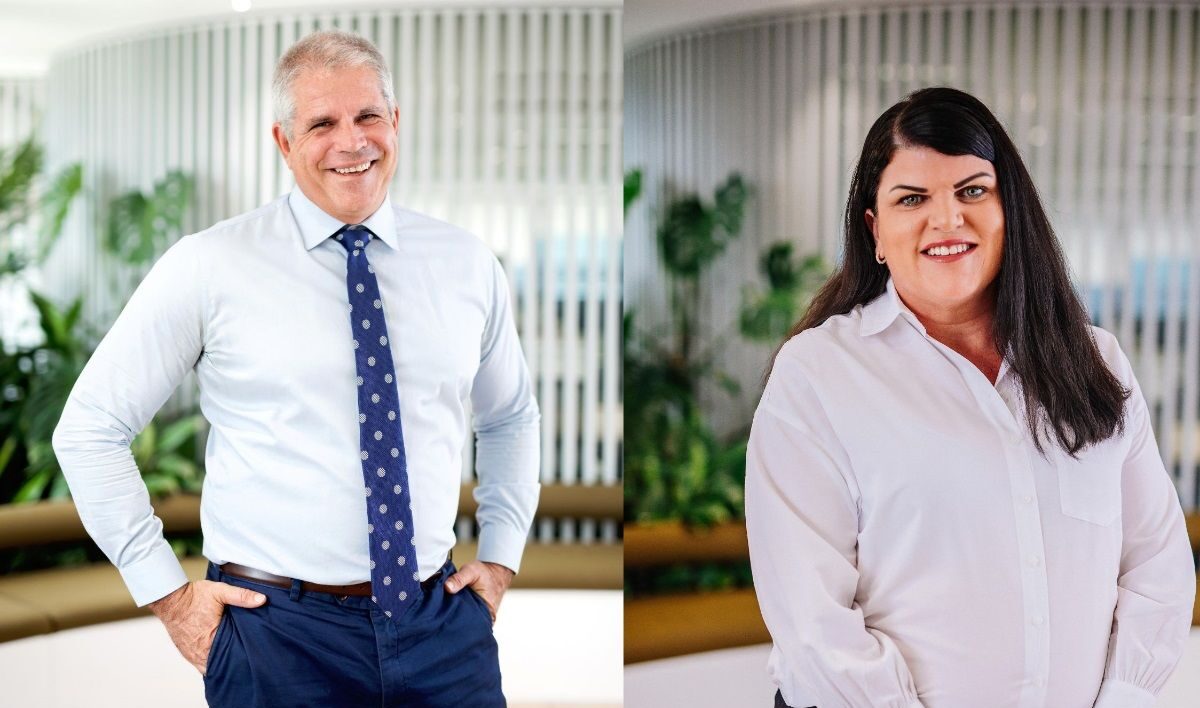
CMW meets Brisbane Economic Development Agency’s (BEDA) CEO, Anthony Ryan, and general manager – tourism, business and major events, Lorelle Chittick who outline the city’s appeal as a key destination for events.
CMW: What’s the latest news coming out of Brisbane?
Anthony Ryan: We’re in a unique position here in Brisbane, a city that is growing at a rate that’s exciting. A number of things have contributed to that. The announcement of the 2032 Olympics has actually brought a new speeding up in all that we need to do. From a legacy perspective, we’ve got about AUD$14.5bn of infrastructure happening right now and AUD$7bn is connected with the transport infrastructure. So, we’re getting mobility right, getting accessibility right, getting all those things that are important for the smooth functioning of a city, whether it be for business, or for investors, or for visitation.
Another component is the other exciting developments, like Queens Wharf and a sign of how Asia is viewing our region, is the move by Singapore Airlines to increase their flights into Brisbane by adding another flight per day, and that’s just one carrier.
Then you’ve got the professional services sector on the other side of the city. Dexus waterfront: that’s another $2bn going into that space as well. All of a sudden, that’s going to start attracting your Tier 1 multinationals and organisations that, instead of considering other capital cities in the region, are now thinking Brisbane is actually fast tracking. It’s going to put on the Olympics, so we’re going to start going there.
The biggest asset providers, the biggest landowners across Brisbane, are starting to say that interest has gone through the roof, particularly in the last 12 months. They want to chase the opportunity and the dollars. Some of the great thinkers in technology and innovation, have started coming to Brisbane.
This is all part of the legacy that we’re talking about. We took seven med-tech operators to San Francisco in early January. The JPMorgan accelerator programme represents investors looking at new innovations and looking for the next big thing coming out. Brisbane’s operators were chosen first, third and fourth by the programme. Brisbane is now seen as this contemporary, innovative, savvy city with a runway to the Olympics.
In one sense people are still sort of understanding where their responsibilities lie in relation to the Olympics, which is, ultimately, the biggest show in town. Of course, everyone has to align otherwise it’s a disaster, and that’s not going to happen.
The continuing development of infrastructure, with new hotels in the pipeline and high occupancy rates is not just due to the Olympics. We’ve got a predicted 40% plus increase in population forecast between now and 2040. Investors see a great yield to play for because they’re going to have full rooms and because it’s a place where individuals want to come and stay.
I was talking to one investor who happened to be a former pupil from my economics class. He’s now sitting on a $60bn investment fund out of the United States. He said all the analysis that they’ve been doing points to Brisbane as a hotspot for investment opportunity.
CMW: How is sustainability playing a big part in all this development?
Lorelle Chittick: All current and future projects are all about enabling sustainable growth for the city.
There’s a number of initiatives we’re taking on as the economic development agency, but for the benefit of the destination as well. One of those projects is a Climate Action Project and encompasses all of Queensland.
We’re also working with consultants to measure the carbon footprint of the visitor economy. We know we are big contributors in this industry and we do have a big footprint.
We have that net carbon zero target and are working hand in hand with our industry so that the first phase of that goal has been completed. We’ve been to benchmark and measure our carbon. The second phase is working to look at mitigation and how we actually start achieving those targets?
CMW: Long haul flights contribute roughly 70% of the carbon emissions of attending an event overseas. How do you plan to offset these for business coming into Brisbane?
Lorelle Chittick: Airlines are working tirelessly on biofuel technology and there are many initiatives already in place.
Anthony Ryan: One other key is our ability to collaborate with each other as a city. We need to start sharing across sectors and understand where the opportunities lie together and where the roadblocks are.
So, BEDA is at the heart of a catalyst group of cross-sector leaders, looking ahead at what the next six months, or two-three year might look like and all are genuinely keen to collaborate.
You wouldn’t find that in other capital cities, because they all compete against each other. But we’ve been able to develop this really good set of ideals around sharing, and trusting, and then utilising that as an opportunity to work together to create a better pathway. We have stakeholder engagement lunches designed to find out the value proposition of our city as a visitor destination, as an investment destination for trade, for business growth, etc. We synthesise that at all the lunches and worked up a draft on what needs to happen. Then we obtained more data and shared it all in one document. And so that’s how that’s how we’re working together in a genuine, authentic way, rather than just a ‘tick the box’ exercise.
CMW: How quickly are you seeing international visitation coming back into Brisbane now?
Lorelle Chittick: We’ve been really fortunate to win our first major incentive group since Covid, securing 1,000 delegates from China and we’re working with Brisbane Convention Centre on that.
We’ve also secured already a number of large international conferences in 2025 and 2023 is looking solid.
Brisbane did well with its domestic conventions and meetings over the last two years and international delegates are returning.
Also key is our work with the Brisbane Airport Corporation. We really want to be known as that first stop in Australia. Coming into Brisbane Airport, you can get to 53 other destinations within Australia and to 30 within Queensland. Again, it’s about promoting Brisbane, promoting that accessibility.
Of course, we want international delegates to come in prior to the conferences and stay longer.
We want to bring in more carriers and get back to those pre-Covid levels.
A second runway at Brisbane Airport was completed just before Covid. We’ve got good access now for US and Canada, increasing daily flights there and continuing to work with Asian carriers as Anthony mentioned. We’ve got a few of the airlines coming through Dubai, and through Singapore, out of the UK. Our next phase is looking at UK and Europe opening up their sectors again.
CMW: You mentioned earlier the Queen’s Wharf development. How much of a game changer is that going to be for the city?
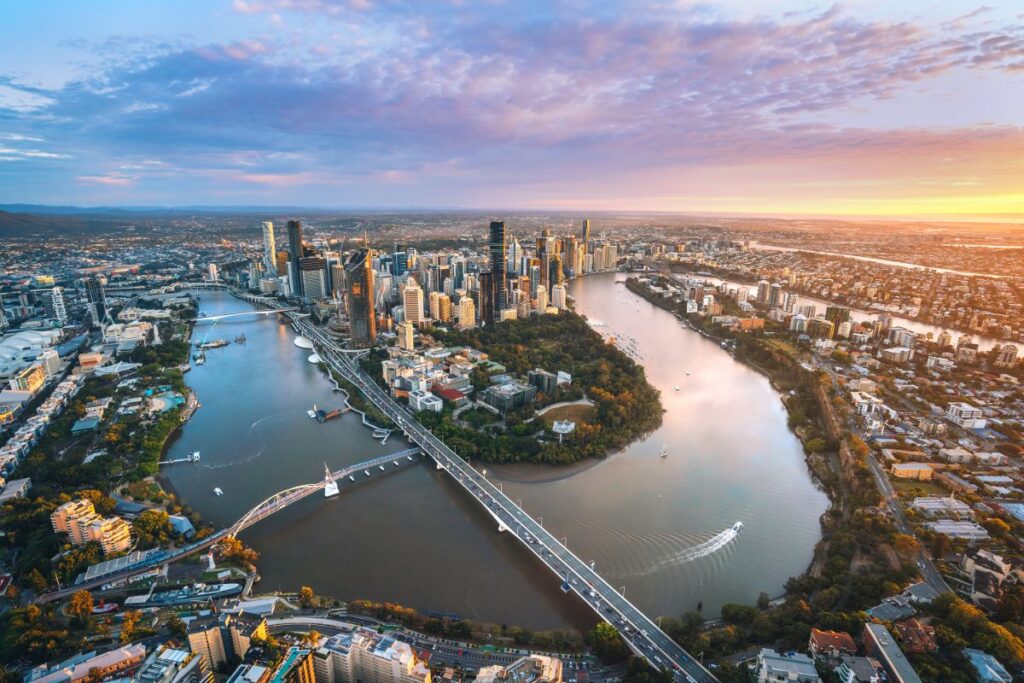
Anthony Ryan: One of the things that is really exciting about that is that if you look at South Bay, and Queens Wharf as an example, they are going to be linked with another footbridge called the Neville Bonner. So, really, we’re activating the river in a genuine way, so that it becomes the heart and soul of our hospitality. It also changes the mobility for a visitor that they can walk around the city very comfortably.
Lorelle Chittick: Knowing that we’ve been we’ve been named the host city of the Olympics and Paralympics, it is vital for us to really review the accessibility nature of our city. So, we have just undergone a project and audit with some reputable accessibility consultants. Our convention centre was involved, the airport, a lot of our attractions and public infrastructure. Our buses and our city cabs were reviewed in what was a comprehensive exercise.
CMW: How much focus do you put on key economic sectors to attract events? How much do you lean on local expertise to add value?
Anthony Ryan: BEDA is a little bit different to the other convention bureaus and tourism operators. We have three remits, one is to build the brand of Brisbane, to build the visitation economy. But then it’s about investment and trade and business. We have departments for every one of those and can create pathways for anyone coming into the city for a business event. We can help concierge them through experience to actually create exactly what they want.
Lorelle Chittick: Our international growth strategy involves working with our state government on those key industry sectors, really building those relationships, understanding their challenges, what are the opportunities and how we can collaborate and driving using business events as catalysts. It is also about bringing together academia and our key institutions.
Exciting times here in Brisbane for sure.