Managing director of UK-based Delegate Select, Graeme Simon (pictured below) says event organisers and their software providers have different priorities.  Event organisers want to run outstanding events and are keen to keep costs to a minimum. They often have specific requirements that they cannot find in cookie-cutter software solutions. Yet having a custom-built solution that does exactly what they envisage can be extremely expensive, not just to develop, but also to maintain going forward. Most software providers in the event industry use a SaaS (software as a service) model, where the solution is provided to the event organiser through a web-interface. The provider takes care of all the development, operations, and technical aspects. The organiser just pays for a service. SaaS providers are keen to minimise their costs by selling the same solution again and again and will generally have a platform to do this. The platform may be under continuous development, with new features added regularly. What providers really want to avoid is having to build and maintain multiple versions of their platform for different clients. If they do, the introduction of new features into their software, will require implementing and testing across various platforms, not just one. If a client is insistent and willing to pay the provider handsomely for new features, on the condition that those features are not resold to their competitors, (i.e., they are developed under an exclusivity agreement), the provider may concur. In the end, though, it will be a commercial decision. Yet, should event organisers be forced to choose between an inexpensive ‘out-of-the-box’ solution or costly bespoke development, with no real guarantee that the development they pay for might not end up being sold to their competitors, anyway? Is there a third way? The answer is ‘Yes’, and it comes down to disciplined software design. My own company, and presumably many others that develop SaaS solutions, resist offering exclusivity agreements. If functionality is going to be useful, sooner or later it will find its way into someone else’s platform anyway. We operate in a very competitive market and want our service to be ‘best of breed’ for all our customers. Therefore, what many providers offer, my company included, is a fully configurable platform. Configuration is different from bespoke development. It involves having a single software platform that can be set up quickly in dozens of different ways, depending upon an event organiser’s requirements. Consequently, organisers feel that they are getting a service set up to their exact specifications, but because the set up takes minutes or hours rather than days, they pay low rates, similar to those for an out-of-the box solution. With functionality being easily switched on or off, clients can be charged only for those parts they use. But what to do when a client asks for features requiring new development? First, we assess whether the features will be of use to other users of our platform. If the answer is ‘Yes’, we will add them into the platform, absorbing a significant portion or possibly all of the development costs ourselves. If the answer is ‘No’ or the client presses for some sort of exclusivity agreement, we can generally find a high enough price for the development that will put the client off. Worst case, we can always add a feature to our platform and switch it on only for that specific client!

Guest Author
Out-of-the-box or bespoke software? Is there a third way?

Comments
Comments are closed on this post.
Trending
Cvent Accelerate returns to Sydney for fifth edition
1 week ago
China Ready® Workshop to return to WTM Africa 2027
1 week ago
Qatar Event Show signals sector momentum with bigger 2026 edition and new industry awards
1 week ago
CEMA’s largest Summit registers record-breaking attendance in Toronto
1 week ago
Half of Australian travel managers can't prove ROI to their own bosses
1 week ago
Events help deliver a record A$2.3bn boost for jobs and growth in Brisbane
5 days ago
Adelaide named in world's top three emerging business travel destinations
1 week ago
Advertisement

Essential Reads
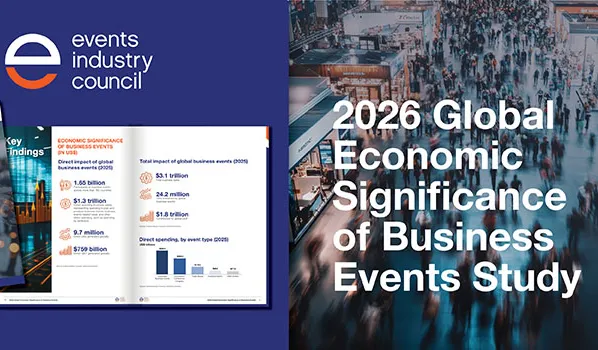
New EIC study finds business events contribute US$1.8 trillion to global GDP
Analysis

Washington DC bucks trend of US tourism decline with record visitor spending
North America

A look back at November’s IBTM and how event formats are “festivalising”
IBTMWorld

US airports face potential closures amid government shutdown
Business Travel

The countries with the highest business travel spend in the world
Business Travel
More like this