As ICCA, like the industry at large, faces perhaps its greatest time of challenge, CMW had a pre-congress catch up with the association’s president James Rees, who has been not only charting a variety of roads to Kaohsiung for the 59th congress, but outlining plans to digital infinity and beyond!
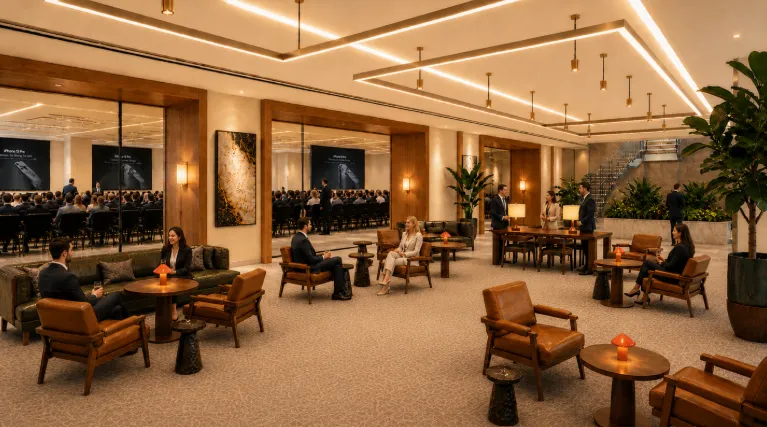
What were the lessons of last year’s ICCA Congress and how did that shape the plans for 2020? We realised very early on that this congress could not be business as usual, however there would be elements of every congress that members would want to see continue if possible – networking connections, the Copenhagen Lecture and the Best Marketing Award as prime examples – so we needed to be brave and move to a hybrid model that would give us the best chance to incorporate all of these vital components. The main lesson from 2019 was a wish for our education to bring in more input from outside our industry and, with the Covid situation shaping our working lives at present, we have designed the programme to include an array of amazing speakers who will share insights on how non-event industry leaders see the future of events and event design, digitisation and the effects of the global economic outlook. What has ICCA done to support its members over these difficult months? There seems to have been good co-operation for example within the G3 Alliance. ICCA reacted swiftly to embrace a digital approach and implemented a series of virtual knowledge development sessions, conducted across all regions and sectors, with the objective of providing real-time case studies of how members were adapting to the pandemic crisis, to help understand best practices and share ‘live’ knowledge among the ICCA community. ICCA has been offering support to members through publications, virtual events, the Covid page on our website, and through campaigns such as ‘We stand together while we are far part’ and ‘We miss face to face’. Additionally, having signed the memorandum of understanding with the G3 in 2019, we began to see tangible results, with joint initiatives driving advocacy and the publication of a series of reports designed to help members of the three associations prepare for re-opening the industry at the earliest opportunity. What are the members’ pain points in this crisis and how do you see the different regions of the world coping? The greatest challenge has been the variance in government recognition of our industry across regions. Germany has shown in Europe that a long-term advocacy programme has meant government recognises the need for the industry to re-open quickly, but of course responsibly, and we have seen this in the successful staging of a number of exhibitions in the Messen. I believe advocacy needs to be tailored on a regional level, however, as we emerge from the crisis. In all regions we will need to re-double our work and remind governments that the industry many of them turned to when the crisis began is also such a great driver of economic and societal development. What have been the main questions from members during this time? The key questions have focused on technology and where members can learn about technological engagement in hosting their meetings. We have rapidly learned about Zoom and Teams for day-to-day business, but what other advanced platforms are out there that can be used to organise Virtual/Hybrid meetings? Members are also wanting to learn from other regions of the ICCA community and other sectors to know what are the best practices applied globally, what transformation is taking place among the association meetings and how associations are planning their future events. This is where ICCA has been able to facilitate discussions. The road to Kaohsiung, may not be so well trodden physically this year, but you have some quality content lined up under the theme, ‘Re-imagining the future of global events’, right? ICCA’s first-ever hybrid Congress required education and content that will innovative and future-thinking, in a format that we have never operated before. As such, the Congress itself is the ‘re-imagining’, taking the form of a live case-study of how events can be managed in the future and we will share the learnings post-event. Tell us about the regional hubs. How were they chosen and what kind of attendance numbers are you predicting for each? The regional hubs were selected through an RFP process by giving equal opportunity to all interested members. We received amazing interest which was a testimony to our urge to meet face-to-face. We understand it is still a fluid situation and we have created contingency plans with our hosts. The registration pattern shows that the ICCA members who do not require quarantine are able to attend the hub events. We expect attendance between 50 to 100 participants in each live hub, with numbers subject to local health protocols. As an example, the hub in Luxembourg will be attended by over 100 delegates. Cape Town, Kuching, Latin America, Luxembourg, Malaga, North America, Riyadh, Seoul. How do you envisage it all linking up from a technical standpoint? We have carefully planned the programme based on time zones and will be live-streaming two ways. The streaming will be uploaded on an advanced customised platform and participants can engage with any hubs by logging into it. The programme is designed based on hubs joining the main Kaohsiung programme for part of the day and during the rest of the day they will conduct their own programme. This is a unique model which combines ‘Digital Transformation and Face-to-Face interaction’. Our technology partner has given us confidence in the way it will all link together for the Congress. We have run tests and have tech support in each region. How are plans for the 2021 Congress in Colombia looking? The ICCA congress 2021 is going ahead as planned in Cartagena. We are in close contact with the local host committee and working on plans with them. We will also plan to include the experience and learning gained from this year’s event in the programme for Cartagena. You’ve announced changes to the structure at ICCA HQ, with redundancies in the team. How do you see the new structure emerging? As I set out in my report to the ICCA General Assembly we did have to take the difficult decision to restructure Head Office operations, which meant the loss of roles from within the team and our CEO will be working on his plans for the new structure in the coming months. We will be able to share that with members in due course. Importantly, these decisions are key to the long-term future of ICCA and the measures, along with other efficiencies and revenue-generating opportunities that are being driven by the management team, will ensure the association weathers the current storm and emerges stronger and more adaptable than ever. You’ve decided to serve a second term as ICCA president. What initiatives, Covid-willing, do you hope to put forward in the years ahead? I am honoured to have the opportunity to serve a second term and thank members for their messages of support. Key to the coming year is to work with the ICCA team to make sure we are stable and able to begin new initiatives linked to technology and education. However, my overriding wish is to be able to fully launch the Future Leaders’ Council as soon as possible so that we begin to better engage with those younger members of our community and allow them to help shape the future of where ICCA is going. What words of optimism can you offer meetings industry businesses looking for a lead from ICCA? We believe that, as human beings, we have a fundamental need to engage in-person and it is these interactions that foster strong business relationships, collaboration and trust. We need to prove to government and policy-makers that our industry is resilient and innovative and make every effort to support economies even without the ability to meet in person. However, we should see this as an opportunity, in the increasingly digital age, to make our industry even more relevant. This necessary shift to virtual and hybrid solutions has shown the world that we can continue for now, but when the time is right, face-to-face will return. Surely, the acceleration of hybrid and a swift move up the event tech learning curve has been one silver lining from the Covid cloud? Yes, as with every technological innovation, a crisis can provide impetus to fast-track development. Hybrid events have been around for over 10 years, without the amount of adoption we should perhaps have seen. Out of necessity, we have now fully embraced these solutions and they can only improve the relevance of our industry in the future.