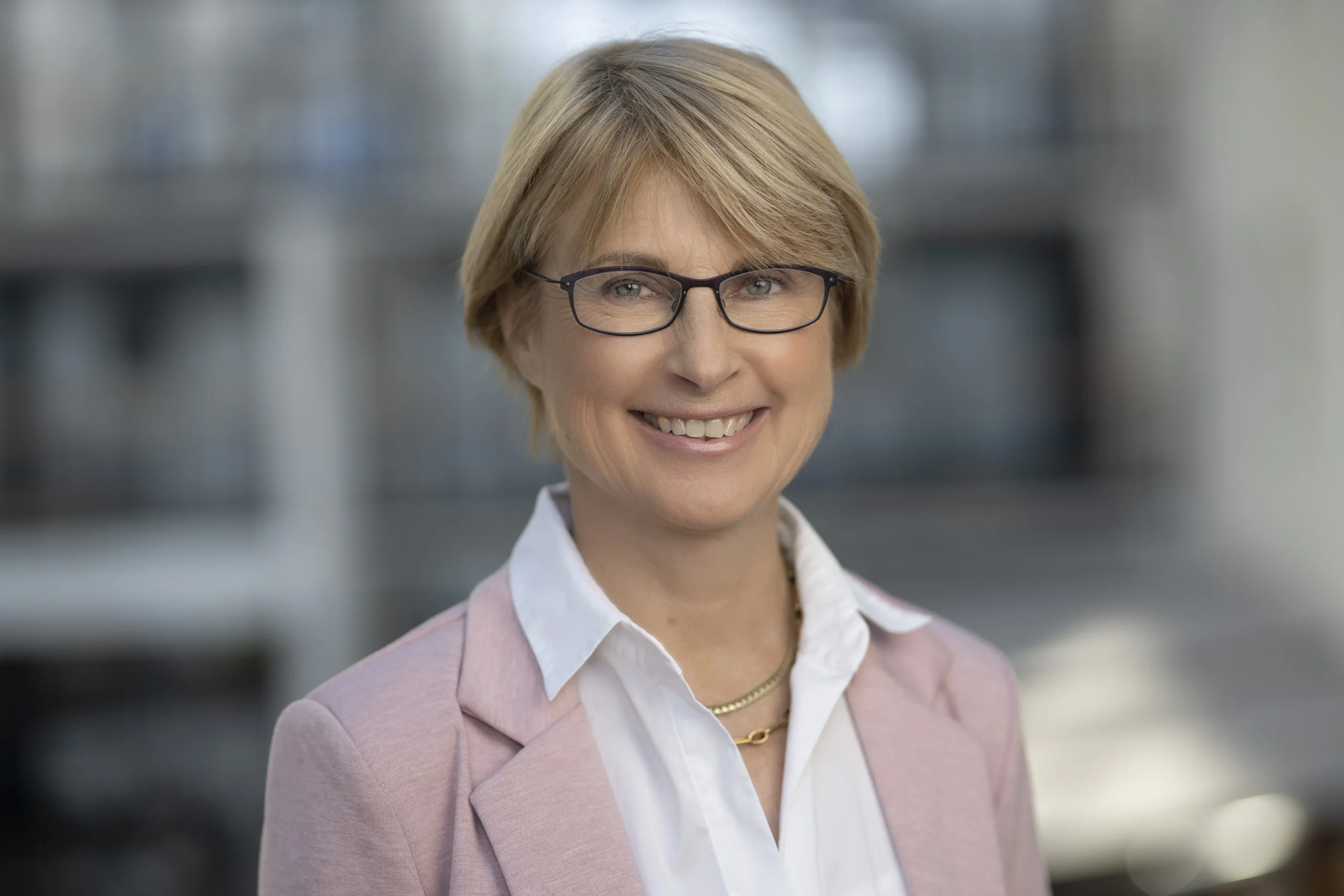
South Africa’s Nina Freysen-Pretorius is the association’s first president to hail from Africa, and follows ICCA’s outgoing Arnaldo Nardone as he steps down after two terms of two years.
In her electoral pitch, she claimed ICCA and the conference industry is entering a “critical new phase of innovation and growth”, one that requires a president capable of building on past success but more importantly of thinking strategically, collaboratively, as well as inspiring excellence.
“With ICCA celebrating 50 years of industry involvement I am so glad an African leader is given the opportunity to lead,” she said, having secured the confidence of the voters. “Now is the time for ICCA to extend its influence into new markets and developing countries, fostering continued growth that will provide jobs, assist in the alleviation of poverty and contribute to a better life for many.”
According to Freysen-Pretorius, her objective is to ensure ICCA continues to provide benefits that enable its members to generate and maintain significant competitive advantage. “These benefits may mean different things in different parts of the world and we have to be in a position to respond accordingly” she said. “Future focus should be to increase the quality and professionalism of our members by educational tools and unique networking events.”
But what of her background and, at least for those of us not present at the ICCA Congress, what can she bring to ICCA’s meeting table?
A strong understanding of associations, for starters. The newly elected president founded The Conference Company in 1997 to serve the association market, and with teams from Durban, Cape Town and Johannesburg, arranged various major international association congresses. She was project manager for UNFCC – COP17 CMP7; the 2013 UN World Tourism Organisation congress, as well as the 3rd Global Symposium on Health Systems Research 2014. Upcoming events include the International Society for Labor and Social Security Law 2015, and the World Society of Cardiothorasic Surgeons 2016.
“It is going to sound like a cliché but I love organising, communicating, bringing people together and seeing the end result after years of hard work and many committee meetings,” Freysen-Pretorius tells CMW. “The sense of achievement having started something from nothing is hugely inspiring.”
She claims the defining characteristics of the MICE experience in South Africa would be surprising, perhaps, to many international association clients. “There is a high standard and service level of events produced in South Africa. We have many obstacles and challenges, but with meticulous planning and implementation we are able to compete with the globally expected high standards expected by associations.”
The ‘twist to the tale’ in South Africa’s offering, she claims, is that while it has the technology, facilities and infrastructure – it also has the natural environment, friendly people and warm culture that make events memorable for all involved. “Our Government is also acutely aware of the importance of the MICE sector and the value that it can add to the GDP,” she adds.
As for how South Africa’s international MICE industry has grown in the past 10 years, and the main challenges she has faced in her roles, she maintains the growth of professional associations is lifting Africa’s offering to the global stage.
“Having the opportunity to successfully host mega events like the FIFA World Cup and UNFCCC COP 17 has shown the world that we are open for business and capable of delivering on our promise,” she says. “The growth and potential therefore not only for South African but for the African continent has been very good. We are starting to see the emergence of African association activity, helped by initiatives such as Meetings Africa’s annual Association Day programme.”
Without local association leaders and active chapters, she points out, it isn’t easy for African destinations to attract international association meetings. However, South Africa has shown there is “incredible appetite” for these meetings to come to the continent. “Many countries are starting to build their own capacity for this type of event, so I’m very optimistic that we’ll see significant growth over the coming years,” comments Freysen-Pretorius.
“Our challenge as an industry is that we need to ensure that appropriate accreditation for service providers within the field is implemented by the private sector. We do not want it to necessarily be a top-down approach from government and that mandatory measure are implemented by government.”
Despite this, the private sector and associations such as SAACI, EXSA and SITE play a leading role in ensuring companies are compliant and held accountable to the services that they are marketing, she says.
As for the most pressing challenges facing the global MICE industry today, it’s the relationship between the industry players – both governmental and private sector – and the association clients’ needs that needs to become more regular, transparent and professional. “Continued dialogue and sharing of information is critical,” she says. “The challenge that we face is that without regulating the manner in which business is conducted, we need to encourage a professional and respectful engagement. The concern is that certain expectations and demands by clients and promises by industry are not sustainable and ultimately will have a negative bearing on us all.”
And ICCA can do much to help address those challenges. “Firstly the fact that we have identified that we need to work more closely together in order to bridge the defined and continue to build on the relationships with our members and the association clients, is a step in the right direction,” says Freysen-Pretorius. But the association can only create the platform for discussion and future recommendations. It is up to its members, associations and government to take on board the advice that these the discussions and consultations provide.
Of course, the MICE industry throughout Africa should benefit from Freysen-Pretorius’s election.
“The appointment of an ICCA regional director focusing on engaging with African members to grow the ICCA membership on the continent is a very positive step,” she says. “With African industry membership growth and inclusion into the ICCA family, we are sure that the level of skills transfer, educational knowledge and improved serves delivery will follow.”
With events such as Meetings Africa, IBTM Africa and Africa Meetings Week, Freysen-Pretorius claims there is an obvious confidence in the African continent, and that growth of the MICE sector is inevitable. “A hugely positive signal to us all,” she calls it.
“Once again the sharing of information, leads exchanges between members has great take home value. The keynote speakers at the ICCA Congress were most thought provoking; challenging how we perceive the world around us and the anticipated changes in the near future.
So as she looks towards her two-year term, what is the single biggest challenge for ICCA both internally, and externally?
“Probably the biggest future challenge is going to be to redefine our relationship to meetings data,” she says. “Up to now, ICCA has built its success [the association has expanded from 600 to 1,000 members over 12 years] on building our own database of international meetings and linking great services to this information, which has only been possible thanks to great input from our members.
“Now the rules of the game are changing, as access to massive global databases opens up and the latest technical tools offer new ways to research and reach the clients.”
Freysen-Pretorius says ICCA’s challenge is to harness these new sources of data and tools, so that its members continue to see it as the key supporter of their work in the international association meetings sector. It’s a challenge, she underscores, that has both internal and external dimensions.
The association’s greatest strengths and abilities to positively influence developments rise from the fact that ICCA has always been a specialist in one particular market segment: international association meetings. However, Freysen-Pretorius points out that because of its longstanding reputation in the market and reach across over 90 countries, it has the potential to impact our industry on a global scale.
So when her term eventually comes to an end, how will Freysen-Pretorius measure her success?
“Membership growth within the areas covered by our regional offices: Africa, Middle East, Asia Pacific and North and South America,” she says, adding that she hopes to revisit Europe as a region, and improve the support of members there.
The packaging and take-home value of our congress, which remains ICCA’s main brand activity, is also on the agenda. “We need to raise the bar,” she claims.
And with that, she sets to work.
This was first published in issue 78 of CMW. Any commnets? Email Zoe Vernor