Aotearoa New Zealand is well-known for its beautiful landscapes and friendly people, but it’s also known as a place of innovation with a progressive and impactful world view. It’s a country that has achieved many milestones, such as women’s and environmental rights, as well as a strong advocate of progress, change, improvement and reform. New Zealand has a master plan to deliver a productive, sustainable and inclusive future, with an emphasis on climate innovation, scientific research and innovation. All sectors which thrive within Wellington.
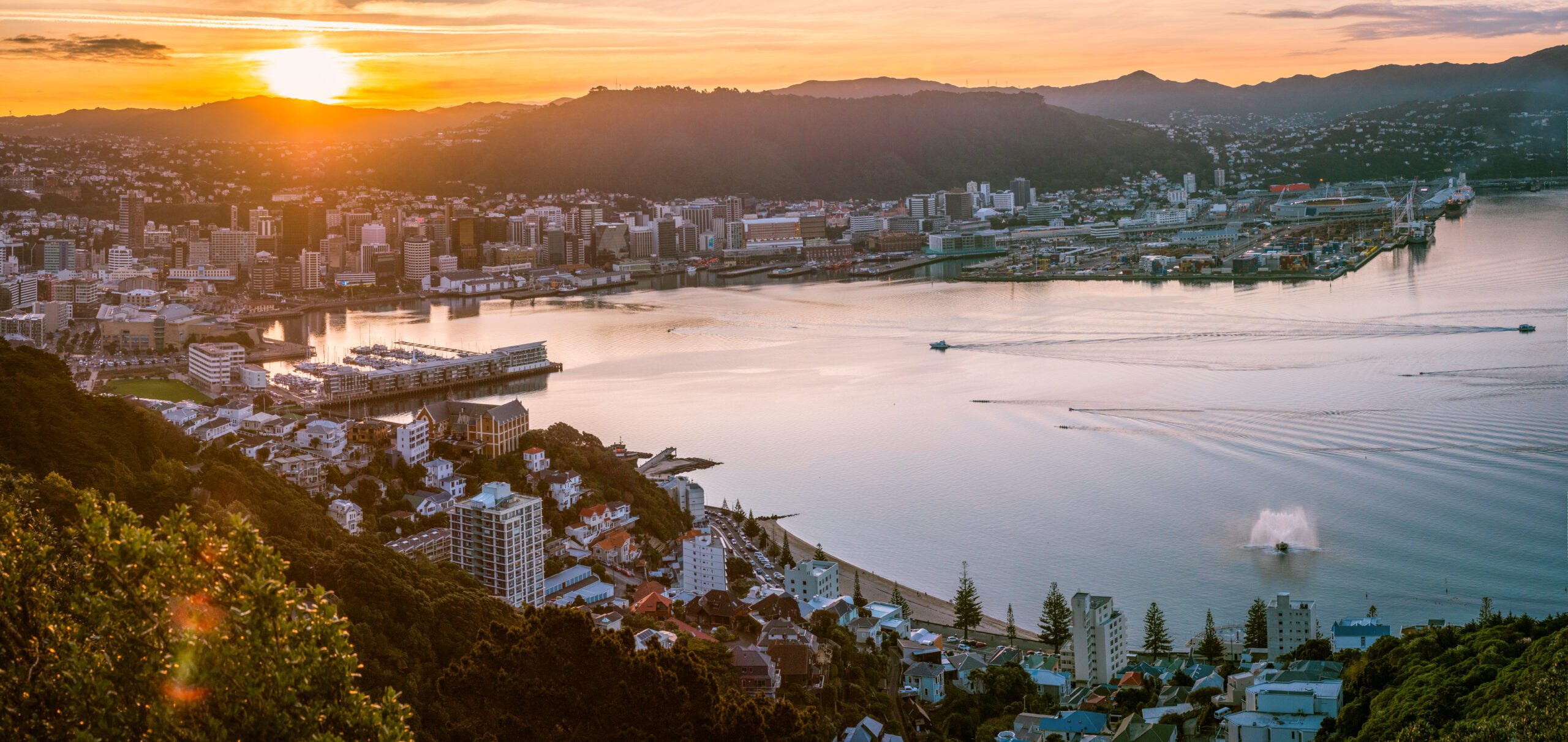
Wellington city and harbour
Te Whanganui a Tara Wellington – a place of change
Wellington is the political and geographical heart of New Zealand where key influencers gather to create positive change. New Zealand’s decision-making comes out of Wellington, home to the Government and headquarters for most of the country’s central government agencies and many industry associations. The capital also boasts a sophisticated mix of leading research institutes, industries and talent solving global challenges. Understanding the value of business meetings, the city strategically uses its key sectors to attract conferences of importance to the city. Hosting international conferences supports Wellington and New Zealand to achieve its ambitious agenda in these areas.
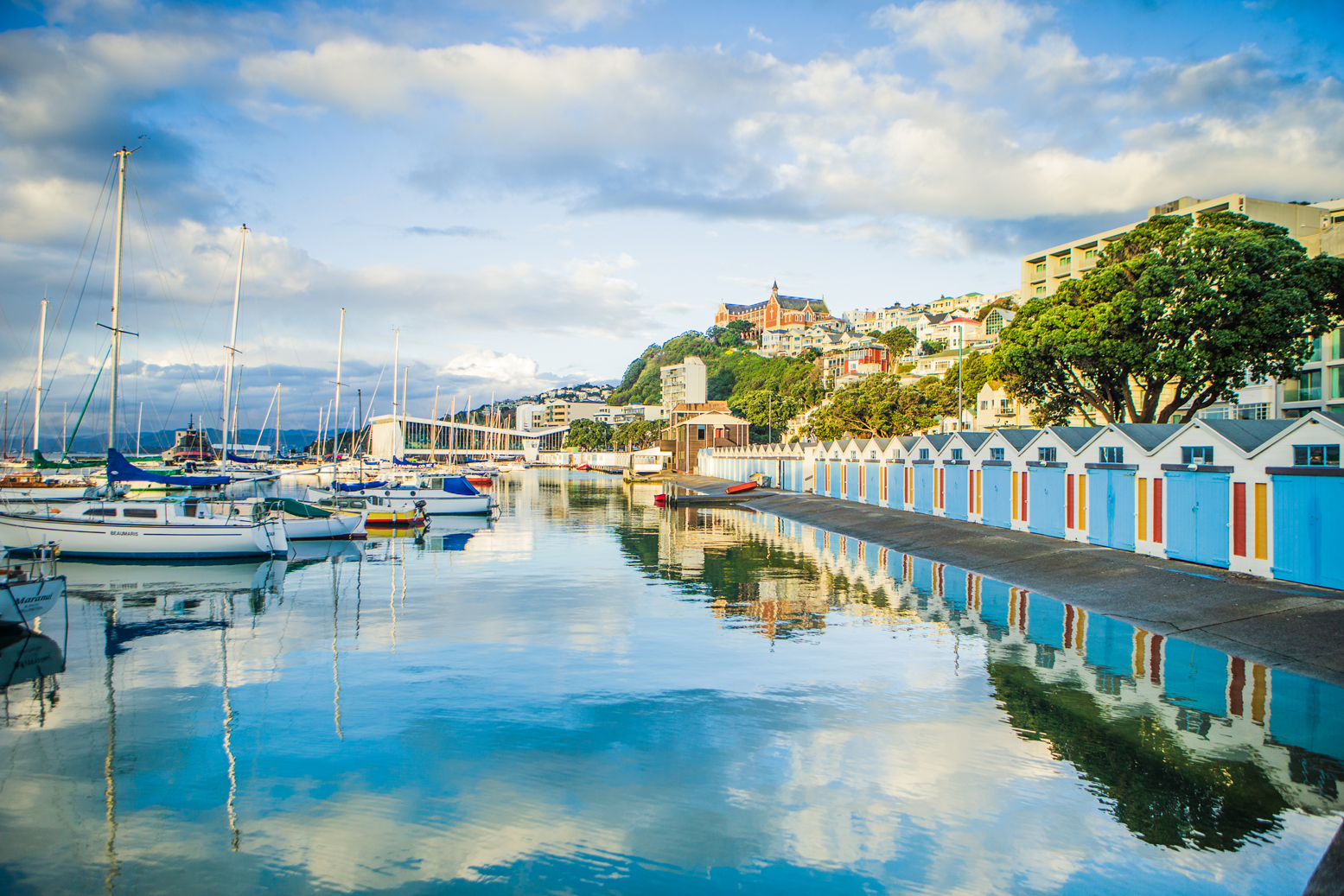
Oriental Bay, Wellington
Capital dubbed ‘science city’
The Wellington region boasts the largest research, science and innovation workforce in the country. It’s home to Te Herenga Waka – Victoria University of Wellington, one of New Zealand’s oldest universities which ranks in the top two percent of 18,000 universities internationally. There are also branch campuses for Massey University’s College of Creative Arts, Otago University’s Wellington medical school, and three highly regarded institutes of technology. Victoria University of Wellington has the highest proportion of academics conducting high-quality research in New Zealand. It’s also linked to a high concentration of institutes and spin-off companies focused on improving social, economic, and environmental wellbeing. There are seven government-funded Crown Research Institutes (CRIs) in New Zealand, all of which are either based in Wellington or have a facility there. They carry out scientific research in areas like agriculture, environment, geoscience, food and land care, striving to improve sectors’ productivity and the sustainable use of natural resources. The capital’s strengths in this space have helped secure Government funding to make Wellington a ‘science city’. The Government recently announced plans to invest NZ$451m to help establish three new collaborative centres that will bring together expertise from Wellington’s research-based organisations. The centres will focus on health and pandemic readiness, climate change and disaster resilience, and technology and innovation. Consequently, a number of associations across scientific fields bring their conferences to Wellington. The first ever Life Sciences Summit organised by BioTechNZ and held in Wellington recently shows how the power of events can help to further grow industry sectors. Wellington has formed an alliance with BioTechNZ, a multi-year partnership to anchor its conference here and grow the country’s promising biotech sector. The inaugural conference has united Aotearoa New Zealand’s life sciences and biotechnology communities across all sectors, including agriculture, environment, industrial as well as human and animal health, and is likely to result in changes to Government policy and regulations in the future. “Biotech is an increasingly important industry in New Zealand for addressing critical environmental, health, climate and food challenges,” says Business Events Wellington manager Irette Ferreira.

Zealandia Te Māra a Tāne
Wellington leads the way
New Zealand’s vibrant, energetic capital makes carbon-conscious events easy. For starters, Wellington has the lowest emissions per capita of any Australasian city and was named as one of the top 10 eco-cities in the world by Lonely Planet. With an environmental focus from every angle, the city itself has long been a leader in climate innovation, reflected in its accolade as one of the top 10 eco-cities in the world in Lonely Planet’s Sustainable Travel Handbook. Known for its connected and collaborative nature, Wellington is a leader in the ongoing restoration of the natural environment. It’s home to the world’s first fully-fenced urban sanctuary, Zealandia Te Māra a Tāne, and is one of the only cities on the planet where native biodiversity is increasing. To secure the environment for future generations, the city has a blueprint called Te Atakura – First to Zero, to ensure it is a net zero emission city by 2050. The implementation plan outlines key activities that will help to reduce emissions in four target areas – transport, building energy and urban form, advocacy, and the council. Climate action and innovation is a big focus across all industry sectors, with some of New Zealand’s brightest minds working together in Wellington to build innovative solutions. It means event organisers can find a wealth of forward-thinking ideas and experts to support their event. The first fully electric high-performance passenger ferry in the southern hemisphere was created in Wellington, and cleantech company COGO is enabling individuals and businesses to reduce their carbon footprint by analysing their bank transactions, among others. Wellington’s events venues are also working to reduce the impact of events on the environment and to make them more sustainable. Four Wellington-managed entertainment venues were the first in New Zealand to be awarded EarthCheck’s Bronze Benchmark accreditation. Wellington’s sustainably-designed conference and exhibition centre, Tākina, was also the first convention centre in the country to receive a 5-Star Green Star certification.
Wellington city and harbour
UNESCO City of Film designation boosts screen reputation
Wellington’s reputation and creative capabilities in the screen sector is reflected in its recognition as a UNESCO City of Film. The screen sector encompasses content created through platforms such as film, TV, game, interactive media, animation, VFX and sound. Predominantly a service-based sector, the greater Wellington region accounts for 8% of the country’s population and yet employs 22% of New Zealand’s screen workforce. Wellington’s long-lasting reputation is built upon innovation and consistently pushing the creative limits, thanks largely to the close collaboration between research and education institutes, creatives and industry. Victoria University of Wellington’s dedicated Miramar Creative Centre offers unique collaboration with the city’s world-leading film, animation and game design industries with teaching direct from the experts. It sits alongside the university’s largest computer graphics research group in the Southern Hemisphere, with strengths in areas such as real-time computer graphics, virtual reality, and character animation. Massey University has newly established its National Academy of Screen Arts and Bachelor of Screen Arts (Honours) degree, with majors across animation, factual production, film production, game production, immersive media, media technology and visual effects. The academy is providing new facilities for students and the region, and a platform to develop research and sector-relevant thought leadership. Industry-side, Wētā Workshop is an award-winning special effects and prop company founded by Sir Richard Taylor and Tania Rodger. Based in Wellington, it is internationally-recognised for its work on some of the biggest movies and TV shows, including The Lord of the Rings and Avatar. Wētā Workshop’s unique relationship with Victoria University of Wellington has resulted in the commercialisation of cutting-edge technology, such as 3D printers enabling hyper-realistic props for film production. Similarly, director Sir Peter Jackson has used modern AI technology to restore 53-year-old mono recordings to create the audio of his documentary series The Beatles: Get Back. The series was made entirely from never-before-seen footage restored in Wellington. The close collaboration has allowed Wellington’s industry to play along the front edge of industry advancements, staying relevant, cost competitive and well-regarded internationally. Associations are tapping into this expertise, such as the Asia Graphics Association which jointly hosted its flagship 28th and 29th Pacific Conference on Computer Graphics and Applications in Wellington in 2021. The multi-year partnership between the New Zealand Game Developers Association (NZGDA) and the city is another example of how events help industry sectors grow and diversify. The association has anchored its annual conference in Wellington. With the city’s support it aims to expand its event content – and its audience – to include film, screen and interactive media, with a focus on the emerging field of virtual production, where gaming, film and screen capabilities are converging. WellingtonNZ.com/meet CONTACT: For more information visit WellingtonNZ.com/meet To learn more about the opportunities for conferencing in Wellington, contact official convention bureau Business Events Wellington: BusinessEvents@WellingtonNZ.com