

Guide to London
For event organisers
Getting from airport to city centre
Venues and Hotels
Finding the venue for you ▶
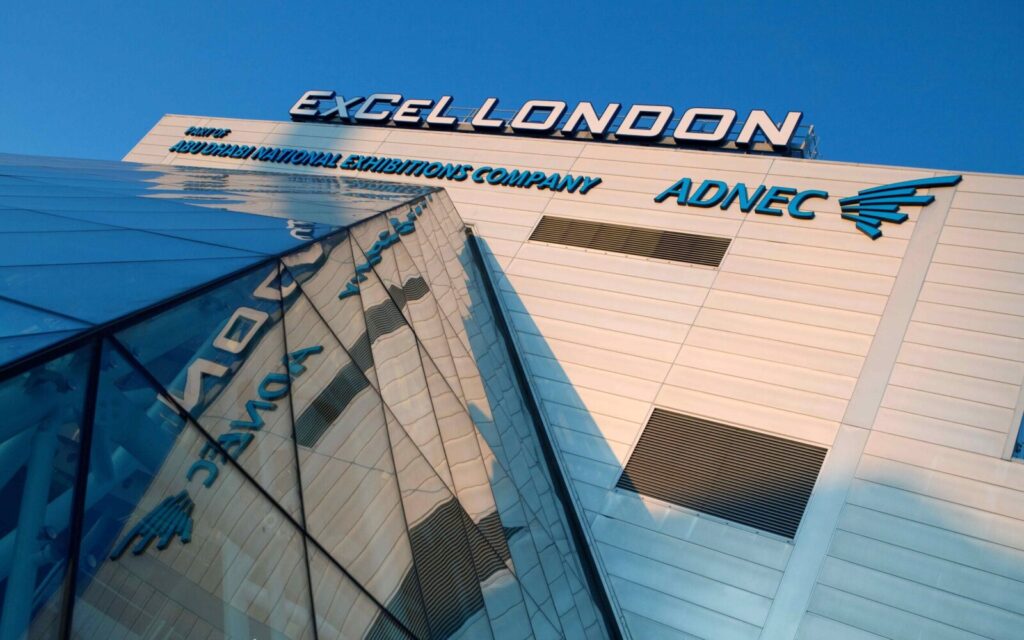
 Photo: Excel London
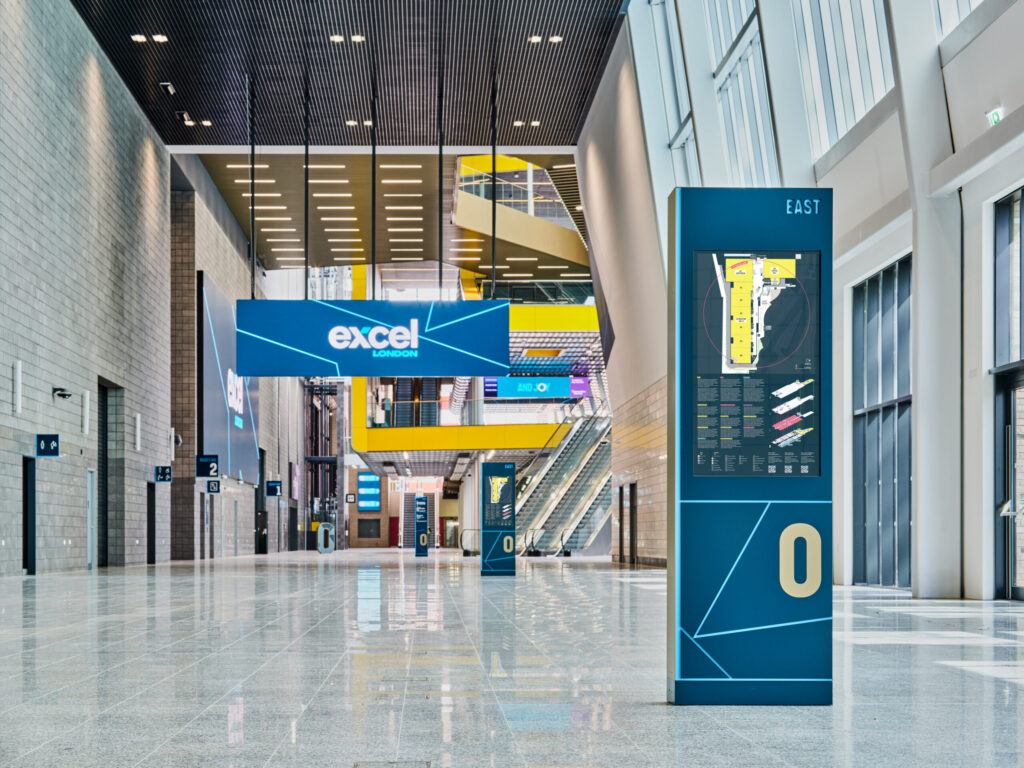
 Excel London
Excel London: Europe's leading events venue with 100,000 sqm flexible space, waterfront views, and central connectivity.
Read more > Photo: Excel London
 Excel London
Excel London: Europe's leading events venue with 100,000 sqm flexible space, waterfront views, and central connectivity.
 Photo: Liga Letina
 Barbican Centre
Barbican is Europe's largest purpose-built not-for-profit arts and events venue. Situated in the heart of the City of London among…
 Photo: Krishna Mistry
 The Brewery
Capacity: 10–1,000. Ideal for: conferences, award ceremonies and gala dinners. Converted 18th-century brewery in the City with six spaces.
 Photo: BMA House
 BMA House
Capacity: 10–320. Ideal for: conferences and receptions. Grade II-listed building with 22 spaces and two outdoor areas.
Finding the hotel for you ▶

InterContinental London
Total rooms: 452. Attached to The O2 arena complex, with direct access to one of the world's busiest entertainment venues. 4,400sqm of event space, 19 meeting rooms.
Read more > Photo: The Waldorf Hilton, London
 The Waldorf Hilton
The Waldorf Hilton offers prime meeting facilities and executive amenities in a prestigious central London location.
Read more >
InterContinental London
Total rooms: 452. Attached to The O2 arena complex, with direct access to one of the world's busiest entertainment venues.…

Leonardo Royal Hotel London St Paul’s
Rooms: 432. Mid-range cost contemporary hotel beside St Paul's Cathedral with a rooftop bar and views of the London skyline.
 Photo: Susie scorpio
 The Savoy
Rooms: 267. London's most iconic luxury address since 1889, with Thames views and the legendary American Bar.

Andaz London Liverpool Street
Rooms: 267. Luxury Grade II-listed hotel beside Liverpool Street station, with five distinctive restaurants.
Stats you should know
1 month
to 5 years range in lead time for corporate events
60%
of events are repeat business
1 year
to 9 years range in lead time for association events
Latest news from London

How hands-on is the CVB?
London & Partners is the city's official convention bureau and operates as a not-for-profit. Its services are free and cover the event cycle from bid support to site visits to the closing-night gala.
- Free assistance – London & Partners' services are free; they will share their knowledge and contacts for no charge.
- Extensive experience – As one of the world's most popular event destinations, London has helped to build events for thousands of delegates. This breadth of experience can of course be an asset to a prospective organiser.
- Bid book production – The team can provide guidance and support in creating compelling bid documents for your event.
- Accommodation – City-wide accommodation sourcing, including the London Accommodation Charter (specific to associations).
- Marketing – Marketing collateral, imagery and video footage are available to support conference promotion.
- Visa/ETA – Through its direct link to the UKVI office, the bureau can provide guidance on UK visas and ETAs.
- Transport advice – Advice is available on navigating London's transport network efficiently.
Key sectors in London
Finance and fintech
Finance and insurance industries combined employed 435,000 people as of 2023. The UK fintech sector employs over 76,000 people across more than 3,300 companies, with most based in London.
Tech and AI
London's tech sector employs around 533,000 professionals — nearly 10% of the city's total workforce — and is home to over 11,500 startups.
Creative industries
There are over 90,000 creative industry businesses operating in London as of 2025, 34% of total UK registered businesses.
Life sciences
There are more than 2,700 life sciences companies in London, supported by anchor institutions including UCL, Imperial College, King's College London and the Francis Crick Institute.
Government and policy
Strong for policy forums, think tanks and trade bodies. 107,000 UK civil servants are based in London.
Professional services
One of the largest sectors in London, with over 800,000 employees in the "professional, scientific and technical services industry" as of 2023.
How sustainable is London?
London has some solid sustainability credentials. The city has 4,981 BREEAM-certified buildings and 752 hotels and venues with green accreditations including Green Key, Green Tourism and EarthCheck.
The main cost will almost certainly be overseas flights by international delegates.
London became the world's first National Park City in 2019, with 4,400 parks and 8.4 million trees.
Transport is a strong asset. London's network highly-rated public transport system includes a citywide underground system, overground trains, extensive bus connections (including 2,500 zero-emission buses) and 250 miles of cycle lanes. E-bike apps are popular, with 40,000 Lime bikes spread across the city.
The Mayor has set a net zero target for 2030.
London & Partners can advise on sustainable event planning.
A snapshot
4,981
BREEAM-certified buildings (dominant UK green building certification)
Lime bikes
40,000 in use as of March 2024
Green space
20% of London is public green space
Local projects organisers can get involved in
Entertaining your delegates in London
 Photo: Myr dn
 St James’ Park
The oldest of London's eight Royal Parks, running from Westminster to Buckingham Palace along The Mall. The park itself is free and open year-round — pelicans on the lake, views of the Palace and Horse Guards, and some of the best central London architecture. Must-see.
Read more > Photo: Élida Celis
 British Museum
Free entry. One of the world's great museums — eight million objects spanning two million years of human history, from the Rosetta Stone to the Elgin Marbles.
Read more > Photo: Myr dn
 St James’ Park
The oldest of London's eight Royal Parks, running from Westminster to Buckingham Palace along The Mall. The park itself is…
 Photo: Zoltan Vass
 The Phantom of the Opera
Andrew Lloyd Webber's landmark musical at His Majesty's Theatre since 1986 – the longest-running West End show.
 Photo: Ewa Horaczko Photography
 Regent’s Park
Royal Park in north London with London Zoo, Queen Mary's Rose Garden and the Open Air Theatre each summer.
 Photo: Jennifer Phillips
 Hyde Park
London's most central Royal Park – 350 acres of open space, the Serpentine galleries, open-air swimming and a summer concert…
Things to be aware of
Crime of course occurs in London, but overall crime rates in the capital are reportedly falling. The main things to be aware of for delegates is the risk of phone theft and bike theft. Homicide fell to a five year low in 2025.
Some risk
of petty theft
Around congested areas, such as busy streets and stations. Particularly phone and bike theft.
15% drop
in violence with injury
Recorded from Dec 2024 to Nov 2025, compared to Dec 2023 to Nov 2024.
Useful Information
Getting there – London is served by six airports, with roughly 1,500 daily flights across 395 direct destinations – the highest connectivity of any European city. Heathrow is the primary hub for long-haul; Gatwick, Stansted, Luton, City and Southend serve additional routes.
Visas – EU visitors are exempt from visa requirements (and need only present a passport). Most nationalities – including US, Canadian and Australian passport holders – can visit without a visa for up to six months but must obtain an Electronic Travel Authorisation (ETA) before travelling. The ETA costs £20, is valid for two years or until passport expiry, and covers multiple trips. Some nationalities require a Standard Visitor Visa. Check the UK visas and immigration for more information.
Currency and payments – Pound sterling (GBP). Cards are universally accepted. Contactless is ubiquitous – including on public transport, taxis, restaurants and most shops.
Electricity – Type G sockets (three-pin), 230V/50Hz. Most visitors, including mainland Europeans and North Americans, will need an adaptor.
Emergency services – 999 is the UK emergency number for police, fire and ambulance.

Public transport in London
London's public transport is generally very well-regarded. The city is also well-connected internationally, with six airports.
Heathrow (LHR) is the primary hub, with three rail options into the city: the Heathrow Express (15 mins, ~£26), the Elizabeth line (~27 mins, ~£15.50) and the Piccadilly line (~50 mins, cheapest but slowest). Gatwick (LGW) connects to Victoria in 30 minutes.
London City (LCY) is the most convenient for the City and Canary Wharf, with Elizabeth line services reaching Liverpool Street in around 20 minutes. Stansted and Luton primarily serve low-cost carriers and are less practical for most business delegates.
Eurostar connects London St Pancras to Paris (2h15), Brussels (2h) and Amsterdam (3h55).
Within the city, the Underground, Elizabeth line, Overground, DLR and bus network cover all major venue and hotel clusters. Pay by contactless card or phone. Black cabs, as well as Uber and Bolt can be taken. Lime Bikes are widely available.
Underground runs
Every 10 minutes
With central stations generally serviced faster
You can use
Contactless
To pay for all transport services in London
Uber Boat runs
Every 15-20 minutes
Along the River Thames for a scenic way of getting around.
When’s the best weather window?
For event organisers, spring (April-May) and autumn (September-October) offer the most reliable conditions and are traditionally the busiest periods for conferences and congresses in the city.