Yevhen Shaposhnikov, CEO and co-founder of Ukraine’s Filosofia event group, explains how to leverage the power of the side event for brand and personal success: We know what start-ups and IT companies dream of: participation in Web Summit, having a queue of partners fighting for the opportunity to work with you, doubling sales, and attracting foreign investment. However, not everyone knows how to achieve this. Or they know in theory but cannot apply it in practice. So, how do you stand out among 70,000 conference participants and attract the interest of investors, business partners, and freelance IT specialists? The goal – to attract the attention Quite often businesses engage not only in participating in conferences and setting up exhibitions, but also they go further by using other marketing tools that help achieve the results. For example, in 2022, side events helped a delegation from Ukraine to attract maximum attention. One such event, featuring a charity auction and informal networking, registered over 2,000 representatives from the global community. In this article, I will try to explain what side events are, how they can help achieve business goals, and share a checklist for organising a successful event that will outshine competitors.
Side events: why organise them?
Side events can be described as additional activities that take place alongside the main event or conference. They are designed for networking, building connections, learning, development, and increasing awareness about a brand or organisation. According to Bizzabo statistics, 95% of marketers believe that offline events help achieve business goals effectively. If you want to raise brand awareness, develop your employer brand, increase sales, gather warm leads, find partners, or attract investments, all of this is possible with a well-organised side event. Such events are about interaction among participants, businesses, and the product or service. Achieving your own goals is impossible without fulfilling the desires of the client. Participants of side events also reap their benefits – typically, they attend such events for networking, gaining additional knowledge, making new connections, and, ultimately, entertainment. Side events can take various formats: it all depends on your imagination and business goals. Here are some examples of side events that work:
- Happy-hours – informal gathering at a bar where everyone socialises, builds friendly relationships, and allows for spending an enjoyable time
- Workshops: are you the developer of a cool technology? Show it in action! Imagine how great it would be to gather people at a side event who not only inspect your booth but directly interact with the product.
- Seminars: If you have an innovative development, then it’s worth talking about! You can engage technology enthusiasts and other developers in a discussion, highlighting your expertise.
Companies are, of course, already actively using this event format to attract additional attention and, during Web Summit 2021, more than 45 side events were organised. The options varied widely: cocktail parties, networking meetings, wine evenings, dinners, board games, presentations, and more.
Check-list for a successful side-event
According to Event Marketing Statistics, 47% of marketers claim that offline events provide the highest ROI (return on investment). Additionally, 61% of professionals note that in-person events are the most important communication channel between businesses and their audience. Therefore, it is no surprise that the competition for audience attention will be fierce not only at Web Summit but also at other conferences both in your country and abroad. Young companies and start-ups continue to seek foreign investments and are keen to enter the global market. However, to attract more funding, they need to stand out. Even at local conferences, there are at least two side events per day hosted by various companies, and all competing for the audience’s attention. After all, people can’t spend their evening in two places at once. Relationships with potential clients aren’t a romantic melodrama, but our goal is the same: to get the client to come to our side event, be ready to invest time, money, and resources, and not be able to go elsewhere! So, hoow do we achieve this?
Plan in advance
Imagine you booked an expensive restaurant for 150 people in Lisbon for a side event, paid for contractors, built a stage, and developed branding. You arrive two days before the event and see that while the location technically holds the required number of people, half of them will have to sit at the bar or on the stairs. The impression is ruined, the reviews will be negative, and there is no time to find a new place. Some don’t need to imagine — there is a case where a company lost €10,000 because they worked remotely and checked the location only when they arrived in the city. In such cases, we recommend finding a reliable local contractor. It would be helpful if a local person could visit the location, record a video for you, and critically assess whether the location meets the stated needs. However, don’t rely solely on agents. You need to understand all the technical aspects of the event yourself so that, in the event of unforeseen circumstances, you can take control of the situation instead of wasting time searching for outside help.
Avoid long breaks
Above all, people value convenience and time. So, manage not only the timing of your event but also anticipate the audience’s schedule! To do this, study the conference agenda in detail. This will give you an understanding of when the audience can attend your side event, how much time they are willing to spend at the location, and the gap between your event and the main conference agenda. It would also be great if your location is within easy access to the main venue. This will increase the chances that people will come to your event.
How to engage everyone
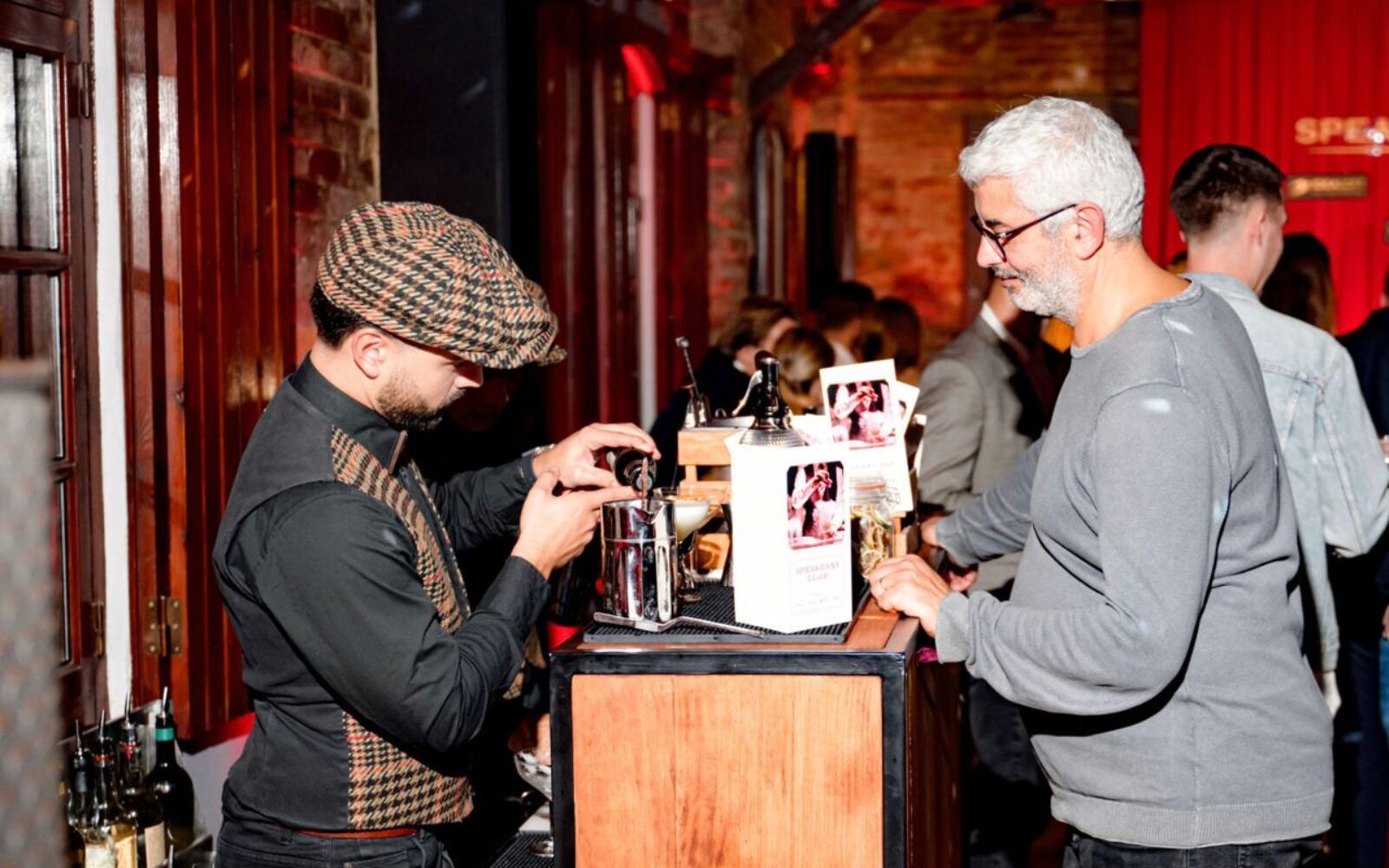
Having a unique product on the market and getting lost among competitors doesn’t sound promising, does it? This is a common problem for side events: despite their huge number, they often don’t stand out from one another. Familiar formats have become tired, yet venturing into something new can be daunting. Don’t be afraid to add some creativity. Here’s a great case study: we organised a closed side event for a client. The format was a speak-easy bar, but we wanted to do something unconventional. So, we arranged a stand-up comedy session between companies. Each company had a C-level speaker, whom we helped with scriptwriting, and we organised a business stand-up on work-related topics. This helped achieve the main goal: reducing the distance between employees and clients.
Networking is a king
According to Event Marketing Statistics, 81.7% of people cite networking as the main reason for attending events. So, everyone wants to meet and talk, but there is often a reluctance to approach first. Our task is to facilitate networking and guide it in the right direction. How do we do this? Here are a few interesting cases:
- A separate chatbot for the event. People can go through a very thorough questionnaire. Based on the answers, people can be grouped for networking.
- Networking bingo. Imagine: when registering for the event, you answer some quirky questions, such as ‘What did you dream of becoming as a child?’ And then receiving tasks such as finding the person who dreamed of becoming an astronaut.
This way, people communicate, get to know each other, and establish connections. Networking becomes easy, interesting, and casual. What is more importantly, it’s definitely more memorable than the format of ‘Drink cocktails and communicate’. Remember how it used to be: a playground, you, a stranger from another area, and your mom’s voice: ‘Go and make friends’. Let’s not trigger the mechanisms of childhood, but create conditions so that those who know how to network do it willingly, and those who are afraid feel safe.
Pay attention to branding
In Dubai, we have seen up to 30 side events happening simultaneously, and the only thing that distinguishes them is the location. Once, we conducted field research where we asked conference participants which company’s side event they were attending. The most common answer was ‘I don’t know’. They only remember the location and the people they interacted with. The good news is that your side event was useful for visitors, but the bad news is that it was useless for you. To prevent this, it’s important to focus on branding and direct attention to your brand. This is how associations are formed: if someone receives a great contact at the event, they will remember both the event and the company when interacting with that person later on. This is the same brand awareness that we need. So that people associate the benefits they received at the event with your company.
Perspectives
According to Event Marketing Statistics, 86.4% of businesses plan to increase the number of their personal events in 2024. This means that the popularity of this tool is only growing. Side events are possible not only at large international conferences but also at any events that attract your desired community. Seize the opportunity to make a statement about yourself and achieve your business goals! For more information about the Filosofia event group, visit: https://filosofia-event.com/