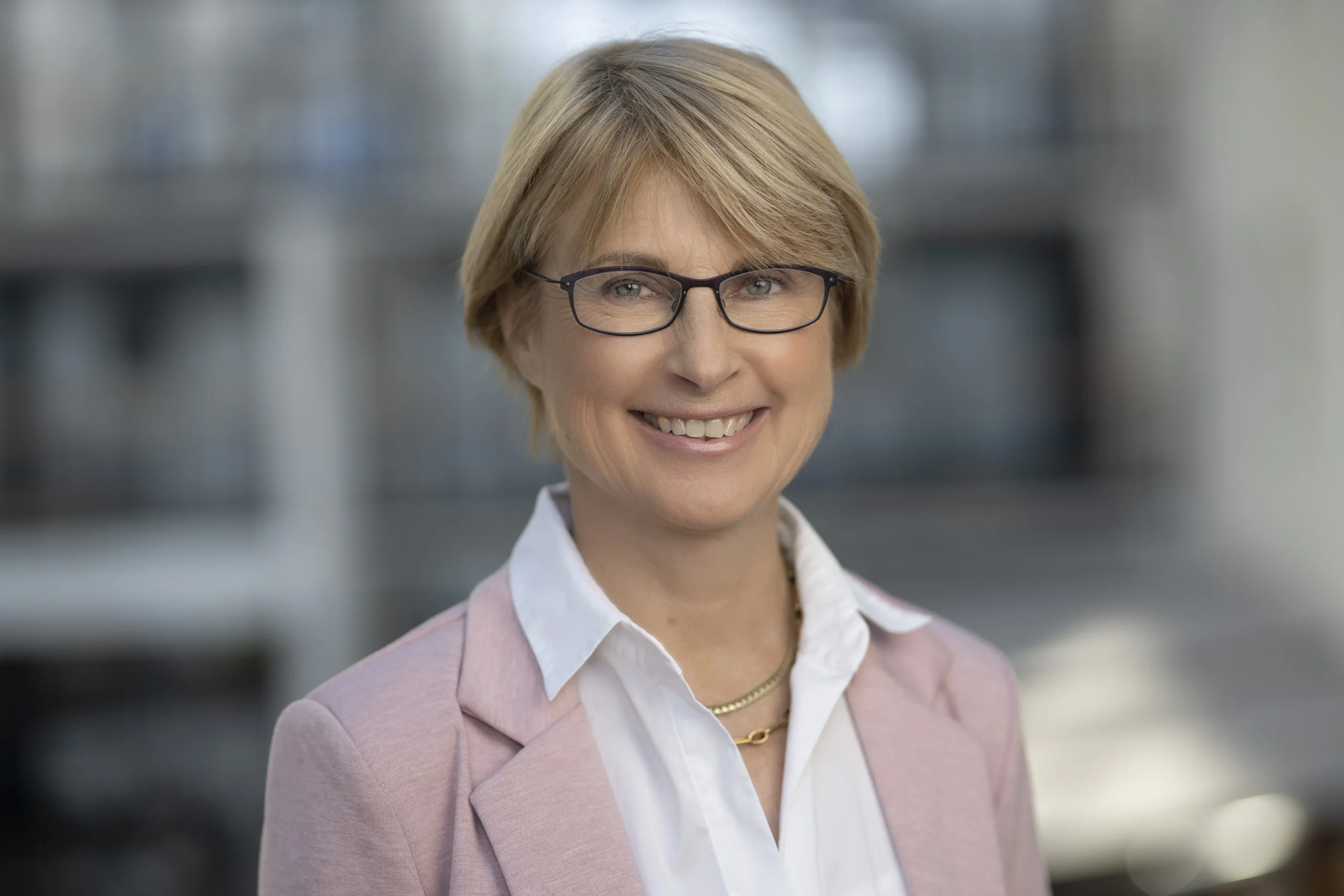
Ong Huey Hong, assistant chief executive of the Industry Development Group at the Singapore Tourism Board, speaks to CMW’s Iain Stirling about record tourism receipts, ambitious infrastructure plans, a landmark partnership with Informa, and why Singapore is positioned to become the MICE capital of Asia Pacific.
Iain Stirling: Singapore showed impressive growth in 2025. What were the main contributing factors in achieving this growth?
Ong Huey Hong: Last year was truly a landmark year for us. In terms of tourism receipts, we achieved S$32.8 billion – exceeding the upper end of our forecast. Visitor arrivals came in at 16.9 million, which was just within our projected range of 17 to 18 million. The trend we are seeing is very clearly one of attracting higher-quality visitors to Singapore.

Ong Huey Hong
MICE is a hugely important part of this picture. Business events visitors typically spend around twice as much as leisure travellers, which is precisely why it sits at the heart of our long-term strategy. Our ambition is to grow our total tourism receipts to S$47 – S$50 billion by 2040 – a very significant increase – and business events will be a key driver of that growth. Specifically, we are targeting a tripling of MICE receipts over that 15-year horizon. That is an extraordinarily ambitious goal, but when you consider the fundamentals, we believe it is entirely achievable.
Singapore sits at the heart of a region encompassing China, India, and Southeast Asia – a combined population of approximately 3.8 billion people, many of whom will enter the middle class within the next decade. That growth will generate enormous trade flows and create significant demand for meetings and events. The global MICE industry is projected to double within ten years, and Asia Pacific is the fastest-growing region within that market. In 2025 alone, our MICE tourism receipts grew by 35 per cent year-on-year. That momentum is very encouraging.
IS: When the war broke out in the Middle East, it created significant uncertainty globally. How has Singapore’s MICE sector responded?
OHH: When the conflict started in late February, there was undeniably a great deal of uncertainty in the world. However, I am pleased to say that when we looked at the shows held in March, April and May, we were genuinely pleasantly surprised by the results.
In March, Asia Pacific Maritime saw attendance that was 20 per cent higher than the previous edition. In April, the Meetings Show and the Business Travel Show, recorded a 10 per cent increase in attendees. And in May, Milipol TechX Summit – a homeland security event showcasing innovation and technology, it attracted 20,000 visitors, significantly exceeding the organisers’ initial expectation of 15,000. So, the momentum has remained very strong.
That said, we are fully aware that external pressures do weigh on event organisers. That is precisely why, at our Tourism Industry Conference on 8th May, we announced a S$5 million support fund for organisers in 2026 via our Business Events in Singapore (BEiS) Grant. The funding is designed to help them drive attendance from new markets as well as deepening engagement within existing ones – effectively making their shows more resilient in the face of these external headwinds.
IS: I understand that Singapore Airlines also stepped up to support connectivity during this period?
OHH: That is correct. Singapore Airlines announced expanded capacity on a number of European routes, including Manchester, London, Amsterdam and Munich, and new flights from Madrid, to ensure that connectivity into Singapore remained strong. Airline access is absolutely fundamental to our MICE proposition, and it is a real strength that we can work so closely with our national carrier.
IS: Reaching a S$50 billion target by 2040 clearly requires significant infrastructure investment. What is in the pipeline?
OHH: People sometimes ask us why we are planning 15 years ahead, and the answer is straightforward: the infrastructure investments we need to make require exactly that kind of lead time.
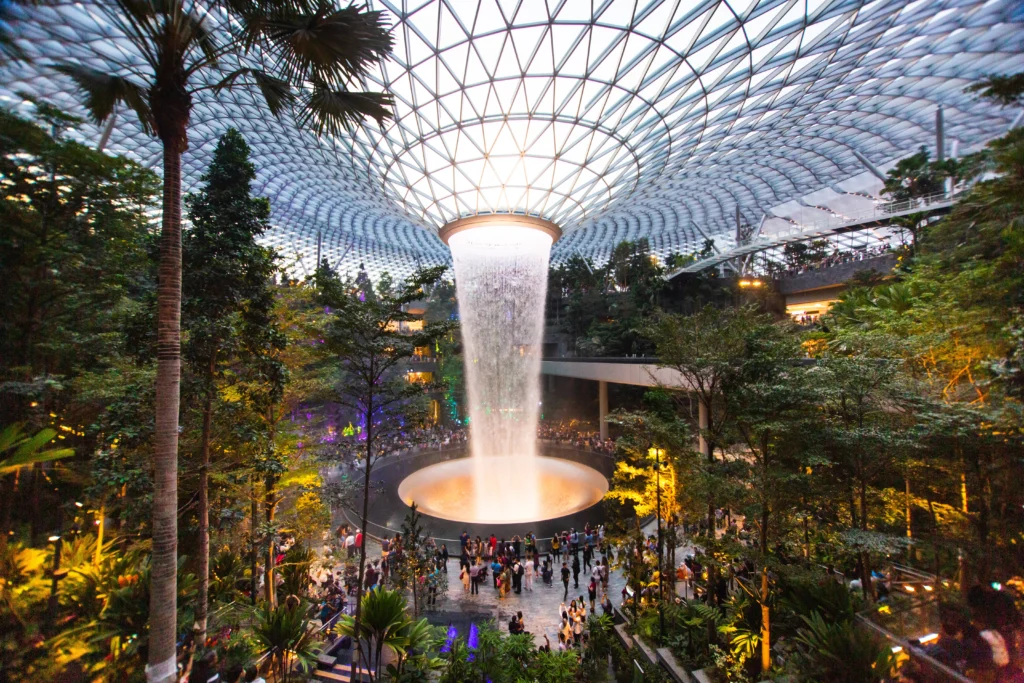
Take Changi Airport’s Terminal 5, for example. When it opens in the mid-2030s, it will increase the airport’s total passenger handling capacity from 90 million to 140 million per year. That is a transformative increase in connectivity, and it will mean Singapore is linked to an even greater number of cities around the world.
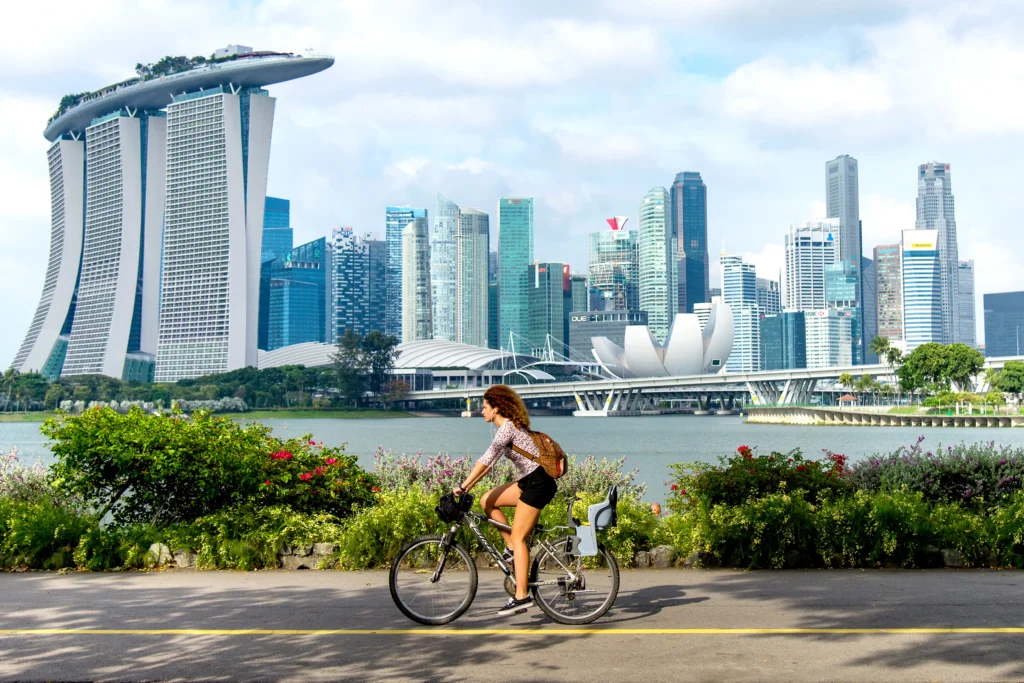
On the venue side, we announced on 8 May that we are actively exploring the development of a major new downtown MICE facility. Singapore already has excellent MICE infrastructure in the city centre – Marina Bay Sands is of course world-class, and its fourth tower is under development. But our ambition is to create the largest integrated MICE facility in the city centre, with direct connections to public transport and surrounded by the kind of amenities and experiences that modern delegates expect. We want to future-proof our infrastructure, not simply add capacity, but ensure that the experience we offer is one that continues to draw the best events in the world to Singapore.
To that end, we will be launching a Request for Information in the coming weeks, inviting MICE operators and property developers to tell us what scale and configuration of facility would make commercial sense. It will be a genuine two-way dialogue with the industry.
IS: Singapore has also been ranked the world’s top MICE destination by ICCA for 23 consecutive years. That must provide enormous confidence.
OHH: It really does. That recognition, announced again just recently, reflects the quality of our ecosystem, our infrastructure, our connectivity, and the professionalism of our industry partners. We do not take that position for granted, and the investments we are making are precisely designed to ensure we hold and extend that lead.
IS: You have recently announced a significant strategic partnership with Informa. What does that mean for Singapore?
OHH: It is a very significant development. Informa is the world’s largest event organiser by revenue, and the fact that they have chosen to formalise and deepen their long-term commitment to Singapore speaks volumes. It is a powerful vote of confidence in what we are building here.
The partnership operates across three main pillars. The first is business development – we have already identified several new shows to bring to Singapore, but this is not a static list. We fully intend to continue identifying events that align both with Informa’s portfolio and with Singapore’s strategic economic priorities.
The second pillar is experience development. Delegates today do not simply want to attend a conference, they want to experience a destination. We are working with Informa to scale up ‘festivalisation’ of events: creating immersive, memorable experiences that go well beyond the exhibition floor. There is significant room to grow this in Singapore.
The third pillar covers strategic initiatives. Two areas are particularly important here: sustainability and talent development. On sustainability, we want to work together to encourage exhibitors to adopt more responsible practices – stand design, waste management, and so on. On talent development, we are designing initiatives that will genuinely benefit the destinations that host Informa events. The aim, ultimately, is to ensure that our partnership has a positive, lasting impact on Singapore and the broader MICE ecosystem.
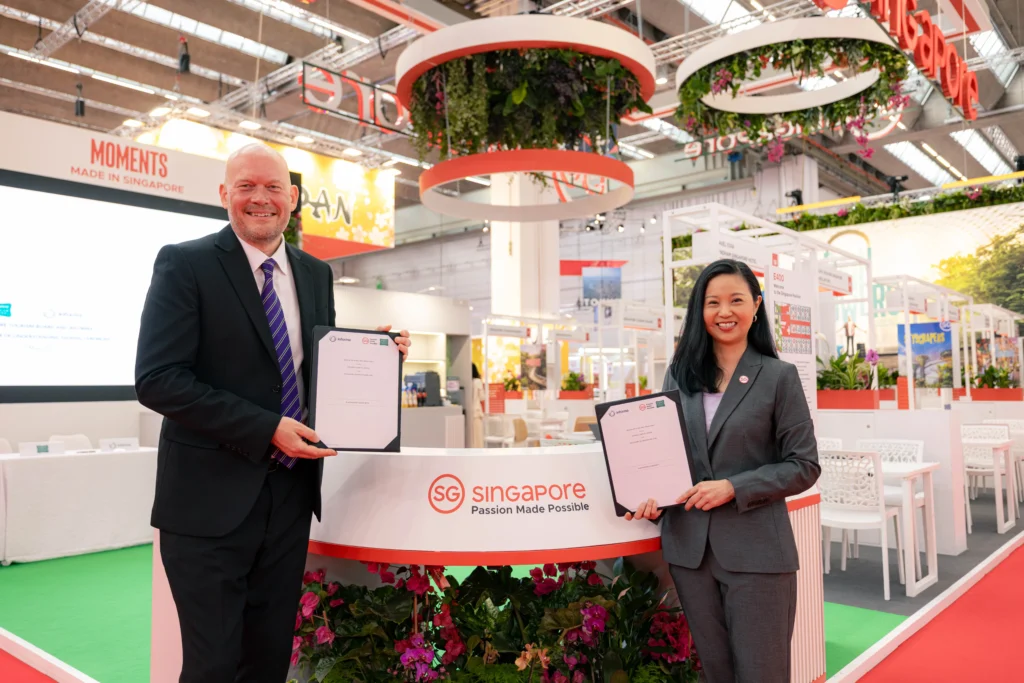
Photo: Tim Goger
IS: Are there particular economic sectors or industry verticals you are targeting more aggressively?
OHH: We continuously review our sector strategy to ensure it is aligned with Singapore’s broader economic priorities. At present, some of the areas where we see the greatest opportunity include healthcare, green-financing, and space technology.
In healthcare, for example, we recently signed a Memorandum of Understanding with the Academy of Medicine Singapore, which represents more than 4,000 members across 13 specialist academies and five chapters. The intent is to work together to identify and bid for major medical congresses that we can anchor to Singapore. Beyond that, we see strong potential in advanced manufacturing, and sustainability-related sectors – all of which reflect areas of genuine strength in the Singapore economy.
The rationale is always the same: when we bring an event to Singapore, we want to ensure that organisers have access to a rich ecosystem of sponsors, researchers, and industry partners. That creates real value for delegates and exhibitors, which in turn makes Singapore an even more compelling destination for the next edition of the event.
IS: How is the events calendar shaping up for the rest of 2026?
OHH: It is an exceptionally strong year. In May, we hosted Innovate for Climate, a significant World Bank conference. June brings the Herbalife APAC Extravaganza – 25,000 participants in what will be the largest meeting and incentive group ever to come to Singapore. In July, we will host the World Diamond Congress for the first time in almost 40 years, which is a genuinely high-value event. September brings the inaugural Passenger Terminal Expo in Asia, and October sees the World Congress on Chinese Medicine – the largest traditional Chinese medicine event in the world, returning to Singapore after 19 years. November will see the inaugural Breakbulk Asia.
And that is before we even mention the recurring anchor events. The Singapore F1, for example, typically generates over 20 associated events in the weeks surrounding it. The depth of our events programme is genuinely unmatched in the region.
IS: You also have a strong pipeline stretching well beyond 2026, I understand?
OHH: Absolutely. In 2027, Singapore will hold the ASEAN Chairmanship, which means we will host a full series of ASEAN meetings throughout the year – a very significant commitment. And 2027 is shaping up to be another outstanding year, with Sibos 2027 amongst the headline events. Our confirmed bookings now extend to 2032, which is a reflection of the confidence that international organisers have in Singapore as a long-term MICE destination.
IS: One advantage Singapore appears to have is strong government alignment around the value of business events. How important is that?
OHH: It is absolutely critical. Business events contributes approximately one per cent of Singapore’s GDP, and the government fully recognises that economic contribution. When we make the case for infrastructure investment, for airline capacity, or for a new support fund, we are pushing on an open door. The whole-of-government approach is something we are genuinely proud of in Singapore.
The ripple effect of a major event – across hotels, restaurants, transport, professional services, retail – is enormous. And when you add in the knowledge transfer, the business connections, the research collaborations that events facilitate, the value to the broader economy is greater still. It is an argument that is well understood in Singapore, and that makes our job a great deal easier.