The Baltic Sea Region, located in the north of Europe embraces 11 nations on the shore of the Baltic Sea. The region is home to more than 100 million inhabitants. And while the Baltic States refer to Estonia, Latvia and Lithuania, the greater region includes the Nordic countries Denmark, Finland, Iceland, Norway and Sweden, Germany, Poland and Russia’s Northwestern region, including Kaliningrad.
The region, supressed by Cold War politics until the fall of the Berlin Wall in 1989 is today home to many cross-border agreements paving the way for international events on a scale that is increasingly drawing the attention of the international meeting marketplace.
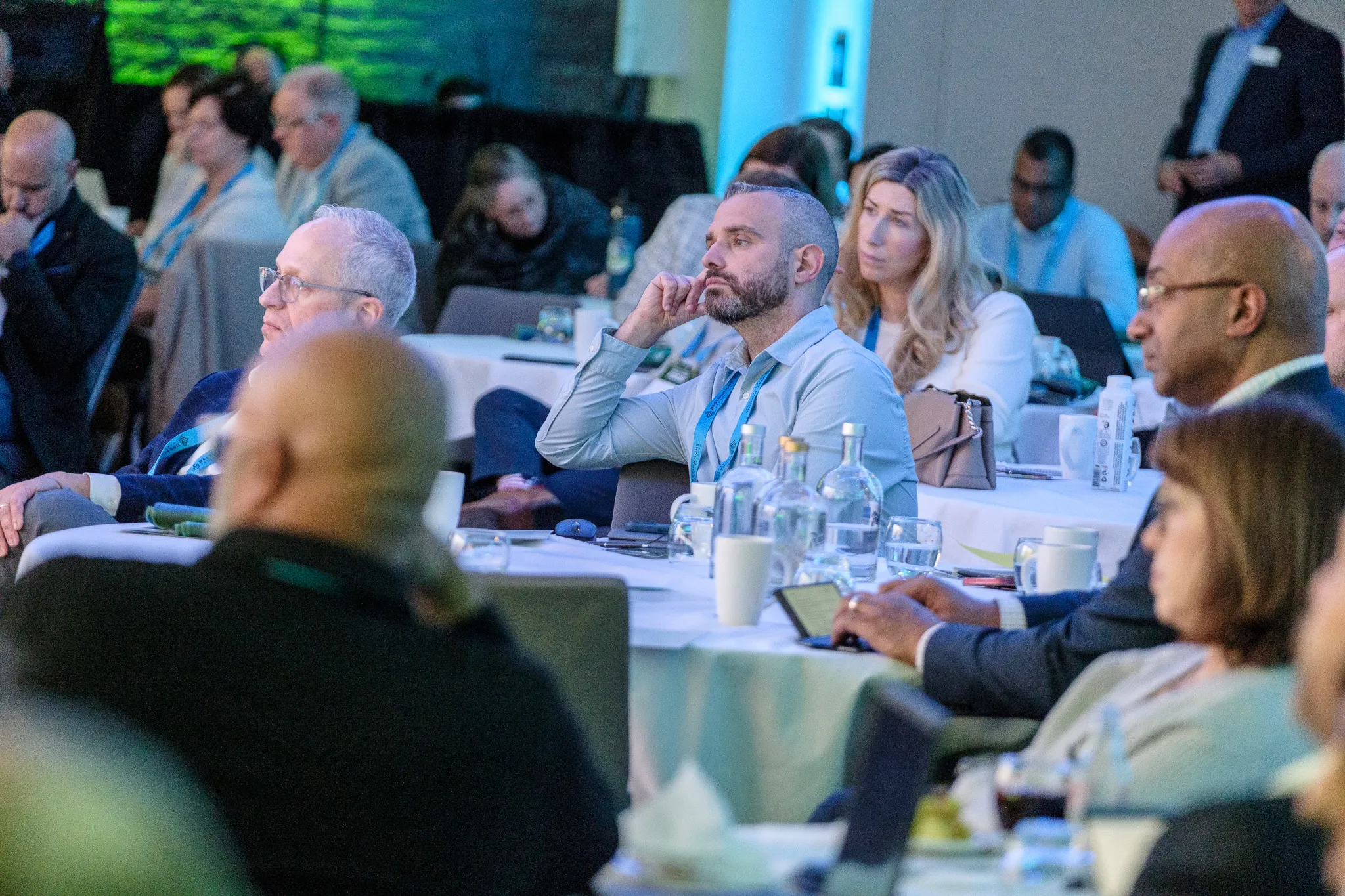
Nowhere is this better exemplified in this industry than at Convene, the annual exhibition for meetings, events and incentives held in Vilnius, Lithuania. This year on 12-13 February, the second edition of the show sought to draw attention to the region as a progressive and increasingly attractive destination for event planners. This year the event was attended by companies including Google, Nokia and Pfizer, among other leading corporations.
More than 150 international event planners from Great Britain, Germany, France, Italy and other countries were able to meet 69 exhibitors from Lithuania, Latvia, Estonia, Finland, Sweden, Poland, Russia and Belarus introducing their services. More than 3,000 business meetings took place during the event.
Secretary of the Council of Vilnius City Municipality, Miroslavas Monkevicius, says: “We want to see the number of conference delegates in the city increasing year-by-year, as they go beyond the limits of the tourism season and spend three times the amount of money that foreigners visiting Vilnius for sight-seeing or entertainment purposes do.”
The region is pushing hard for international attention. This year Lithuanian businesses invested approximately LTL 360,000 (US$143,203) to present a good image of the host city Vilnius. Almost half was investment from the capital’s hotel sector, anxious to reap the benefits that international conferences and meeting can bring to the region. Seven hotels in Vilnius provided accommodation for 400 of the foreign guests, free of charge.
Event organiser and Director of Vilnius Convention Bureau Jolanta Beniulien commented that over the course of the exhibition, both the city and the local business community had “a unique opportunity to show whatever they do best, therefore attracting new events and becoming the gateway to the meeting industry’s expansion into the entire Baltic Sea region”.
Ushering in growth
According to the Union for International Associations (UIA), the five cities Singapore, Brussels, Vienna, Paris and Seoul hosted the greatest volume of meetings in 2012. More than a thousand meetings – three every day of the year – took place in Singapore in 2012. The figure is significantly more than the combined total for the capital cities of the Baltic States at 38 (Tallinn: 18, Vilnius: 12, Riga: 8), something the region hopes to change with a development drive in physical infrastructure, service and marketing for the region.
Managing Director at The Right Solution, Sally Greenhill, who provided the keynote at this year’s Convene, said she sees great scope for growth in the region.
“When I was working in Estonia, I saw parallels with Singapore because it’s a kind of city state,” she said. “Tallinn is vital to the whole economy of Estonia, and the same is true of Singapore and the opportunities with technology, with a growing city, with a young population.”
The Baltic region has a young, very well educated population, she continued. “They have a lot of enthusiasm to really grow the economies of their cities and their countries and to really take it forward. In many parts of the world we have ageing populations that are draining the economies, and these are going to become an increasing problem.
“Particular in Estonia, all of the politicians are very young, very enthusiastic, very dynamic, you really have the opportunity to benefit from that. But I would also include industry sectors and the economic clusters in the term demographics.”
Last year Greenhill conducted research with European meetings planners, and highlighted these as the top industry sectors generating meetings throughout Europe.
“It’s interesting to look at the sectors lower down the list,” observes Greenhill. “Historically, after the great financial crisis of 2008 the automotive sector was very high in the industry sectors for the meetings industry. Then it collapsed. If you remember, the motor industry in the US was in terrible trouble and the whole business disappeared. But because of the developing countries in Europe now, and their great appetite for car purchase, the automotive industry is now back up in a high position on this list. Poland is a prime example of somewhere where the automotive industry is very important and developing fast.
“Estonia’s technical and technological knowledge is really of interest to the rest of the world and attracts huge interest,” says Greenhill, adding that this development is not only in industry and knowledge.
Key to the region’s development is the need to connect people with their destination, and that’s one of the things Greenhill claims needs to be developed throughout Latvia, Lithuania and Estonia. Increasing the air routes to many other parts of the world, of Europe in particular, and the frequency of those air routes so that you can get delegates there.
It’s a chicken and egg situation, Greenhill points out. “You have to get the demand increase before you can get the airlines to provide you with those routes and the frequency. But it can be done and increasingly the Baltic cities with the low-cost airlines are becoming more attractive to delegates as an affordable and cost-effective means of getting delegates to these destinations.
If this does involve going through a hub such as Stockholm or Helsinki, then the added travel can be ameliorated by making the whole experience and process as seamless as possible. “It should be easy for delegates to get on the transfer, the next leg of the journey,” Greenhill says. “Decrease the amount of time it takes and that too becomes and acceptable proposition.”
Finding a place to stay
According to EIBTM research done in November, the key countries generating attendees at events in Europe are Germany, Spain, the UK, Italy, France, Russia, Netherlands, USA, Belgium and Poland. This is where the delegates for the Baltic region are coming from.
“That will influence not just the travel and transport, but the hotels that they want to stay in,” points out Greenhill, adding that investment by international hotel chains would improve the region’s proposition to meetings professionals. “Many want to stay in a recognisable brand name that they know of that they feel sure will give them the experience and comfort they are looking for. So there is a need for more international brand names in the region. But it’s exactly like the airlines; you need to create the demand in order for the hotels to see the opportunity. Hotels are very nervous about the peaks and troughs in this industry. One week they’re choc-a-bloc, the next there’s no-one because there’s no conference. They like to see regular corporate travel, which is difficult to generate. So you have to develop regular demand patterns.”
There’s a real opportunity for the Baltic region to develop as a hub events destination, and it will be interesting to see who takes that forward, as the average income in each of these countries rises, there’s an opportunity for more consumer exhibitions and there is definitely an opportunity for more business events.
Greenhill also pointed to the importance of a high-status iconic convention centre in the region, adding that it’s a common factor among the top 40 cities worldwide. “But it’s not just about the outside, or getting a ‘starchitect’ as they get called these days, to design your building. The interior must also be carefully designed.”
I think there’s a great opportunity for the Baltics to attract some of the conferences that will do dual cities.
This was first published in issue 75 of CMW. Any comments? Email cmw@mashmedia.net