Iain Stirling, CMW, spoke with Amy Calvert, president & CEO of the Events Industry Council (EIC), at the recent PCMA Convening Leaders in Philadelphia about the latest barometer findings, economic significance research, and why 2026 will be a pivotal period for the global business events sector:
Iain Stirling: You’ve just released the Q3 barometer, which shows prospectivity at 106% of 2019 levels – the highest recovery milestone yet. What’s driving this surge in forward‑looking demand, especially for events planned more than 12 months out?
Amy Calvert: What we’ve seen consistently since launching the barometer in 2023 is that the pandemic fundamentally reshaped how people understand the value of events. When in‑person gatherings disappeared, communities, organisations and teams felt the impact immediately. Once we were able to share data that validated the recovery we were sensing anecdotally, there was a clear hunger to return to participating, hosting and securing space.
The data reinforces something we’ve always known: you cannot replace the trust, confidence and meaningful communication that come from face‑to‑face interaction. These are the foundations of effective organisations. Events also play a critical role in talent development – how we build, nurture and attract talent into our sector. That human‑centric value has become even more visible in recent years.
IS: In an age of AI and misinformation, people seem more aware than ever of the importance of meeting face to face.
AC: One hundred percent. There is so much happening in the world – geopolitical tensions, economic uncertainty, social fragmentation. It takes real determination to show up. People are tired, they’re stretched, and yet they still choose to come together. That, to me, is one of the most authentic demonstrations of why our industry matters. Events give people a space to understand one another, to collaborate, and to work through complexity in a way that digital tools simply can’t replicate.
IS: On the other end of the scale, hotel room nights are at 92%, slightly down from Q2. How do you interpret this gap between strong future bookings and softer current activity?
AC: In the short term, attendance is being influenced by a combination of geopolitical and macroeconomic factors. The World Economic Forum’s work on the future of jobs and skills provides helpful context here – people are navigating rapid technological change, shifting workforce expectations and new pressures on wellbeing. All of that affects travel decisions.
There are also structural barriers. Some individuals simply don’t have the resources or permission to travel. That’s something we need to talk about openly as an industry. We need a more united effort to reduce friction and improve people’s ability to participate.
And then there are sector‑specific issues. In the United States, for example, changes to funding models for critical research have affected attendance at scientific and medical meetings. These are complex dynamics, but they reinforce why advocacy and workforce development are so important.
IS: The data also showed a big variation between North America at 130% and Asia Pacific at 82%. What’s behind that disparity?
AC: Some of these swings can be attributed to one‑time, large‑scale events. In 2024, the Middle East performed exceptionally well because of major global gatherings hosted there. Those kinds of anomalies can create regional disparities in a given reporting period.
More broadly, many large global conferences rotate regions and don’t take place annually. Some operate on a three‑year cycle. When a major event rotates out of a region, it can significantly affect the data for that period. But when you zoom out to the global trend, the growth trajectory has been consistent.
IS: Hotel rates have recovered to 109% of 2019 levels. Are planners working with tighter budgets? Are events getting smaller?
AC: Inflation is real, and supply‑side cost structures are what they are. Hotels and venues are navigating their own pressures. This environment requires shared risk, shared objectives and closer collaboration between organisers and suppliers.
What I hope this signals is that organisers are being more intentional about the quality of the experiences they deliver. If we focus on what truly adds value and strip away what’s superfluous, we can prioritise the investments that matter most. Attendees will continue to prioritise participation when they feel the experience is worth it.
Destinations also have pricing power based on inventory and demand. Some markets have had to adjust rates; others haven’t. Understanding those dynamics is essential for planners.
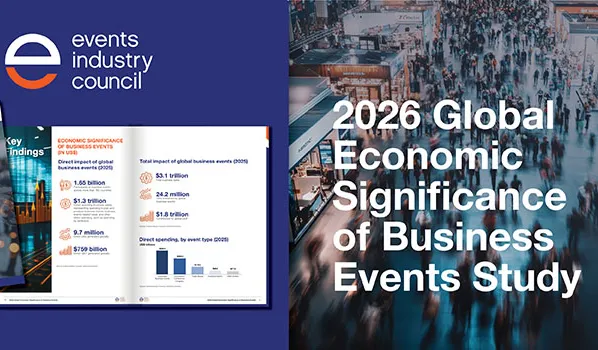
IS: Let’s talk about the economic significance study you released in May. What new insights or methodologies are you hoping to capture?
AC: We’re focused on three major areas. First, we’re taking global economic data across 50 countries and going deeper on segmentation. We’re working collaboratively with member organisations and entities that conduct economic significance studies to align methodologies. Many country‑level studies use different metrics, and we see a real opportunity to help socialise a more common framework. Over time, that will allow these studies to be leveraged collectively in a more powerful way.
Second, we’re expanding our focus on legacy and catalytic impacts. In the 2023 study, we looked at what happens to businesses, teams and communities. Now we want to identify a set of core metrics – investment in research, infrastructure, education – and track those over time. Policymakers increasingly want to understand long‑term impact, not just immediate economic return.
Third, we’re tying advocacy and workforce development into a more unified effort. Through initiatives like Global Meetings Industry Day, we’re working to communicate the value of business events year‑round. Policymakers need clear, consistent messaging that helps them prioritise investment in our sector.
IS: And that helps the industry make its case for support, especially given the geopolitical and economic uncertainties highlighted in the barometer?
AC: Absolutely. One thing that always stands out is scale. In 2019, we had 1.6bn participants attending meetings globally. That’s an enormous community – 1.6bn people who can help tell this story.
When individuals can say to policymakers, “Travel, mobility, infrastructure and opportunity in this sector matter to me personally,” it reinforces the long‑term wellbeing impact on society. Yes, it’s about 27m jobs and significant revenue, but it’s also about connection. We want to be the connective tissue that helps tell that story.
IS: Turning to your Board, you’ve got Stephanie Harris as advancing chair and Jason Dunn joining. What does this leadership combination signal about your priorities for the year ahead?
AC: We’ve been very intentional about expanding global diversity on our board. When I started in 2019, the board took a step back and asked: What is this organisation really about? What was it founded to do? That work culminated in Vision 2030, which reflects the belief that together we are stronger.
In a time of resource scarcity, the collective impact model matters more than ever. If we want to tell a better story, inspire talent and advance our sector, we cannot do it in silos. Our priorities are clear: advancing research, supporting workforce development and helping people build the human‑centric skills that are increasingly important in a rapidly changing world.
IS: With leaders from PCMA, MPI, ASAE, AMC Institute, IAEE and others, how does that shape EIC’s approach to global advocacy and standard‑setting?
AC: Each of those leaders has a distinct mandate to serve their individual memberships. But when they come together through EIC, they’re thinking about macro opportunities that wouldn’t make sense to tackle independently.
There may be perceived overlap at times, but these leaders recognise that investing in EIC is a way to demonstrate leadership and support for the greater good of the industry. They care deeply, they’re thoughtful and strategic, and they’re committed to moving the industry forward together.
IS: The keynote from the economist was quite powerful–- slightly more pessimistic than we are, but reflective of global realities. It highlighted how positive our industry is by comparison.
AC: Our industry plays an important role as connective tissue, especially as fewer people are in offices full‑time and as societal challenges continue to grow. That role is needed now more than ever.
We also have to be realistic. There are serious geopolitical realities and persistent disruptions. Markets will dictate certain outcomes. But that’s why priorities matter. Scarcity can be challenging, but it can also sharpen focus and lead to better decisions.
IS: To finish off, between the barometer, the upcoming economic significance study and a new board, it’s going to be a pivotal year. What’s your vision for how all these pieces fit together?
AC: We talk a lot about collaboration and unity, and now we need to demonstrate what that looks like in practice. This year is about showing up and delivering tangible outcomes – not just dialogue.
We want to provide resources that are genuinely useful and offer professionals ways to engage in telling their stories. One example is our work with the Joint Meetings Industry Council to update the EIC Sustainable Event Standards. Building on the Net Zero Carbon Events initiative, we’re creating a clearer, more connected roadmap for sustainability.
If advocacy and workforce development are our north stars, then our priorities are clear: help people build ambition, simplify complexity and create momentum. The goal is more engagement, more confidence and, ultimately, more meaningful action across the industry.