The Calgary TELUS Convention Centre has teamed up with the Southern Alberta Institute of Technology (SAIT) to bring ICCAUni to North America for the first time. Iain Stirling speaks to president and CEO Kurby Court about why investing in the next generation is one of the smartest legacy plays a destination can make.

For more than 50 years, the Calgary TELUS Convention Centre (CTCC) – Canada’s first purpose-built convention centre – has made a habit of getting there first. Its latest first is in education. Working with SAIT, Calgary has become the first North American destination to take part in ICCAUni, with SAIT the first academic institution in the region to join the programme.
ICCAUni was launched in 2024 as part of the International Congress and Convention Association’s (ICCA) education offer. It brings researchers and professors together with the industry to study real challenges and develop data-driven solutions, and currently includes 15 academic institutions across 13 countries.
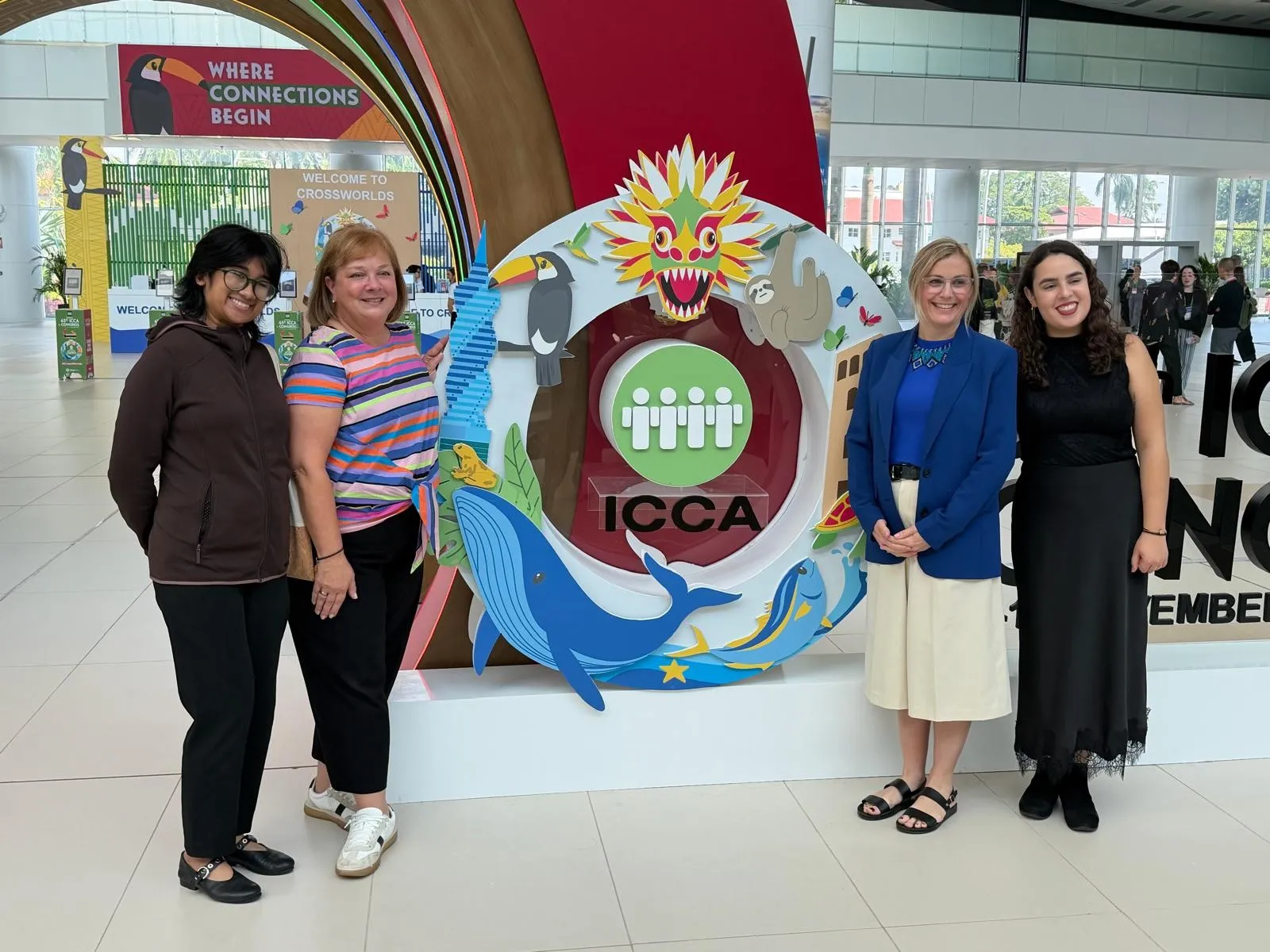
The partnership was marked at the 65th ICCA Congress in Panama, where two SAIT students, sponsored by the CTCC, joined the ICCAUni track alongside their instructor.
“SAIT is our trade school, if you will, and it has a world-renowned hospitality programme,” Court said, speaking ahead of the Congress. “When I was at a reception the other night with the programme head, she said, ‘I’m most excited about Panama.’ The students are too.”
A pipeline problem – and an opportunity
For Court, the starting point was simple: people. The CTCC’s strategy has a strong focus on what he calls “next gen” – the next generation of buyers, delegates and staff.
“What is this going to look like five years from now, let alone ten?” he asks. “It’s a little scary, because there’s a generation of people who don’t see hospitality or our industry as an attractive career. They don’t understand that the world’s your oyster if you get involved. You like to travel? This is the industry for you. Want to manage people and logistics? This is the world for you. Like constant change? Same again.”
There is a hard commercial edge to this too. Calgary is in the middle of a major wave of capital investment: an expanded BMO Centre, a new arena, a new arts facility, and three or four hotels that have launched or announced build dates.
“There is going to be a draw on human talent, so we need to feed that pipeline and be alert to it,” Court says. “We’re blessed with a very low turnover rate in our key positions and teams, but we know that may not be forever once these other facilities come online. And we’re feeling the pinch across the nation – coming out of Covid, hospitality and tourism was seen as a vulnerable sector from an employment perspective.”
He is clear the gap has not yet closed. “There’s a big gap to fill. We’re slowly gaining back that trust. But people need to understand that the next-gen employee of five, ten or 15 years isn’t really there anymore. If you can get two years, you’re doing great.”

CTCC North Building
Learning outside the classroom
Part of ICCAUni’s appeal is the chance to show students how quickly the industry moves. “Our landscape could do a complete 180 within an academic year,” Court says. “It’s important for students to experience the association world outside the classroom and see real-world things happening at the speed they actually happen.”
The idea took shape after the CTCC team learned more about ICCAUni at the 2025 ICCA Congress. Alyson Robb, the centre’s VP strategy and external relations, says SAIT was an obvious partner. “They’ve got a top hospitality and tourism programme and now offer a degree in tourism and hospitality, so it helps them level up too. They were immediately interested and saw the value. It was a no-brainer.” SAIT, established in 1916, has just celebrated 110 years.
Court adds that the centre went looking for ways to engage with ICCA and contribute something positive to the wider ecosystem. “We’re always looking for that ripple effect. We may not see the final outcome of what we’ve started, but we love starting things and getting momentum going. Nobody in North America was doing this, so, like everything else we do, let’s be the first and hopefully stimulate others to follow.”
It is already producing results. The SAIT programme director recently approached Court to ask what single question the industry would most like answered, so that students could focus their capstone research on it. “That’s a tangible way they can now give us meaningful information – not just for our venue but for the business events sector as a whole. That would never have been sparked had we not started down this road with them.”
Student legacy in the bid
The CTCC took the thinking to Panama in a more formal way. Devin McLaughlin, who has led the student legacy work for the centre, presented a white paper in the Congress’s special research stream, titled Student Legacy: How an investment in students can benefit association events and how destinations can reap the rewards.
The paper argues that shifting demographics, changing membership expectations and fierce competition for professional attention are putting pressure on associations, and that one of the most effective long-term responses is to bring post-secondary students into their events. Done well, it suggests, student engagement creates a pipeline of future members, volunteers, leaders, sponsors and advocates – and gives destinations a legacy offer that can become a factor in where associations choose to meet.
Calgary has already tested the idea. When the World Geothermal Association held its congress in the city in June 2026, SAIT students attended, many of whom had never heard of the association. “Now they’re asking how they get more involved and how they become members,” says Robb. “That was a pilot this year, and we’re looking to grow it.”
Much of the student involvement so far has come after a destination has been chosen, but that is changing. “As we bid on other international association events, we’re looking at how to weave this into the bid,” Robb says, noting that Calgary can draw on SAIT, the University of Calgary and Mount Royal University. Several SAIT alumni already sit within the CTCC’s bid process – one is its director of sales.
Court is careful not to force it. “It depends on the association, the time of year, the product and whether there’s a student component we can weave in. It comes down to whether there’s an appetite. But if they’re looking for legacy, those are the conversations we can have.”

Calgary TELUS Convention Centre
Matching groups with programmes
The centre has become adept at connecting visiting groups with relevant courses. If a pipe fitters’ association is in town, the team flags to the organiser that SAIT runs a pipe fitting programme and suggests complimentary student passes. The same logic applies to SAIT’s drone programme and defence events, and to its aircraft maintenance and engineering programme, with ground recently broken on an aircraft manufacturing facility in the region.
Another strand of the work is a partnership with the Canadian Immigrant Women’s Association (CIWA), which also works with SAIT. Newcomers to Canada do 8 weeks at SAIT doing a fast track curriculum and then they do a 4 week internship at CTCC – on the payroll and doing what Court insists must be meaningful work.
“They’re not here to stuff envelopes,” he says. “That’s the criteria for our staff to take on an intern. They shadow every role, from maintenance and building engineers to admin and marketing. At the end of the eight weeks, we’ve walked up to someone and said, ‘Congratulations, you’ve completed the programme, and here’s an offer of employment.’ Their eyes get really big and wet really quickly. It’s one of the most rewarding things we’ve ever done.”
Not everyone can be hired, but the experience travels. One former intern went on to a career at WestJet on the strength of her time at the centre. Court notes that many newcomers arrive with master’s degrees or PhDs, and some have led teams of thousands, yet their qualifications are not recognised in Canada – something the centre has been raising with government.
Sticky moments
Court believes the most valuable lessons are the ones that stick. During a Global Meetings Industry Day event, students were asked to plan the programme and told only that one attendee would be using a wheelchair. They forgot. When that guest was invited on stage to describe his day, he explained how uncomfortable it had been – and why swapping a ramp for a lift he could not operate himself in an emergency had taken away his control.
“It was a big aha for everybody,” Court says. “There were seasoned event planners in the room, including my own. I asked who had an accessibility checklist as part of their planning process, and maybe two hands went up – and none of them were my own. When students have those sticky moments with us, I love it, because they’ll never forget it.”
He recalls bumping into a former student who credited one phrase from a CTCC site visit – “You never know who you’re talking to” – with landing them a job, after a chance conversation at a function led to a request for their CV two days later.
Representation matters too. “When a newcomer comes through our venue and sees a director from a similar background, they see someone like them in that role,” he says. “It’s sad that you have to point that out, but it’s important, because people from marginalised communities can hit that barrier of thinking they’ll never be able to do that.”
A wake-up call for associations
Court’s message to associations is that they will need to think differently to win over the next generation. Younger professionals are protective of their personal time, he says, and the traditional model of volunteering and participation will not automatically appeal.
He points to his recent experience as a mentor on ICCA’s Lift programme, working with a young professional at a French DMO. “The average age in that organisation was 56 and she was 26. She has a master’s in economics, she’s a researcher, a brilliant mind – and she couldn’t unlock herself in that space. Some of her recommendations were the kind I wish my own employees would bring me, and they were completely dismissed.”
“There’s an obligation for leaders right now to think about what next gen really means,” he says. “People of my age are all on boards, and there’s nobody in their twenties or thirties sitting there saying, ‘That’s not how we talk, that won’t attract us.’ We’re making decisions about what’s best for associations when, five years from now, those members may not be there. It’s a big shift and you’ve got to be ready for it.”

Downtown Calgary
Not a box-ticking exercise
So what will success look like? “I’d love to see the students who were introduced at ICCAUni in meaningful employment and contributing to our ecosystem,” Court says. “Leading teams in associations, giving back on volunteer boards and inspiring the next generation behind them. It’s the gift that keeps on giving. The only thing we ask is that you pull someone up behind you.”
Longer term, he hopes academic programmes and the industry’s image will shift. “You don’t have to be a lawyer or a doctor to have success.”
His advice for other North American convention centres is direct: “Do it. Someone needs to lead the way. As an industry, we have a responsibility to the next generation. Academic funding models don’t always allow students to take part in this kind of engagement, so sponsoring a couple of students is not a huge draw on our organisation. Every convention centre should be looking at the academic institutions they draw on to bring business events to their buildings and supporting those students to stretch their minds.”
And he is emphatic that intent matters. “If we can’t do this with meaningful intention, we should never be doing it. This is not a box-ticking exercise. It’s leading the way and practising what we preach.”
First-hand from Panama
The SAIT students and their instructor who attended the Congress in Panama are keen to share their experiences and perspectives on ICCAUni and student legacy – a chance to hear the story first-hand from the people it is designed to benefit.
“ICCAUni was created to bridge the gap between the classroom and the industry,” says Shawn (Yih-Hsiang) Cheng, ICCA’s regional director for North America, “and welcoming SAIT as the first North American institution marks an important milestone for our region.”