Iain Stirling interviews Natasha Richards, director of impact & industry relations at IMEX and Board member of the Events Industry Council (EIC)
Natasha Richards delves into the complexities of the events industry, highlighting both opportunities and hurdles. She advocates for a more nuanced approach to measuring impact, moving beyond traditional metrics like ‘heads on beds’ to assess broader economic and societal benefits. Richards underscores the power of collaboration, the vital role of associations in shaping its future, and the urgency of sustainability efforts – from reducing carbon footprints to advancing recycling practices.
Iain Stirling: The events industry has been described as ‘hidden’ since it operates horizontally across multiple sectors. Could you elaborate on this challenge and how it affects the industry’s ability to demonstrate its value?
Natasha Richards: The business events sector’s cross-sectoral positioning, while beneficial, can make our value appear hidden or diluted. We essentially act as a catalyst for other industries, and measuring that catalytic effect presents significant challenges.
Natasha RichardsOur industry intersects with tourism, hospitality, technology, and marketing, but also with countless specialised fields through the association sector. This fragmentation makes it difficult for stakeholders to recognise the comprehensive picture of how business events drive economic growth, innovation, and community engagement.
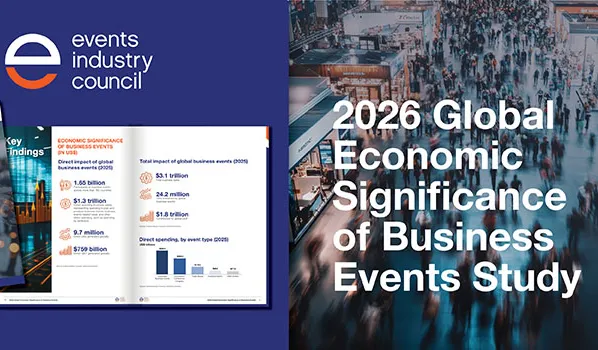
One of our most pressing challenges is the continued reliance on outdated metrics: ‘heads in beds’, coffee cup counts, and bed tax funding models that have remained largely unchanged for decades. The Economic Significance of Business Events report, produced triennially by the Events Industry Council (EIC), serves as a critical resource, currently valuing our industry at $1.6 trillion. The next report in 2026 will place greater emphasis on measuring those catalytic effects beyond purely economic impacts.
IS: Many suggest that we should be positioned under Departments of Economy rather than Tourism. Do you think that would better represent our industry?
NR: We’ve long questioned whether tourism is the right home for business events. While we’re certainly part of the visitor economy, facilitating cross-border movement, visa processes, and destination visits – business events fundamentally involve knowledge transfer and face-to-face interaction to solve societal problems and advance industries. These aspects aren’t recognised by traditional tourism metrics.
Industry thought leaders such as James Latham suggest that rather than sitting exclusively under economy portfolios, our industry should maintain relationships with multiple ministries, especially those dedicated to health and societal development. This is particularly relevant for association meetings. When a destination hosts major healthcare-focused events while maintaining connections with their health ministry, for example, it creates a powerful conduit for change and advancement.
The most effective industry advocacy often happens at local or regional levels rather than nationally. When decision-making occurs only at the national level, these crucial alignments are harder to establish. The real magic happens when local and regional stakeholders are engaged.
IS: Covid highlighted that we lack an official industry classification code, making it difficult for companies to accurately identify themselves within our sector.
NR: Absolutely. It’s incredibly frustrating when you can’t properly select what your business does! Even explaining our profession to family members can be challenging.
In the UK, efforts have focused on establishing a Standard Industrial Classification (SIC) code. Similar work has been underway in the US through the Events and Conferences Alliance (ECA), supported by IAEE, to develop their equivalent system. Creating a toolkit for other countries to establish similar classifications could be tremendously valuable.
IS: What impact did the pandemic really have on our industry, and how are we approaching advocacy and impact measurement since then?
NR: The lack of classification codes meant we essentially weren’t counted in government assessments. While the 2008 financial crisis had galvanised initiatives like the Meetings Mean Business Coalition to defend against government meeting cutbacks, Covid presented an existential threat – our sector was among the first to shut down and the last to reopen. This crisis revealed our invisibility to government and our lack of effective lobbying.
There have been positive responses, such as ECA led by Tommy Goodwin, which effectively advocates for the US industry despite the challenging lobbying landscape. However, there’s no ‘global hill’ to lobby, so we need a stronger international voice. The ‘Many Voices, One Message’ campaign by The Iceberg, is vital. We need a single, clear message articulating our value, even if delivered through different organisations and voices.
IS: As someone involved with JMIC and EIC, can you share examples of how these associations demonstrate the economic impact of events?
NR: Having recently joined the EIC Board, I’ve gained new appreciation for the research our industry ‘umbrella’ organisations’ conduct. An often-overlooked resource is the JMIC Global Manifesto developed during the pandemic, which identified 15 key ways our industry creates strategic advantage, growth, and transformation.
The EIC’s Economic Significance studies remain fundamental, but their recent Future Landscape Report is particularly valuable for understanding how our sector can influence pressing future issues. This research explored 12 critical areas including climate risk, social impact, ESG considerations, evolving business models, infrastructure, mobility, risk assessment, security, talent development, well-being, advocacy, and AI integration. While not strictly an advocacy tool, this research helps us understand near and long-term industry futures and how to better advocate across different sectors.
IS: You mentioned the outdated ‘heads in beds’ metric. Is there a new, more comprehensive measurement approach we should be focusing on?
NR: While new metrics are needed, it’s challenging to replace one that’s been entrenched for so long, particularly when room taxes directly fund many destination marketing organisations and convention bureaus. However, we can certainly augment these traditional metrics with new ones.
We know that meetings aren’t held simply to fill hotels – that’s a necessity, not an objective. We need better ways to demonstrate that we deliver more than economic value; we advance research, drive change, share knowledge, motivate people, introduce new products, and help industries benchmark themselves. Despite predictions that trade shows would become obsolete, they remain highly relevant because people require that in-person connection. We just need more effective ways to measure their multifaceted impact.
IS: Looking ahead, what strategies would help our industry tell its story more effectively?
NR: The major industry umbrella organisations, such as the EIC and JMIC, are collaboratively crafting a stronger unified message. At IMEX, we’ve utilised our for two decades to create a neutral platform bringing government representatives and policymakers together with industry leadership.
At the forum, which takes place each year at there are discussions around strategies to influence our industry’s direction and strategic destination management. This year’s forum will explore ‘The New Art of Place Leadership’, focusing on how our sector can secure a place at the decision-making table. We’re examining how to gain influence, create impact, and develop sustainable strategies that persist beyond administrative changes.
IS: Australia has united its associations under one umbrella – the Australian Business Events Association (ABEA). Could this model work elsewhere?
NR: Australia’s approach was courageous, requiring significant altruism for organisations to merge into one entity. While this exact model might not be replicable globally, our peak bodies could certainly work together on crafting a unified advocacy narrative. There’s plenty that associations can do independently based on their geographical influence, but collaboration on advocacy messaging and addressing climate challenges would be tremendously valuable. There is a greater willingness to co-operate for the common good.
IS: Are there specific sectors that excel at measuring and communicating the deeper impact of events?
NR: This work remains in its infancy, but there are champions leading the way. Genevieve Leclerc of #Meet4Impact is at the forefront of measuring societal impact, working with organisers, associations, and governments to create measurement frameworks. Similarly, the Copenhagen Legacy Lab has developed methodologies they’ve generously shared with other destinations.
We need greater standardisation of these frameworks so they can be adapted globally while accounting for structural differences across destinations and countries. Destination Canada has done exceptional work on legacy and impact studies, examining benefits beyond tourism. Australia, particularly Sydney, has developed a sophisticated approach to winning business events that specifically benefit their communities and economy.
Furthermore, the 2017 International Aeronautical Congress in Adelaide directly influenced the formation of Australia’s Space Agency. Sydney will host the next congress this September. Similarly, Barcelona’s Mobile World Congress, originally intended as a one-time event, has established the city as a research hub for mobile technologies – a lasting impact from a single event.
The same spirit of co-operation emerging among industry organisations extends to destinations. Copenhagen freely shares its research, frameworks, and findings, as do Canada and others. This demonstrates our industry’s sophistication and interconnectedness.
IS: Will these messages be featured at upcoming IMEX events in Frankfurt and Las Vegas?
NR: They’re part of our DNA. IMEX shows function as catalysts, facilitating parallel conversations among the right stakeholders to move these initiatives forward. Our Policy Forum, at IMEX Frankfurt, will address these topics directly, while board meetings of various industry organisations will use our platform to advance these discussions both at IMEX Frankfurt and IMEX America.
[caption id=”attachment_2060518″ align=”