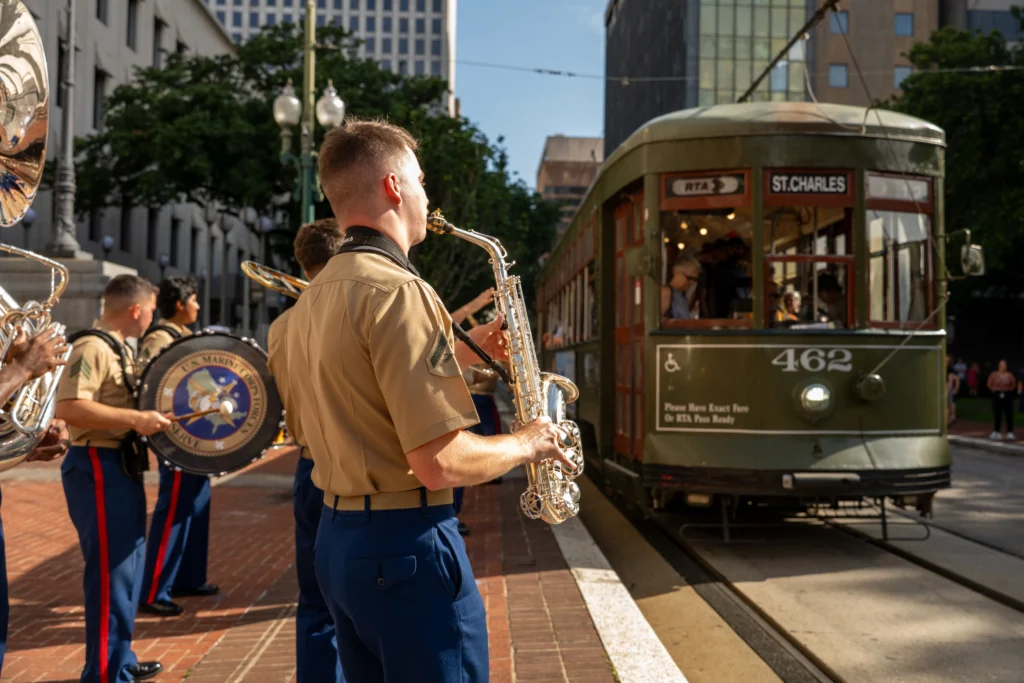
New Orleans has always known how to make an impression. But in the space of just a few weeks, the Louisiana city managed to host the second edition of North America’s 50 Best Restaurants, welcome tall ships from across the globe for the Sail 250 bicentennial celebrations, and continue building a pipeline of major medical and association conferences that underpins its economy. CMW’s Iain Stirling sat down with Walt Leger, president and chief executive of New Orleans & Company, and Stephanie Turner, senior vice-president of convention sales and strategies, to talk about culinary prestige, international headwinds, and a 2035 vision plan that puts residents, not tourists, at its heart.
Iain Stirling: The city recently hosted the second North America’s 50 Best Restaurants. How does winning an event like that translate into business events, and does culinary prestige genuinely move the needle when convention planners are comparing cities?
Walt Leger: Our strategy has always been to engage with partners, particularly in the media, who we feel elevate the brand. When people hear ‘New Orleans’, they think food. They think music. We are known for a distinctive flavour and a culinary scene that commands real international respect.
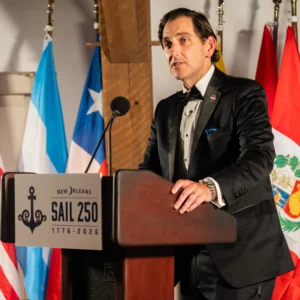
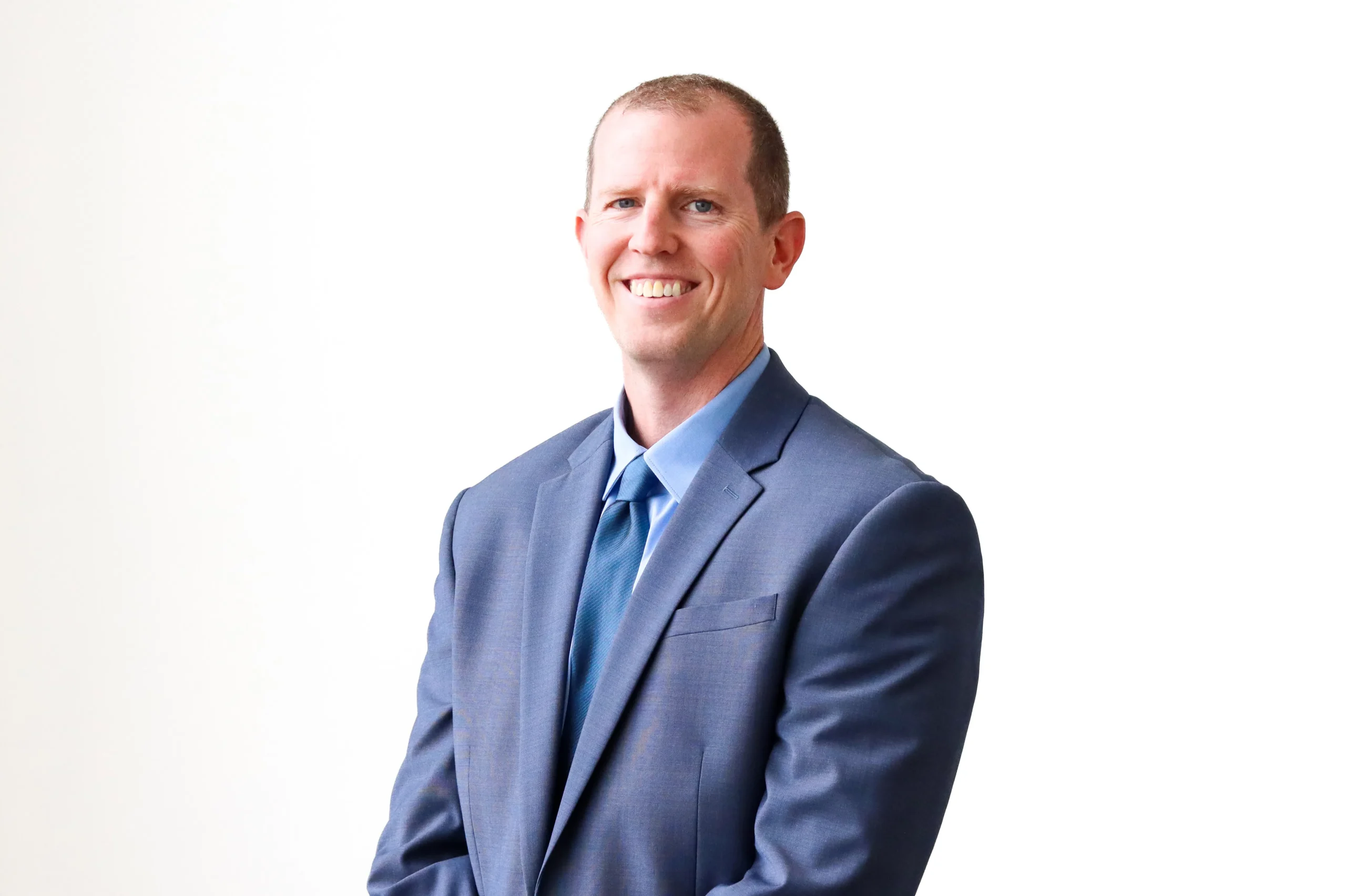
Walt Leger
What this event did was celebrate something that hasn’t always been sufficiently highlighted: the sheer variety of what our community offers. Three New Orleans restaurants were recognised on the North American list. One is a modern Mexican restaurant – very authentic. Another is Dakar Nola, a Senegalese restaurant. And the third is Emeril’s, the New Orleans classic that has really reinvented itself since EJ Lagasse joined his father Emeril and reimagined the venue.
Those three tell the story beautifully. Serigne, the chef at Dakar Nola, originally came to New Orleans to train at Commander’s Palace. He has a very traditional culinary grounding, and yet he took everything he learned here and went back to his roots – to Senegal – and created something extraordinary. That same layering of personal heritage and New Orleans influence is being replicated throughout the community.
The challenge is that if you don’t get the right people here to experience how the food scene has evolved, you can remain stuck in the perception that it is all Cajun, all Creole – and that misses the innovation. Events like 50 Best speak to a very particular audience: luxury travellers, elevated leisure experiences, and corporate clients. The feedback we have already received is that we converted a number of people into real champions for the city.
IS: New Orleans was the first city to host Sail 250, celebrating America’s 250th anniversary. What did that mean logistically and reputationally for the city?
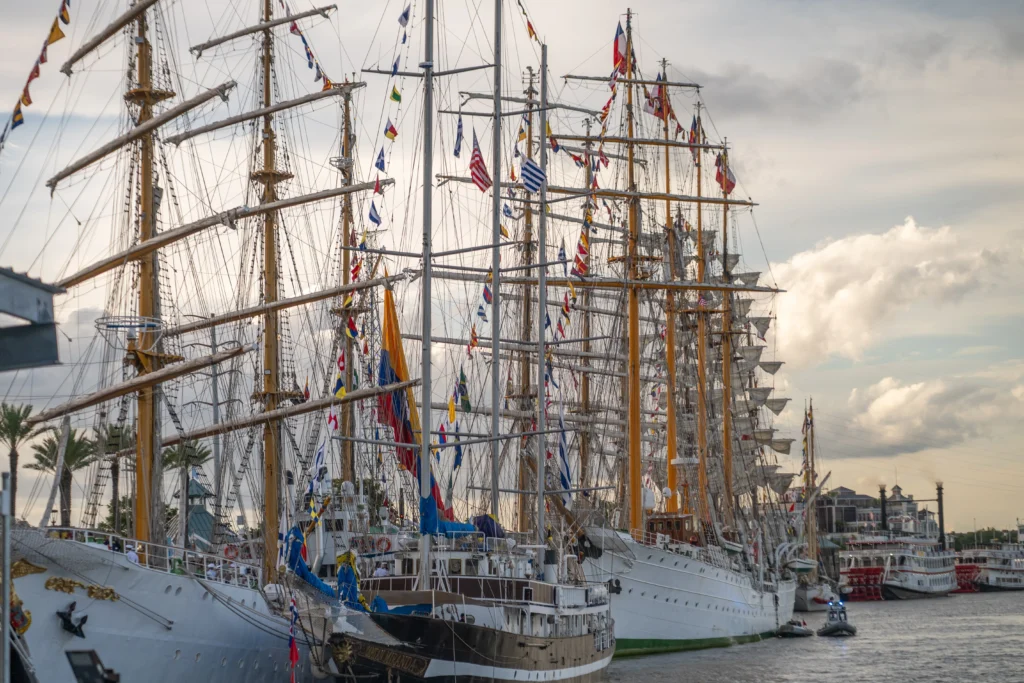
WL: The Port of New Orleans, and the system of ports along the southern Mississippi River, are among the largest on the planet – top five globally. The river touches 31 different US states and two Canadian provinces through its watershed and tributaries. Something like 40 per cent of the rainfall, crops and commerce of the United States ultimately flows through this river basin. It felt entirely fitting that New Orleans was the first city to kick off Sail 250.
The celebration allowed us to do several things at once: highlight that this city, which has been here for over 300 years, has always been essential to America’s founding and history; honour the military heritage of the city; and welcome vessels from around the world. We had ships from the UK, the Netherlands, Peru, Uruguay, Sweden, Chile and Colombia, among others, all navigating the Mississippi alongside its normal commercial traffic.
Logistically it was challenging, but it allowed us to demonstrate precisely what we do every day here – engaging in highly sophisticated maritime commerce and helping to move product to the world. And the setting helped enormously. We now have approximately 2.5 miles of contiguous riverfront that has been transformed over recent decades from industrial warehousing into what I’d describe as the city’s front porch. Last month we opened another stretch of that – the Golden Waldenburg Riverfront Park – and the combination of Sail 250, 50 Best and other events running simultaneously really showcased our capacity to layer activity at scale.
Stephanie Turner: That layering is something we are genuinely good at. This past weekend alone, we had 10,000 Louisiana educators using the convention centre at the start of the week – 7,000 hotel rooms occupied – and that dovetailed seamlessly into Sail 250 and 50 Best. Business layered upon business is very much our operating model.
IS: Inbound visitation to the US is under pressure, and Canadian visitors in particular have dropped off. How is that affecting New Orleans, and is domestic business events activity compensating?
WL: Canada remains challenging. The sentiment is clear – Canadians are simply not engaging with the United States at the levels they once were. We hope that will pass. Louisiana and New Orleans have a very deep historical connection to Canada: the Cajun people were essentially displaced from Acadiana in Canada and came south to Louisiana, so the bond is genuine and enduring. We have also done very well in the past with both corporate business and associations from Canada, and as that has slowed, it has created some pressure.
That said, we have not backed away in any meaningful way from our approach to the international audience. Stephanie was recently in Frankfurt for IMEX. We are continuing to be extremely diligent. In the longer term, we fully expect that relationship to return.
On the domestic side, we are seeing leisure pick up and business events strengthen, which is at least helping to offset some of the shortfall. And I would note that at IPW in Fort Lauderdale recently, it was Canadian journalists – from the Globe and Mail, from Toronto, Montreal, Calgary and Vancouver – who were taking appointments with us for positive stories. The sentiment on the ground is often more nuanced than the headline numbers.

Stephanie Turner
ST: From a meetings perspective, it is a combination of factors rather than a single problem. We are seeing reduced international numbers, yes, but demand is still there. We have the American Society of Hematology (ASH) coming in December, for instance, and they bring in Air France specifically because their French delegation is so large.
What we are seeing is greater adaptability across all our customers. When our customer advisory board met here in February, they all spoke about working hard to build strategies that drive their own attendance. And locally, medical meetings remain our biggest drivers. We are also seeing a real resurgence in regional visitation – the Louisiana Department of Education event I mentioned is a perfect example of that.
At IMEX, I heard consistent excitement about New Orleans from the international incentive travel market. The international traveller is actively looking for new alternatives, and New Orleans is increasingly emerging as a destination for incentive travel and small-group travel – a market we intend to grow.
IS: Medical meetings are clearly a cornerstone of New Orleans’ business events economy. How has that sector developed, and what role do the city’s own medical institutions play?
WL: Medical meetings have been the foundational layer of our association business for decades. Those meetings are critically important because they signal very high confidence in our ability to execute at an excellent level – and that industry is a small world. People talk to each other. They look for the destinations that consistently deliver, and we have been consistent.
The academic infrastructure supports that reputation. We have Louisiana State University and Tulane University as the two primary medical education facilities in the city, alongside a full spectrum of medical training programmes. Xavier University – a historically black college and university – has one of the major pharmacy schools in the South and has produced more African-American undergraduates who went on to medical school than any other institution in the country. That is a remarkable and distinct legacy.
ST: It is not unusual, as Walt says, to have 40 to 70 countries represented at a single medical meeting here. We have also had some of our medical partners ask us to work with them and other regional medical providers to develop future meetings collaboratively – which speaks to the depth of those relationships.
IS: Walt, you have been reappointed to the US Travel Association executive board and appointed to the US Department of Commerce Travel and Tourism Advisory Board. Are you actively raising the impact of the current political climate on inbound business events travel with those bodies?
WL: Absolutely. At IPW this year we had the opportunity to spend time with leaders at the Department of Commerce and with Nick Adams, the President’s special envoy to travel, and to speak candidly about everything currently impacting the travel and tourism industry – leisure and business events alike. I felt we had a receptive audience, and expect those issues will be brought back to the administration.
I also had the opportunity recently to travel to Vancouver for the City Nation Place conference, and was genuinely impressed by the technology being deployed at the border between our nations to make that crossing as efficient as possible. Continuing to lean into technology to make international travel secure, safe and frictionless is a real priority for US Travel.
We also had Secretary Duffy from the Department of Transportation visit New Orleans during Jazz Fest. He visited the Port, we discussed multimodal transportation, and he has become a real champion for modernising security protocols and implementing new technology to remove friction from the travel process. There has been some investment in additional FAA and security personnel that is a step in the right direction, but there is a great deal more work to be done.
I will say that Memorial Day travel this year was record-setting. People continue to prioritise travel. The business events side has really stabilised after some choppiness a year ago, and the fundamentals remain strong.
IS: What is New Orleans doing on the sustainability front, particularly given the scale of events like Mardi Gras and the convention programme?
WL: During this year’s Mardi Gras alone, we diverted 61,000 pounds of recyclable materials away from landfills – plastic, aluminium, glass, and traditional Mardi Gras throws. That is significant, but what is perhaps more significant is the behavioural change that programme has catalysed.
The krewes themselves, the organisations that run Mardi Gras parades, are now questioning whether they should be generating the waste in the first place. Some have shifted towards locally sourced food products as throws: red beans and rice, jambalaya mix, bamboo items. One of the major krewes has moved from traditional plastic cups to aluminium. The mindset has shifted from celebrating how much waste a party produced to asking how much we can simply stop creating.
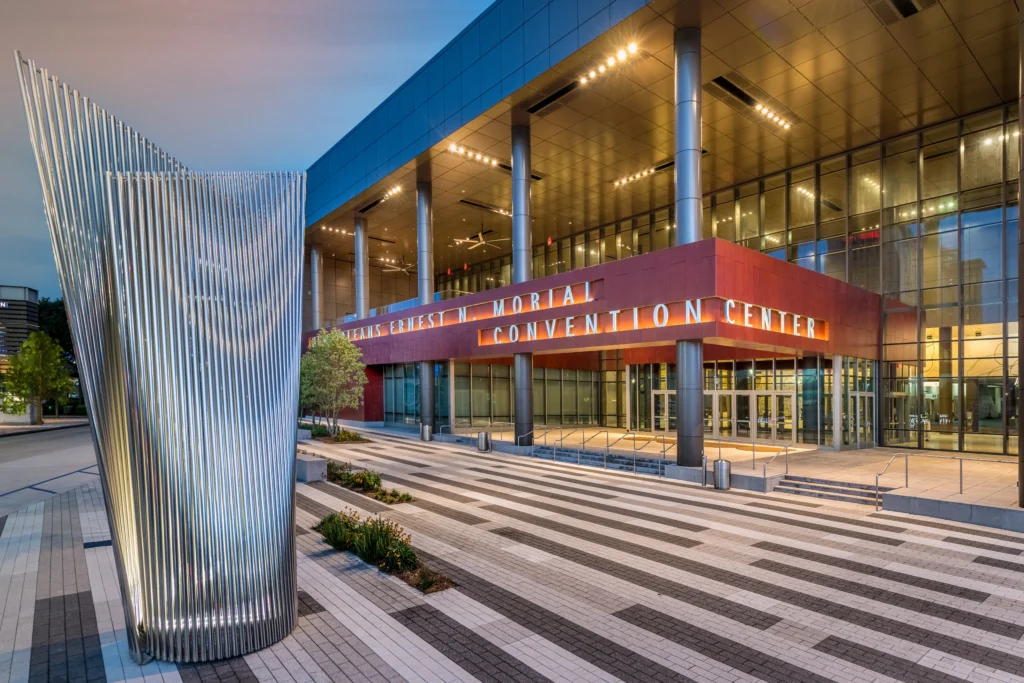
The convention centre has developed a number of complementary initiatives alongside its LEED certification work: major recycling programmes, partnerships with exhibition contractors to repurpose materials for home-building initiatives, and collaboration with the Coalition to Restore Coastal Louisiana on oyster shell recycling. The centre has genuinely led a lot of that activity across the wider community.
ST: More venues are now employing dedicated sustainability managers, and we are seeing that reflected in how our conference clients approach their own event planning when they come here.
IS: Your Vision 2035 strategic plan is underway. What is the single most important shift in how New Orleans is positioning itself as a business events destination over the next decade?
WL: The most important shift is in the framing of the plan itself. We made a deliberate pivot away from developing a tourism master plan, and instead created a vision plan for our community – centred around being a great place to live, to work, to learn and to invest. And therefore to visit. Visit last, not first.
That framing opens up a very different set of partnerships. It allows you to think about collaborative approaches to transportation, infrastructure and neighbourhood investment that benefit the people who live and work here – and which also, by extension, create real value for visitors. The riverfront development is the clearest example. Approaching that as a tourist destination first would have been the least efficient route. Instead, we asked: how do we make this riverfront as accessible as possible, full stop? How do we make it a place where residents bring their families, where local musicians perform, where the community genuinely gathers?
When you build that, you build a coalition of residents who understand the value that visitation brings – because they can see it improving their own infrastructure and quality of life. Our restaurant community is one of the most vibrant in the nation. A city of our size sustaining thousands of major restaurants, world-class attractions and a magnificent riverfront is only possible because we attract visitors who spend their money here and help us build something better for everyone.
The plan allows us to work as genuine partners with economic development leaders, the City of New Orleans, the Greater New Orleans Foundation, and regional partners across parish lines. We talk about vibrant neighbourhoods, connectivity, opportunity for prosperity – those are not travel and tourism concerns alone. But our foundational economic engine can help push everyone forward, not just the tourism economy.
“We made a deliberate pivot away from a tourism master plan. Our vision is centred around being a great place to live, to work, to learn – and therefore to visit. Visit last, not first.”
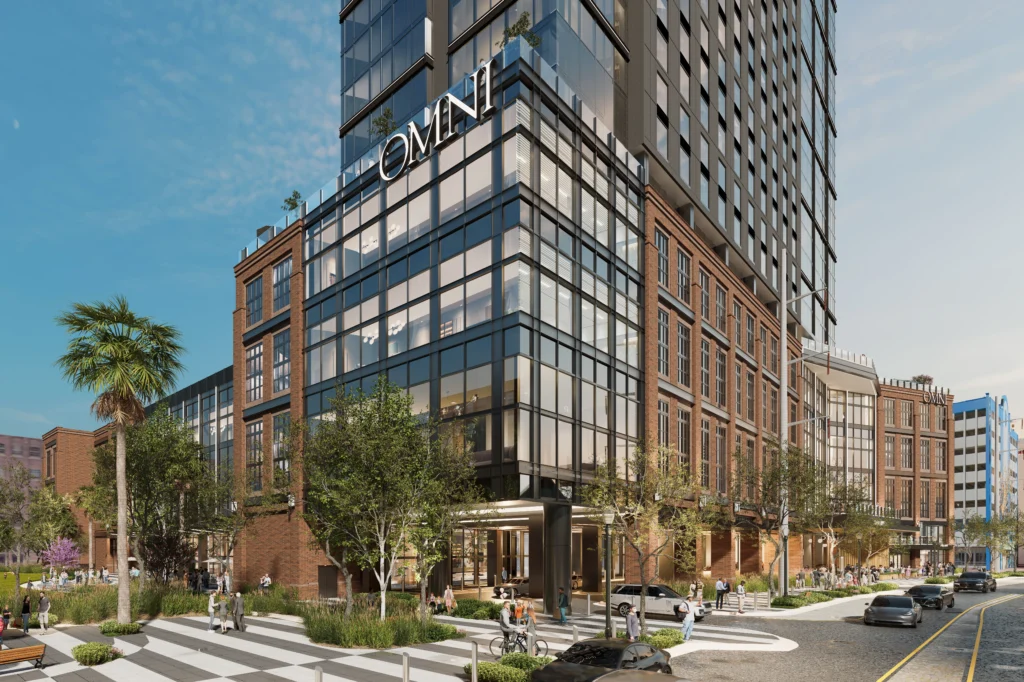
IS: What infrastructure developments should the business events community be watching beyond the Omni Hotel project?
WL: Development around the River District – the acreage immediately adjacent to the Convention Centre – is accelerating. Office buildings are coming out of the ground; the Shell headquarters building is almost complete, which is enabling further development around it. The Omni Hotel is under construction, and a Marriott AC property is going up right next to it. There continues to be new development in the boutique space as well, which is an attractive investment proposition for a lot of operators in New Orleans specifically.
On connectivity, the airport has just launched a 20-year master plan with a new terminal and a number of expansion opportunities over the next five to seven years. The airlines are largely driving that expansion themselves, which is a positive signal – they are pushing for more gates and more flights because they are seeing the growth. Following the consolidation in the low-cost carrier market, we have seen Frontier and Breeze step in to cover routes, and other carriers are expected to follow. The demand has not gone anywhere.
IPW 2027: A Homecoming
One final point of pride: New Orleans will host IPW – the United States’ premier inbound travel trade show – in 2027, a decade after the city last welcomed it in 2016. With between 5,000 and 6,000 attendees expected, including approximately 2,000 buyers and 500 international media, and data suggesting the event generates some $5.5 billion in future travel bookings for US destinations, New Orleans is preparing to put its best foot forward – and if the past few weeks are any indication, it has very good form indeed.