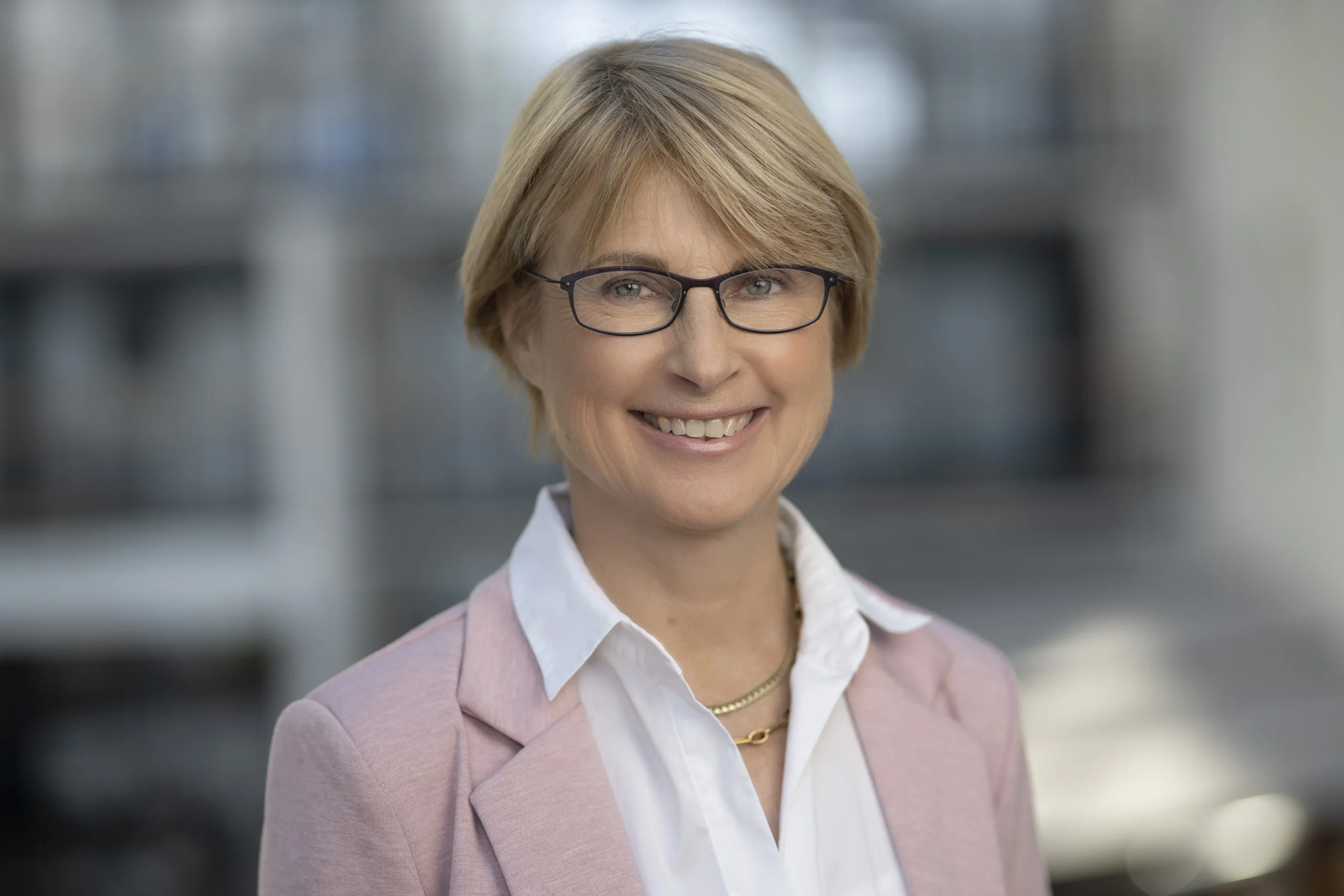
Marilyn Tham, general manager of Mega Events, MICE and Cruise, Hong Kong Tourism Board (HKTB), sat down to discuss the city’s post-COVID MICE recovery, its ambitious conventions strategy, and a bold new marketing campaign designed to set Hong Kong apart in an increasingly competitive marketplace.
Iain Stirling – Hong Kong welcomed 2.5 million MICE visitors in 2025. How would you characterise the current state of the market?
Marilyn Tham – It was a strong year. The 2.5 million figure represents seven per cent growth year on year, which we are very pleased with. In terms of segments, meetings and incentives remains the largest, accounting for around 62 per cent of total MICE visitors. Conventions and exhibitions share the remainder fairly equally, but I am particularly excited about conventions, where we saw more than 30 per cent growth last year. That tells us there is significant potential to develop further, and it is very much a strategic priority for us.
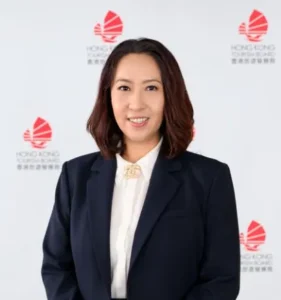
Marilyn Tham
Exhibitions are a slightly different story. Of all the MICE segments, exhibitions are perhaps the most sensitive to the macro environment, because they are fundamentally about trade and commerce. The current tariff tensions and geopolitical uncertainties do give some exhibitors and buyers pause – they are cautious about making large purchasing commitments when the business climate feels unstable. That said, Hong Kong hosts close to 100 international trade shows annually. We lost two or three during COVID, but virtually all of them have returned since our borders reopened. Last year we also welcomed nine new shows, including the Battery Show Asia and Airspace Asia Pacific, both from Informa Markets.
What we observe is that the scale of some shows has become slightly smaller compared to the pre-COVID peak – exhibitors may take a smaller stand than they once did – but the events themselves are here and they are active. And the Hong Kong SAR Government has been tremendously supportive, offering rental subsidies and other incentives to organisers and exhibitors to help drive the industry’s recovery.
IS – You mention the contrast between different types of exhibitions – can you give an example?
MT – It is quite fascinating. Hong Kong’s exhibition calendar spans an extraordinary range. At one end you have high-end luxury, such as our jewellery shows. At the other, you have something like Asia Fruit Logistica, which is one of the world’s largest fruit and vegetable trade shows, operated by Messe Berlin and based here in Hong Kong. It has a long history in the city, and even immediately after COVID it was recording year-on-year growth, because food is an essential commodity regardless of the economic climate. Registrations for the following year’s show are typically confirmed before the current one has even closed. It takes place every September at AsiaWorld-Expo, and I always encourage people to visit.
The jewellery sector, by contrast, is naturally more discretionary. If economic conditions are uncertain, perhaps buyers purchase one ring rather than ten. So, the macro environment affects different segments in very different ways.
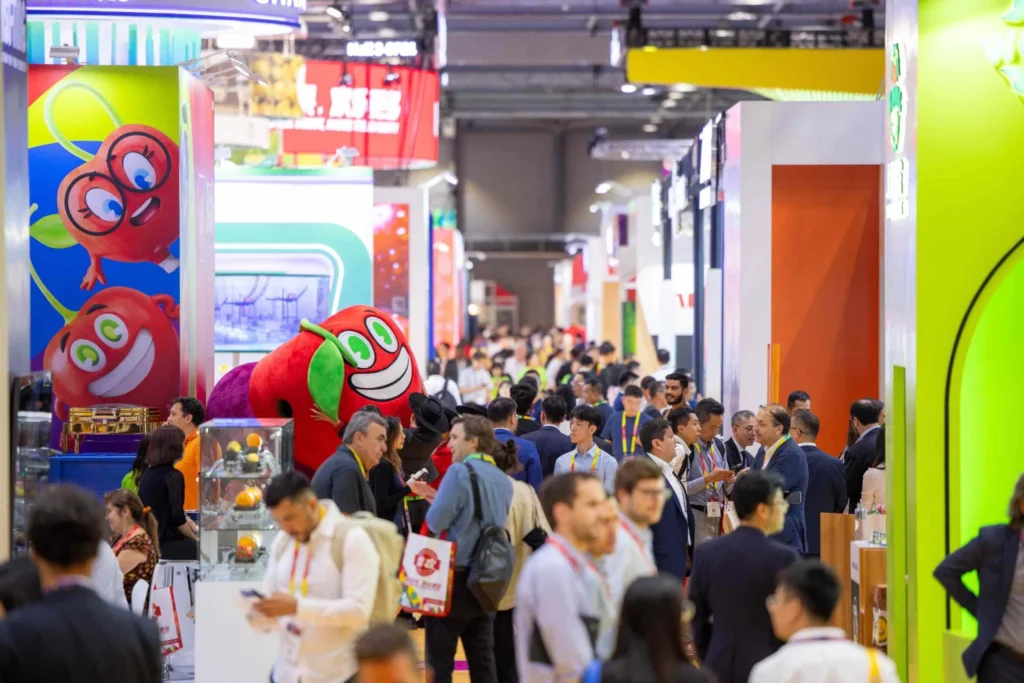
Asia Fruit Logistica 2025
IS – Let us turn to your strategy for conventions. You launched the Convention Ambassador Programme during COVID itself – what does that involve?
MT – The Hong Kong Convention Ambassador Programme is something I am very proud of, not least because we launched it in 2020, at arguably the most difficult moment imaginable for our industry. Our international borders were closed, and MICE is fundamentally reliant on international visitors and international associations. But we had a remarkable group of local leaders of business and professional bodies who were passionate about Hong Kong, and we brought them together.
Through the programme, we equip these ambassadors with a dedicated website, a full suite of resources – videos, images, presentation decks – and direct access to our team. When they are bidding to bring a conference or convention to Hong Kong, we stand alongside them: preparing RFPs, making presentations, identifying the right venue, and promoting the event internationally. It is a genuine partnership.
Since we launched, the programme has grown to over 170 ambassadors across 13 different sectors with the extension to Chinese Mainland. Between them, they have helped secure more than 50 conventions for Hong Kong, bringing in excess of 100,000 overnight visitors.
IS – And you have since expanded the programme to Chinese Mainland?
MT – Yes, we began extending it to Chinese Mainland last year, and we now have 40 mainland Chinese ambassadors. The rationale is compelling. Chinese Mainland has thousands of professional associations, many of which have developed to world-class standards. Typically, their conventions rotate among Chinese cities – Guangzhou, Beijing, Shanghai – but there is now real appetite for them to take that next step and present themselves on the world stage. Hong Kong is perfectly positioned to facilitate that.
We position ourselves as the MICE hub of the Greater Bay Area – nine cities across Guangdong Province, plus Macao and Hong Kong – with over 88 million people on our doorstep. Guangdong is one of the wealthiest provinces in Chinese Mainland, and around 18% of China’s Fortune 500 company headquarters are located in the Greater Bay Area: Tencent, Ping An Insurance, BYD. That kind of concentration of corporate presence makes a compelling case for both record-breaking attendance and commercial sponsorship, which is critical for many non-profit-making professional associations.
The 15th China Chest Pain Centers Congress is a perfect illustration. This conference originated in mainland China 14 years ago, focused on community-based cardiac care centres that help identify patients at the earliest possible stage. The association wanted to take the concept global – to share the model with other countries dealing with heart disease. So, they brought their 15th Congress to Hong Kong, and with our support we helped promote it internationally and invite delegates from around the world. This year’s congress has drawn even wider global participation, giving the event greater international significance. That is exactly what we mean by positioning Hong Kong as a super connector.
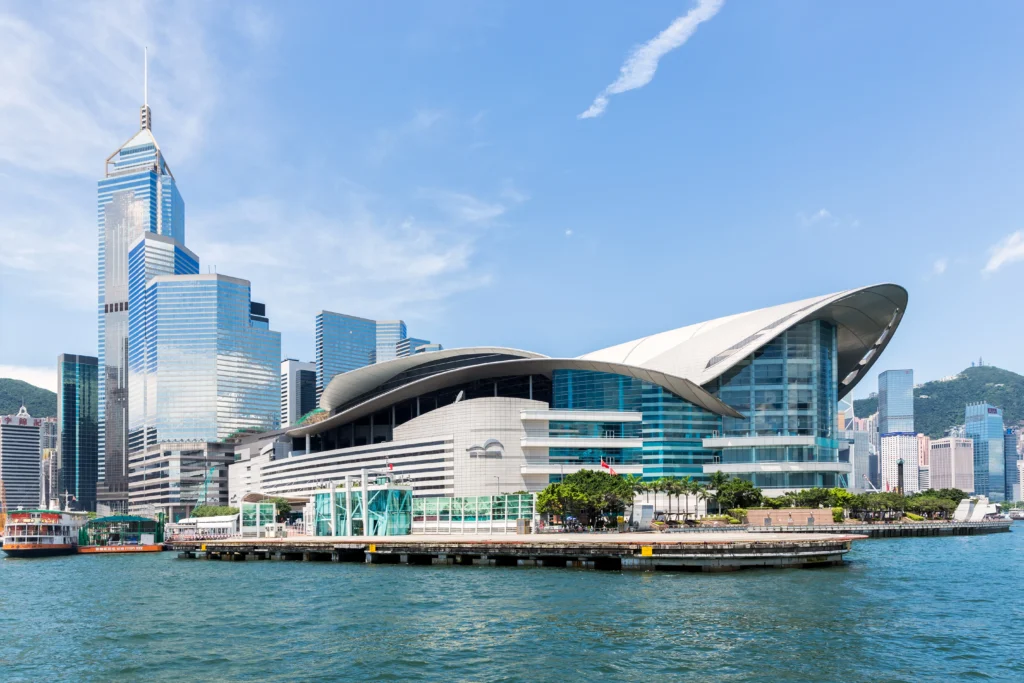
HKCEC
IS – Are mainland Chinese associations at risk of outgrowing Hong Kong and moving on?
MT – Hong Kong has a deep track record in MICE – not just infrastructure, but the experienced people, the agility, the relationships. If an association grows and eventually moves on to hold their flagship event independently elsewhere, I see that as a success. And with more than a thousand associations in Chinese Mainland, there will always be others ready to take that first step onto the global stage. We are very happy to be part of their journey.
IS – How does Hong Kong’s sectoral focus shape your conventions strategy?
MT – The Hong Kong SAR Government and the Central Government have identified eight key industry sectors in which Hong Kong should develop as a regional or international centre: financial services, trading, aviation, transportation, legal and dispute resolution, intellectual property, innovation and technology, and cultural and creative industries. We align our conventions strategy to those priorities, seeking out conferences and events that reinforce Hong Kong’s position in each field.
In practice, medical conferences are one of our strongest areas – I would estimate they account for close to a third of our convention volume. We have two outstanding medical schools at the University of Hong Kong and the Chinese University of Hong Kong, and that expertise generates significant association activity. We recently hosted a record fifth time conference of the 41st Asia-Pacific Academy of Ophthalmology Congress, and we have the World Cancer Congress coming this September as well.
Beyond the eight priority sectors, we also actively develop education and social sciences. Five of our universities rank in the global top 100, so the university community is a significant driver of academic conferences. We work closely with faculties to bring events to Hong Kong. And we welcome events from across the spectrum – architecture, for instance, is well represented.
IS – Are you seeing the trend towards regionalisation – breaking global conferences into smaller, Asia-focused editions?
MT – Very much so. The current macro environment has led many international convention organisers to explore regional formats – it reduces the logistical and financial risk associated with long-haul travel, and it creates genuine growth opportunities for cities like Hong Kong. We are actively working with international professional conference organisers and event companies to identify flagship events that align with our strategic sectors and clone an Asia-Pacific version. We have a team in Beijing, Shanghai, Guangzhou and Chengdu working alongside our colleagues here to pursue these opportunities.
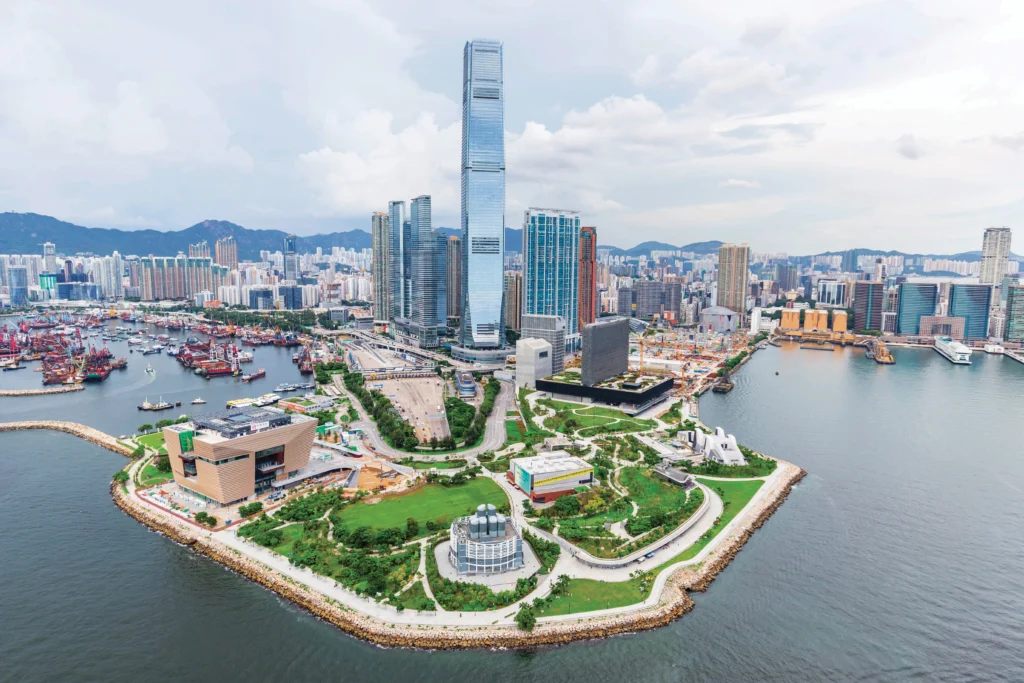
West Kowloon Cultural District
IS – Are associations asking for more financial support than before?
MT – The level of financial subsidy being requested has not substantially increased compared to the pre-COVID peak. Funding support remains important – our regional neighbours in Singapore, Thailand and Australia all offer it, and most organisers regard it as standard – but it is one element of a much broader proposition. The government has strengthened the financial resources available to MEHK for bidding, which is welcome. But what really differentiates Hong Kong is the end-to-end support: RFP preparation, presentation assistance, venue curation, pre- and post-event experience design, global marketing. Funding matters, but it is rarely the only reason a city wins a bid.
IS – Tell us about the “Only in Hong Kong” campaign – what is the thinking behind it?
MT – This is our major new marketing campaign. We spent considerable time developing it because we needed to be clear about what makes Hong Kong genuinely different – not just a good MICE destination, but an irreplaceable one.
Hong Kong’s DNA, when you examine it honestly, comes down to a few distinctive qualities: variety, vibrancy, contrast and world-class. We are a compact city that offers an extraordinary breadth of choices. And even during COVID, while our borders were closed, we were investing in new infrastructure. The West Kowloon Cultural District is now a world-class arts and culture precinct with two flagship museums – M+ for contemporary visual art and culture, and the Hong Kong Palace Museum – alongside a magnificent outdoor green space at the waterfront where concerts and festivals take place throughout the year.
The Kai Tak Sports Park, which just been crowned 𝐕𝐞𝐧𝐮𝐞 𝐨𝐟 𝐭𝐡𝐞 𝐘𝐞𝐚𝐫 at the prestigious The Stadium Business Awards 2026, is another gamechanger. We now have a 50,000-seat stadium, a 10,000-seat multipurpose arena, and extensive outdoor facilities. This has transformed Hong Kong’s capacity as an events destination. We have concerts almost every weekend – K-pop, J-pop, Cantopop, international artists – and we are building a genuine calendar of world-class sporting events. Last year we welcomed Liverpool, Arsenal and Tottenham Hotspur for football matches at Kai Tak Stadium. In August we will host FC Bayern Munich and Aston Villa, along with four other top-tier European clubs, with fixtures on 1, 5 and 7 August.
We also host the The Association of National Olympic Committees General Assembly 2026 in the final quarter of this year – the first time it has been held in Hong Kong – and I am working hard to bring SportAccord here as well, which would further cement our credentials as Asia’s events capital.
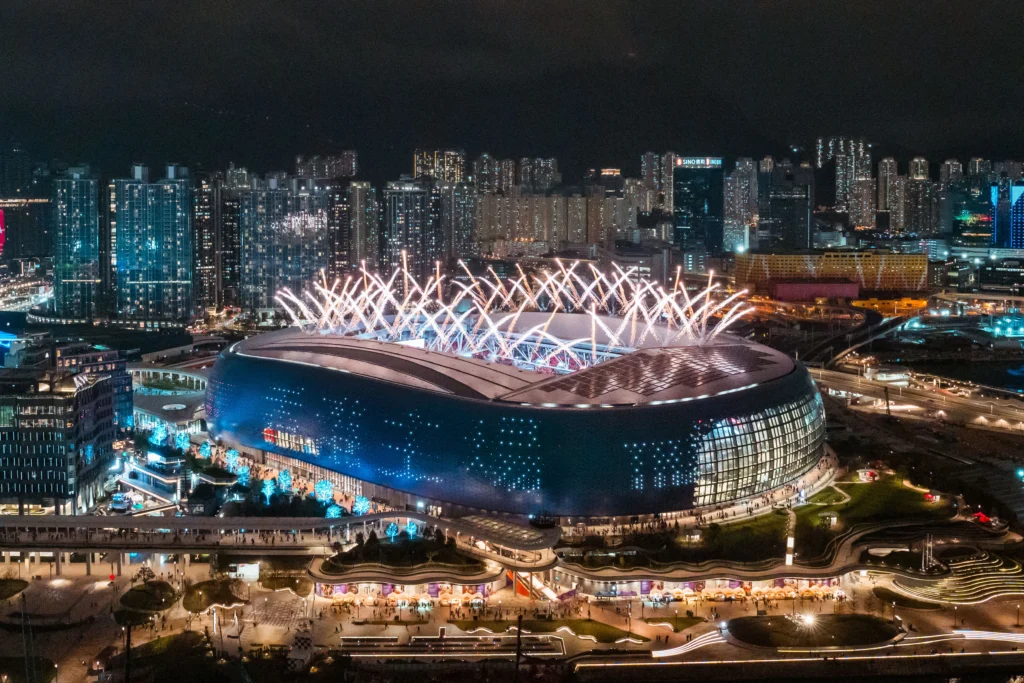
Kai Tak Sports Park
IS – How does the events calendar connect back to the MICE proposition?
MT – Fundamentally, MICE delegates are people, and people want memorable experiences. When we invite convention delegates or incentive groups to Hong Kong, we want them to experience something they simply cannot find anywhere else. So we integrate events, attractions and activities into the MICE experience – whether that is watching the Rugby Sevens, attending Art Basel Hong Kong (with which we have just signed a further five-year partnership), joining our Chinese New Year parade, or simply spending an evening at the Wine & Dine Festival with 300-plus booths set against Victoria Harbour.
We organise eight signature events of our own annually, spanning from Chinese New Year, the Dragon Boat Festival, the Wine & Dine Festival, the Mid-Autumn Festival Fire Dragon Dance – which is truly unique to Hong Kong – to Winterfest. This year we are also putting greater emphasis on Halloween, which is genuinely spectacular in Hong Kong: the entire city, from shopping malls to hotels, transforms in a way you simply have to see.
The point is that every time a delegate comes to Hong Kong for a show or a conference, there is something new to experience. The city keeps evolving. That is both our challenge and our greatest asset.
-
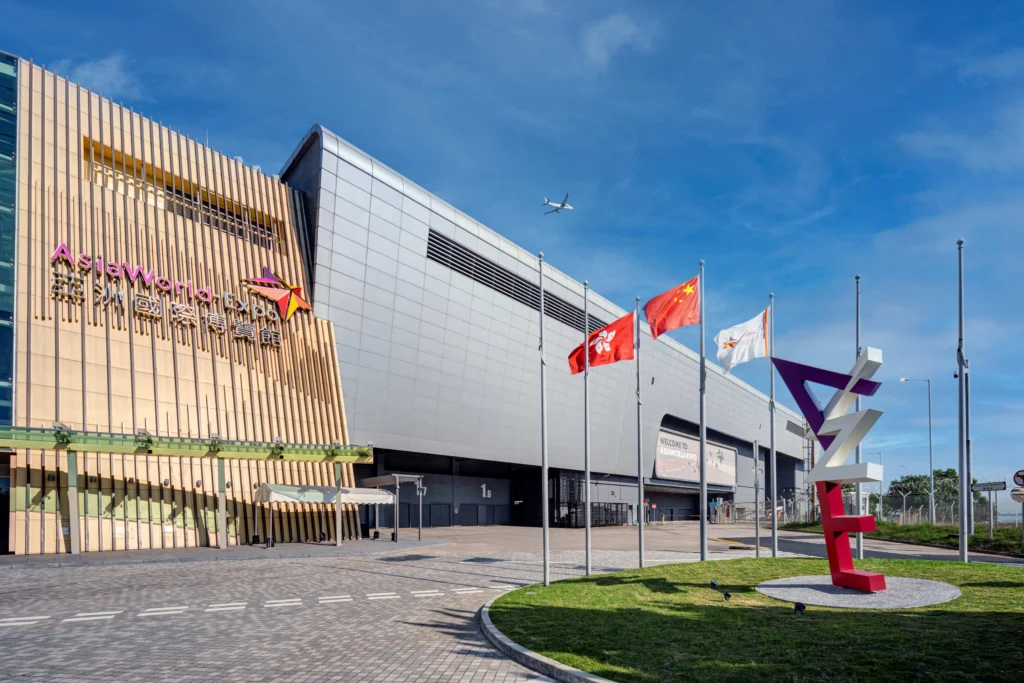
AsiaWorld-Expo
IS – Consensus was held in Hong Kong for the first time last year – are you seeing more major international events making that move to Asia?
MT – Yes, and Consensus is a perfect example of the trend. It was the first time the event had been held outside North America, and it broke attendance records with more than 10,000 delegates. Consensus 2026 is already confirmed, and 2027 as well. Another significant technology event, LEAP East, which is based in the Middle East, is coming to Hong Kong this summer and is expecting 20,000 attendees, which would make it even larger.
The logic is straightforward: Asia represents enormous growth potential for many global events, and the uncertainty in other parts of the world makes the region more attractive, not less. Hong Kong is the natural gateway. We can reach half the world’s population within a five-hour flight, and our connectivity within the Greater Bay Area is unmatched. Hong Kong to Shenzhen is less than 15 minutes by high-speed rail; Hong Kong to Guangzhou, less than an hour. The Hong Kong-Zhuhai-Macao Bridge, at 55 kilometres the world’s longest sea crossing, connects us westward in under an hour. For exhibition buyers who want to visit factories or meet manufacturers across the Pearl River Delta, the logistics simply cannot be beaten.
IS – Finally, the “Only in Hong Kong” campaign – what is the central message you want the business events world to take away?
MT – That Hong Kong is not simply a well-equipped, well-connected city – though it is certainly both of those things. It is a place where the contrast between East and West, between heritage and modernity, between the urban and the natural, creates experiences that cannot be replicated elsewhere. The campaign highlights the city’s variety, vibrancy and world-class offerings, as well as unique facets across culture, mega events, natural scenery and many more, attracting worldwide travellers to come and explore Hong Kong from brand-new perspectives and inspiring them to visit. We are an Asian World City in the truest sense: world-class in our standards and our ambition, but unmistakably, irreplaceably Hong Kong. That is the promise we are making, and it is one we are very confident we can keep.
Comments
Comments are closed on this post.