Paul Colston talks to international broadcaster, presenter, events host and MC, Paul Coia, who imparts a wealth of stories, experience and tips for public speaking. How did you first get involved in the corporate events world? Was it a natural step from your TV and radio work and how are those skills transferable? I was presenting the Holiday Show on BBC1 in the UK and Thomas Cook asked if I’d like to host its conference in Athens. I jumped at it but had to learn quickly. My agent started putting me forward for more. I may not have been experienced in the world of conferences, but I was cheap! What’s not to like? Being on stage at a conference is similar to radio and TV presenting. You’re trying to inform and entertain, to get the best out of your guests, sticking to time, remaining focussed, and always mindful of the audience. You also have to be diplomatic. I’ve lost count of the number of times as host I’ve been asked to get motivational speakers or performers off stage when they’re dying on their feet. One guy bet me £100 he would end his motivational presentation by getting a standing ovation. He was awful, and after ten minutes I was asked to get him off, except when he saw me hovering at the side of the stage and knew the game was up, he told the audience that he was going home to his five-year-old grandson who would be missing him, so he asked for an ovation for his lonely, grandson, got it, and walked out through a cheering crowd. Give us an idea of the range of events you have worked on and how you approach some of the challenges involved. I’ve worked on events with 100 in the audience through to 50,000 (opening of the Special Olympics in a stadium when Prince Philip was delayed. I was sent out to entertain the crowd for an hour and it’s amazing what panic can teach you.) I’ve hosted standard conferences, multi continent satellite link ups, product launches, annual results to shareholders and more. One of my favourites was doing a weeklong Breakfast show to all the hotels in Hawaii for Oracle delegates at their global conference. I also had to introduce the entertainment on the last night. Unfortunately, this famous rock star had been arrested for tax fraud at the last minute, so they hastily flew another act in from Los Angeles and I was sent out to fill until they were ready. That was difficult as many in the audience didn’t have English as a first language. I got them singing Beatles songs in all their different languages. All events bring unique challenges, but all demand the same preparation. I do deep research on the company, its history, objectives and challenges. Sometimes the organisers are too close to the company’s current problems to have clarity, so I try to always show them how to bring out the positivity and possibilities that will energise their colleagues. Can anyone learn these skills? I simply try to pass on the short-cuts or tips I’ve learned in my broadcasting career. Speakers have to be themselves to be seen as authentic, so my job is to get rid of any worries or blocks that are preventing them from being natural. I coached executives for a global car launch. Millions were spent on it with orchestras and barges on the Thames. In rehearsals the execs all stood giving their presentations with their palms joined together like choirboys. So unnatural. Their last presentation coach had advised them to do it to stop over-gesticulating. Nonsense. When did you last walk into an office or canteen to be faced by your colleagues standing as if in prayer? Be yourself! The biggest tip from me would be to drink a lot, two hours before going on stage. It takes that long for the cells in your body, including those in your throat and mouth, to absorb the water. A quick sip before you go on stage just won’t do it. And eat bananas for stamina. How aware should conference speakers and delegates be of different cultures when meeting and presenting in other countries? I once coached the ExCo of a large engineering company for presentations they were giving to preferred bidders during an acquisition. A Japanese bank was shortlisted and, despite my warnings, one of the directors took one of the bank’s business cards and wrote something on the back in front of the potential buyer. That potential evaporated immediately. Always ask any colleagues on the ground in any destination you are presenting what’s good and bad practice there. In media situations, some cultures embrace the adversarial style of interview, others absolutely not. So, you need to know what to expect. What are some of the more complex presentation techniques to master and what are some common pitfalls to avoid? The biggest pitfalls in presentations are not knowing your presentation well enough, turning your back on the audience to look at your slides (they are for the audience, not for you), not anticipating slide changes, not looking up and making eye contact, having too much info on your slides, and not staying focussed. Always ask for feedback to check if your message landed. In media situations, the two biggest pitfalls are distilling your messages so that you can repeat them until they land, and also over explaining. If they need to know more, they’ll ask. What was it like having to use Zoom to continue your work during Covid? I was lucky during the first Covid lockdown as I was booked to narrate a 600-page business audiobook. Zoom has been a blessing and a curse. For me the upside has meant being able to help people in countries around the world where their budgets wouldn’t allow me to travel. The curse is that I couldn’t get to see them present properly. In media training, Zoom won’t show me how they fidget, or whether they’re using notes on their screen. There are pluses and minuses. I was asked by a Swiss company to spend three days interviewing, on camera, speakers after their conference speeches. This gave the company months of social media video to use. But with little notice, I was suddenly asked to go on stage to do a ‘Secrets of Leadership’ interview session for an hour with their CEO and the CEO of another company. No time for preparation but it was exhilarating. ‘Seat of the pants’ situations like that are great if you have the experience to cope with it. How has the typical conference stage set up and format changed over the years? And how can one deal with difficult panelists and audience members who may wish to hog the limelight? One growing trend I’ve really enjoyed is the company wide search for presenters to host the annual conference. Typically, it involves staff sending short videos of themselves, then the Comms team shortlisting. I then give presentation coaching for knockout rounds until we are left with two who might be very junior but are great communicators. It’s great for their profile to be seen hosting, and even the runners up get weeks of coaching – great for professional development. It’s great that the advent of Slido and similar apps allow the audience to feedback immediately. As a warmup, I once asked the audience at an Emirates Airlines conference in Dubai to give me one fact about themselves no one else in the room would know. We found a relative of one of the Abba members, a guy who had had a chart hit in Belgium, and someone who worked as a sheep dagger in Australia. (cutting the excrement off the sheep’s fleece before you shear them.) Now that’s a company with diverse talent. But with more access for audiences comes more responsibility for presenters. You have to keep things moving, not allowing anyone to hog the time allowed. There’s a polite way of shutting down questions, removing the microphone from contributors and continuing the conversation outside. Be polite, but ruthless. There are many types of stage sessions, from panel-based set ups, to single presentations, to roundtable type discussions. How can an organiser hit upon the format that is right for their event? Whichever way it’s done, all presentations should be produced rather than thrown together. Thought has to go into them. The best are produced with one thing in mind – What’s In This For The Audience? Even Shakespeare built scene changes and intervals into his plays to keep up interest. The audience attention span has shortened over the years. The Digital Native needs more stimulation, more scene changes, more repetition of messages. One of my bugbears is when a speaker has been told how long to fill, rather than being asked how long it would take to land their message. One of the best presentations I saw was from Paul Polman, the former Unilever CEO, in Davos. He had been given an hour’s slot, but told me he’d speak for 20 minutes because that’s how long it would take to get his message across. He also opened it up to the floor for questions. He filled the hour charismatically and received a standing ovation. Audience members will rarely say: “I wish they’d talked for longer.” Think how you can surprise people. Be adventurous. Remember, it’s all about the audience, not you. Shake. It. Up.
How to shake it up on stage for maximum effect

Comments
Comments are closed on this post.
Trending
SITE to bring research and 20 years of Young Leaders to IMEX America 2026
1 week ago
Beyond attendance: How conferences can grow membership, strengthen communities and create lasting impact
1 week ago
Australian airfares remain below inflation despite soaring costs, according to Flight Centre index
1 week ago
PCMA members approve 2027 Board of Directors and Trustees slate
1 week ago
Nearly 9 in 10 destinations improve as Helsinki leads 2026 GDS-Index
1 week ago
IMEX America achieves top neurodivergent inclusive event design endorsement
2 days ago
Beurs van Berlage becomes a B Corp and achieves Green Globe Gold status
1 week ago
Advertisement
Essential Reads
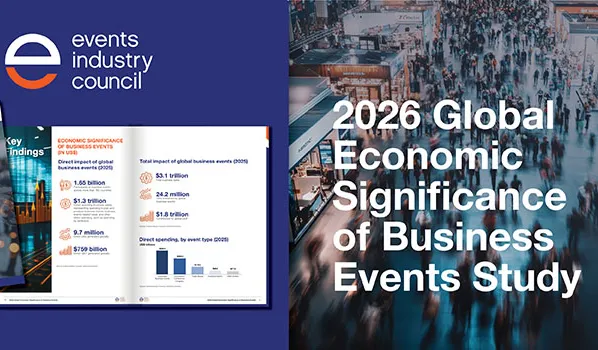
New EIC study finds business events contribute US$1.8 trillion to global GDP
Analysis

Washington DC bucks trend of US tourism decline with record visitor spending
North America

A look back at November’s IBTM and how event formats are “festivalising”
IBTMWorld

US airports face potential closures amid government shutdown
Business Travel

The countries with the highest business travel spend in the world
Business Travel
More like this