We review the Wellington events story as the new convention centre moves centre stage helping to leverage the capital’s Tech and Science expertise
As New Zealand’s centre of government and the world’s southernmost capital city, Wellington is also recognised as the country’s arts and cultural capital. That adds a valuable dimension to the small but impactful city, which has also become a recognised hub for Science, Tech, Climate and Screen – something that CVB Business Events Wellington (BEW) is proud to showcase.
Being within walking distance of New Zealand’s policymakers has also proven a key attraction for the capital city, with many national associations and organisations choosing to conference in Wellington to ensure government officials can attend and engage with their sector.
New flagship venue landing the big events
It’s been a busy year in the civic capital with the opening of the Tākina Wellington Convention & Exhibition Centre, situated right opposite the waterfront and national museum and within walking distance of 4,000 hotel rooms. Perfect for conferences with up to 1,600 delegates, in its first year the venue welcomed over 44,000 delegates and generated NZ$38m of income for the city.
Major events included Water New Zealand’s Annual Conference & Exhibition which attracted more than 1,400 delegates and 200 exhibitors; The Royal Australian and New Zealand College of Obstetricians and Gynaecologists (RANZCOG), who hosted their Annual Scientific Meeting, attracting 800 delegates in New Zealand for the first time in seven years, and the TRENZ tourism exhibition with more than 300 exhibition stands and 1,000 participants.
Built with the environment in mind, the centre has a 5-star green star rating and offers 18,000sqm of event space over three floors. The ground floor includes a 1,280sqm exhibition gallery, the country’s largest.
Tākina’s iconic design draws inspiration from a wide range of sources, including its maritime location and Wellington’s dramatic and sometimes wild weather patterns and landforms. The Māori mythology of Te Upoko o Te Ika – the head of the great fish of Maui – is also represented within the architecture.
Four key sectors
Wellington’s Economic Wellbeing Strategy and Regional Economic Development Plan outline the sectors of strength the city is targeting for further economic development and growth. For BEW, this has meant catering to these sectors and capitalising on the exciting work happening in the region. Wellington has focused on four key sectors of strength:
Science. The Wellington region contributes 22% of New Zealand’s research, science and innovation workforce – the highest in the country. The diverse science industry in Wellington spans established and emerging sectors, from medical and organic chemistry researchers tackling diseases such as cancer, to engineers and physicists tackling fusion energy and researchers tackling artificial intelligence and climate change.
Climate action and environment. Wellington is a leader in climate innovation and environment restoration. According to the 2021 Economist’s Safe Cities Index, Wellington is number one for environmental security. Conservation and ensuring biodiversity has become a cornerstone of Wellington’s values. Locals are connected to the environment like no other city and world-leading Antarctic and climate change research is happening there and affecting policy all over the world.
Technology. New Zealand is often ranked as one of the easiest countries in the world to do business and Wellington prides itself on being a strong hub for CreativeTech, CleanTech and FinTech start-ups. There are more than 4,500 tech companies in the city. Investment in research and development in the tech sector has quadrupled over the past decade in New Zealand. It now accounts for a third of the total R&D investment.
Screen. Wellington has a long history of filmmaking; the first piece of footage shot in New Zealand was in Wellington. But it was Sir Peter Jackson, who kickstarted the Wellington film industry with ‘The Lord of the Rings’ in the early 2000s, since when the sector has blossomed. In 2023, the screen, creative, and digital sectors contributed $1.52bn to the regional GDP. Wellington – or ‘Wellywood’, as it’s often known – is now a UNESCO City of Film, with the title recognising the city’s reputation and creative capabilities in the screen sector. It’s the centre of New Zealand’s digital and gaming community. It’s also home to Weta Workshop, instrumental in creating the ‘Avatar’ franchise, as well as all things Hobbit.
With several world-class universities in the city, BEW and the business events sector has sought to align itself with their research focus areas when targeting international association conferences. Top universities such as Te Herenga Waka – Victoria University of Wellington – as well as campuses for the University of Otago’s Medical School and Massey University’s College of Creative Arts, have proven indispensable. It is set to be a busy year in 2025 as the city plays host to international conferences in partnership with academics.
Green gateway and ‘coolest capital’
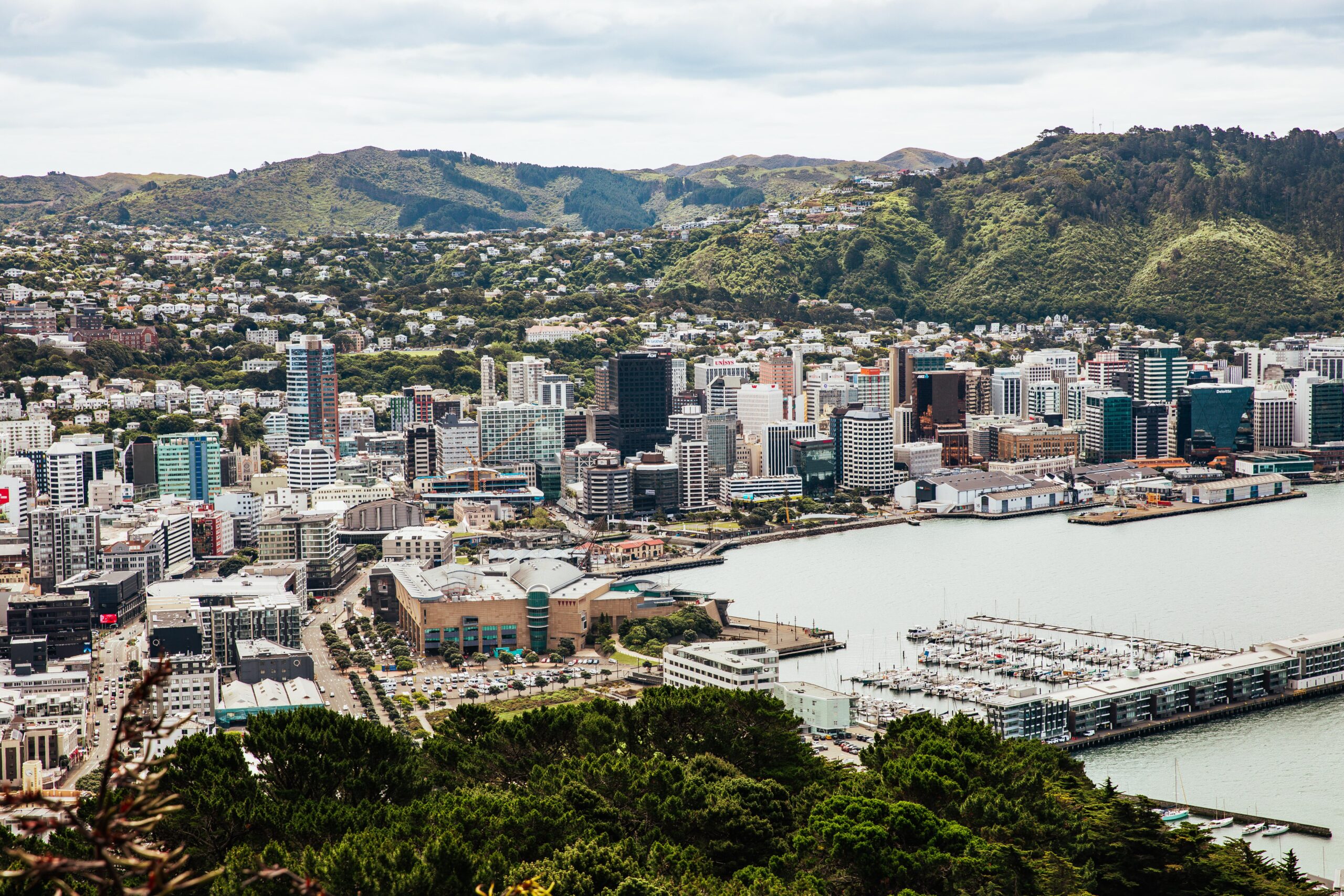
Wellington’s location at the bottom of the North Island makes it the southernmost capital city in the world and is the gateway to the South Island. Every day, ferries leave Wellington harbour and traverse the Cook Strait.
A dense and walkable city rising with the green hills from a stunning harbour, Wellington is rampant with forest and coastal walks, surrounded by idyllic nature on all sides, perfect for delegate breaks. The city has more cafés per capita than NYC and claims to have created the flat white. It’s also the craft beer capital of New Zealand.
Wellingtonians also value their green spaces to foster the relaxed lifestyle. The Wellington region includes 50,000 hectares of regional parks and forests. Tracks thread through every reserve, from 30-minute loops to multi-day circuits. Almost all the city’s residents live within three kilometres of the coastline; no surprise it’s often dubbed the ‘coolest little capital in the world’.
Much of the city is built on land reclaimed from the bay. Notable institutions include the Parliament buildings (among them the distinctive ‘Beehive’ building, the National Library, the City Gallery Wellington (housing contemporary art) and the New Zealand Academy of Fine Arts (featuring the work of New Zealand artists).
Native birds fly over the city and a clean fresh wind comes off the hills. The surrounding bush, wild coastlines and stunning harbour frame the city in every direction so it’s no surprise the natural world is front and centre for Wellingtonians.
As a result, environmental sustainability is high on the agenda. Already the lowest carbon city per person in Australasia, Wellington is on a mission to become a carbon-zero city by 2050. BEW is playing its part, having launched its legacy programme in 2024, committing to working with clients to increase the positive impact conferences have on the city and its communities.
Wellington has joined cities from around the world in the Cities Race to Zero, a collective pledge to halve carbon emissions by 2030. It was also one of 15 cities worldwide to win the Bloomberg Mayors Challenge for education-based climate solutions. The city’s major venues are all committed to playing a part, too by signing up for international accreditation with EarthCheck to improve operations in relation to environmental sustainability.
Just ten minutes from the city, Zealandia Te Māra a Tāne is a venue that encompasses all Wellington’s sustainable goals. It is the world’s first urban eco-sanctuary, an ideal location for delegates to connect with nature pre and post conference or even during as a location for out-of-the-box sessions.
Wellington is carving out a place as an industry leader in the conferencing and event sector. With its inherent cultural and environmental values, proud history of innovation and impressive geography, Wellington is a city where the wild is always present. Conferences in the city feel this energy and are fuelled by it.
It even has its own phrase. ‘To kōrero’ is to converse, discuss and meet in te reo Māori, the indigenous language of Aotearoa. As the capital city of such a culturally diverse country, Wellington has a proud history of discussion for positive charge. The rich cultural landscape and the value locals placed on it not only makes for an unforgettable cultural experience but imbues any event in the city with this same richness.