When the recession hit in 2009, the meetings and events industry was scrutinised around the world. Face-to-face meetings were seen as expenses that could be eliminated and rhetoric within the media was driven largely by isolated incidents of abuse. In the United States, it soon became clear that the industry was without the type of advocacy necessary to communicate the positive impact of face-to-face interaction to the people instituting measures aimed at reducing what was perceived, in the wake of the financial crisis, as ‘unnecessary’ expenditure. As Nan Marchand Beauvois, vice-president of National Councils and general manager of the US Travel Association, a Washington DC-based trade association that represents all industry sectors in the US, points out, those same financial companies that fomented the global financial crisis were criticising the meetings industry for holding meetings in Las Vegas – meetings they called unnecessary and frivolous. “It was kind of the perfect storm, and our industry in the United States was caught in the middle of it,” she says. “What resulted from this is that a week after our elected officials were saying ‘don’t have meetings in Vegas because it was frivolous’, these companies are bankrupt and they’re spending hundreds and thousands of dollars on entertaining in Las Vegas.” The impact was significant. The meetings industry in Las Vegas “pretty much shut down”, she claims. Meetings were cancelled, hotels went from 90% occupancy to 50%. At that time the US Travel Association, a Washington DC-based trade association that represents all industry sectors in the US, got together with all the other associations in the meetings industry who agreed something had to be done. And that was the first time that the CEOs of SITE, MPI, CIC, IAEE and others got together and said, collectively, that the decline had to be arrested. More than US$100m of cancellations took place within six weeks of negative comments by President Barack Obama. The Mayor of Las Vegas, Oscar Goodman, declared himself “hotter than fish grease” when he heard the president state that corporations using federal bailout money should stop visiting Vegas. President of Maritz Travel and Experient David Peckinpaugh underlines the real-world consequences of this political posturing. “Our company was managing a meeting for [insurance giant] AIG at the luxury Montage hotel in California, which had just accepted TARP [Troubled Asset Relief Programme] money; government money. What hit the news, before the Vegas uproar, was the fact Tiffany boxes were left in rooms, but TARP money was not used for those. “However, as you know, when something gets in the press it can be quickly spun into a very negative light,” says Peckinpaugh. “In this case incorrectly stating that public money was being inappropriately used for AIG to wine and dine a ‘boondoggle’ for its employees. Our company lost $140m in terms of business in the next 60 days.” Peckinpaugh says the company had to lay off nearly 500 people. “That gives you an idea of the environment, that was very personal and affected many individual lives, it was a disaster.” So in 2009, the Meetings Mean Business campaign was formed with the goal of protecting and defending the industry from attack. At the time simply called Council, it had a PR campaign targeted at the elected officials in Washington and took full page adverts in the Wall Street Journal, and in USA Today targeted at the politicians. The adverts were very straightforward; ‘Do you want to lose another million jobs? Keep on talking’, being one particularly colourful example. This is an initiative that is 100% funded by the industry, the organisations and trade organisations and corporates that benefit from its success. The industry is, literally, as Marchand Beauvois says, “putting its money where its mouth is”. No public money is used and despite this, while it didn’t stop what was going on in the industry, it appeared to slow it down. Doubling efforts  Fast-forward to 2014 and the industry leaders have redoubled their efforts and relaunched the campaign with a focus on creating one voice to extol the undeniable value that business meetings, events, trade shows, incentive travel, exhibitions, conferences and conventions bring to all sectors of business, government agencies and the economy. “We decided it was not a proactive organisation and was not truly representative of everyone in the US meetings industry,” she says. “Everyone decided as a group to do a lot of surveys, focus studies, what would a proactive Meetings Mean Business coalition look like – what would it be doing on behalf of the industry. So we relaunched it in 2014 at PCMA.” “Today it achieves its goals actively engaging with stakeholders, the media and – crucially – key policymakers, a proactive campaign was built around three pillars: creating personal connections, driving positive business outcomes and building strong communities.” Marchand Beauvois points out that in the US, elected officials might not necessarily understand the impact of the industry. Educate the lawmakers “It was very important for us to be able to educate them, to talk to them about the importance of our industry, the significance of their words,” she says. “We had to educate our lawmakers so they understood the value potential of our businesses, and also that any of the laws that they were able to put in action are good for our industry. That was important for us.” It’s a matter that should, after all, resonate with a community that has itself come under intense scrutiny for its own ‘frivolous’ meetings. “Government meetings in the United States have been under attack for three years,” Marchand Beauvois points out. “The budgets for federal agencies travelling to meetings has been cut back 30% and the trend, unfortunately, is that it will stay that way and not increase.” So in order for the Meetings Mean Business coalition to be able to educate elected officials in the US, it has to win the attention and backing of governors, congressmen and elected officials that understand the economic impact of the industry. The coalition calls those figures its friends in the industry. “Some of our biggest supporters are from states that benefit primarily from the industry,” Marchand Beauvois explains. “Senators and congressmen from [Las Vegas home state] Nevada, for example. We probably have 22 very strong supporters, but we have a lot of work to do because every time there is an election we may lose an elected official so it’s an ongoing process to make sure we educate our elected officials.” The industry, both in the US and those elsewhere in the world, will be watching the progress of the coalition with interest.
Winning friends and influencing people in Washington
Comments
Comments are closed on this post.
Trending
Beyond attendance: How conferences can grow membership, strengthen communities and create lasting impact
1 week ago
IMEX America achieves top neurodivergent inclusive event design endorsement
5 days ago
Nearly 9 in 10 destinations improve as Helsinki leads 2026 GDS-Index
1 week ago
PCMA members approve 2027 Board of Directors and Trustees slate
1 week ago
Cairns doctor launches skin cancer conference, with a day on the Great Barrier Reef
4 days ago
Antwerp welcomes OpenLivingLab Days 2026
1 week ago
Ex-McCann CEO to lead the EC Group
1 week ago
Advertisement
Essential Reads
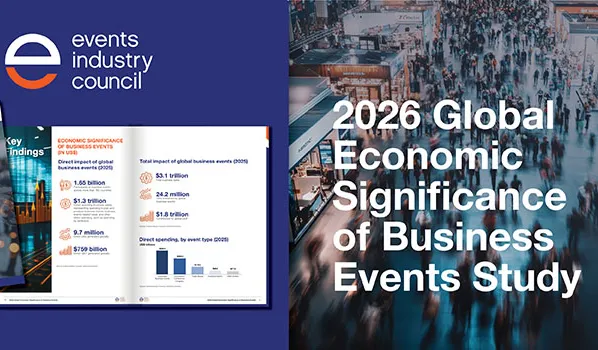
New EIC study finds business events contribute US$1.8 trillion to global GDP
Analysis
Washington DC bucks trend of US tourism decline with record visitor spending
North America

A look back at November’s IBTM and how event formats are “festivalising”
IBTMWorld

US airports face potential closures amid government shutdown
Business Travel
The countries with the highest business travel spend in the world
Business Travel