By Juraj Holub
The moderator steps on stage and asks the audience ‘Are there any questions?’. Tumbleweed rolls by as delegates shuffle nervously in their chairs. Eventually, the moderator asks an obligatory question and the session ends on an anti-climax.Recognise the scene? During one of our recent events 50% of eventprofs cited a lack of questions from the audience as the biggest barrier when looking to create audience interaction. So, why don’t participants want to put their hands in the air and get involved?
Hurdle #1: Fear of looking stupid
At school, asking questions meant you didn’t understand something and so you would hold back to avoid looking stupid in front of your peers. This is something many of us have taken into adulthood.
According to the National Institute of Mental Health, 74% of us are scared of public speaking. Having to ask questions increases this anxiety.
Tip:
Evaluate your space. Large rooms with a theatre setup discourage dialogue, as any intimacy between participants and speaker is ruined by the sheer size of the room. Creating a setup that is intimate encourages interaction between the speaker and the audience.
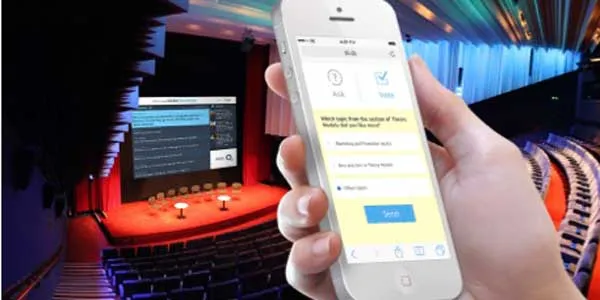
Another effective solution is technology. We live in a world where putting up your hand and asking a question is no longer the only way to get your voice heard at a conference.Interaction technology, such as Sli.do, is a powerful enabler democratising the Q&A and panels. Anyone can participate.
Hurdle #2: Session formats not optimised for interaction
Most presentations at conferences are monologues, very much like telling a story, and people usually don’t ask questions during someone’s story.
Tip:
While it might seem natural to wait for the speaker to finish, the chances are the audience will be disengaged by the time you open up the floor for questions. By experimenting with the timing of the Q&A, for example opening to questions in the middle of a presentation, you can draw people into the story and see a rise in interaction. Even better, ditch the traditional keynote and replace it with much more interactive fireside chats.
Hurdle #3: Ineffective Q&A time
It is not feasible to expect 300 participants to each ask a question during a 5-10 minute Q&A session. It is also hard to gauge if a question that an attendee will ask will be relevant to people in the room.
Tip:
Not only can interaction technology help you collect audience questions effectively, it can also give you a clear overview of the popular topics, as people are able to assign upvotes to the submitted questions.
Archived questions can also be sent to speakers who in return share their answers after the event.
Hurdle #4: Lack of encouragement and facilitation
If you are hoping to create this memorable communication you need something a little bit more than a speaker standing on stage and asking “are there any questions?”
Tip:
Create a question-asking environment. Allocate time for the audience to reflect on the content and have them brainstorm questions in groups. By not allowing the speaker to talk at the faces in the crowd for an hour, you have already introduced something new. Dropping in activities and votes throughout a talk means the audience will feel more energised and willing to participate in the discussion.
There are hundreds of ways to help encourage participation at Q&A sessions, but, by understanding some of the reasons why delegates would rather sit quietly than put themselves in the spotlight, you will be better able to create an audience based discussion without suffering from the dreaded silence that follows: ‘Are there any questions?’