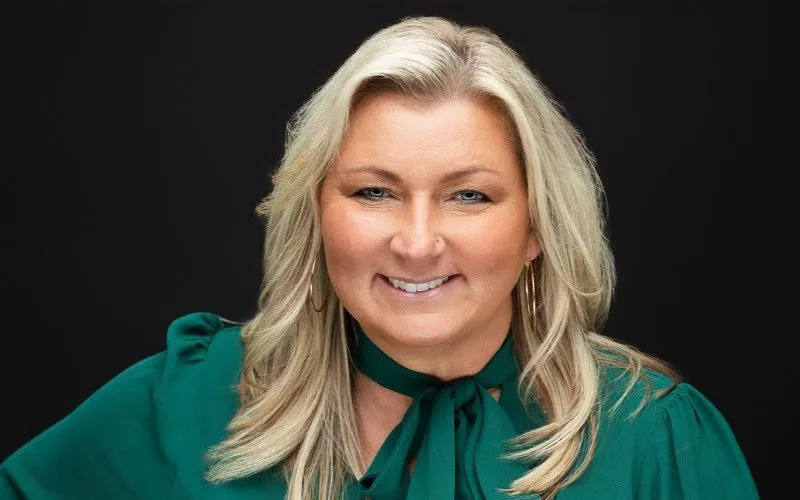
CMW’s Iain Stirling talks to Robin Mack, executive general manager, commercial & business events Australia, at Tourism Australia.
In terms of promoting sustainable tourism, what measures are Tourism Australia taking to ensure an impact is being made?

Robin Mack
We know that events have a massive economic impact on Australia. Have you seen an increase in events this year?
RM: The latest data I’ve got on all arrivals into Australia from all markets show that we are at 77% of where it was compared to 2019, although the UK market is at 82%. So, tracking really well, and includes business and leisure events. Aviation is back to 86% internationally and 100% domestically. So that’s kind of our litmus test. We’re hearing from many industries that are tracking ahead of projections. Our Bid Fund programme is a good measure for us for our future pipeline. We had 28 wins between January and the beginning of August, worth AUD$172m. This is tracking better than where we were at in July last year for wins in a calendar year. Even in Covid, we were winning future bids. We’ve added AUD$4m into boosting that programme which shows the importance of the Bid Fund.
How is Tourism Australia encouraging sustainable tourism within your key destinations?
RM: It’s about the advocacy piece. Who’s doing it well around the country? Well, Adelaide Convention Centre is doing amazing things with their new waste programme, Waste Master. And ICC Sydney has got carbon zero menus that they have introduced. MCEC in Melbourne has a reusable cup scheme to provide an alternative to single use coffee cups. We have the Australia innovates video series, which is a series of nine films linking to our key industry sectors, that demonstrates the Australian smarts. And one of our key sectors that we focus on is renewables. We have a conference on that coming up in Adelaide and one person we highlight in the series is Graham Ross. He has a local company called BlockTexx, the world’s first commercial-scale textile resource recovery facility. BCEC in Brisbane has partnered with them to recycle linen. These are the kind of champions we are elevating.
How important are ambassadors from key economic sectors in securing business for Australia?
RM: We have our focus sectors that we champion and elevate, like the renewables I mentioned, but also space, education, infrastructure and health are all focused on. Our Australia Innovates series is an example of how we amplify the stories of extraordinary Australians to demonstrate our country’s smarts in these sectors and ultimately drive awareness of Australia as a destination to hold your next conference. Many of Australia’s convention bureaux also have an ambassador programme, which they leverage to help secure business for their destinations.
How do you work with overseas long-haul groups in terms of minimising their carbon footprint?
RM: We are on the other side of the world, and we recognise that many flights are lengthy. There are carbon offset programmes and our own airline, Qantas has a green frequent flyer card for their members. Associations and incentive groups can still meet those sustainability measures in terms of a net carbon zero event and give back to communities here. We have the Indigenous elements that we talked about, so they can weave in a welcome to country and Indigenous speaker, gifts, etc, that are sustainable.
The 2032 Olympics will be in Brisbane. What other major events do you have coming and what’s the expected legacy from these events?
RM: The Olympics, in 2000 was a massive legacy and massive bump in tourist numbers following. So, the global eyes on it will be amazing. We had the FIFA Women’s World Cup taking place recently, the British and Irish Lions in 2025, the men’s Rugby World Cup 2027, Netball World Cup in 2027 and women’s Rugby World Cup in 2029 and then Olympics in 2032. Building up to Brisbane in 2032, the government have announced an AUD$5.6bn investment into infrastructure in Brisbane to get ready, which includes a new stadium. The Gabba is going to be reworked into a new arena version. Queens Wharf is under development and they are building sporting infrastructures around in regional places, so when the Olympics end, there will be an incredible legacy left behind for the communities. 
Are there any particular key association meetings in the pipeline?
RM: We’ve recently held World Rotary in Melbourne, which brought in 14,000 delegates, 11,000 of those are international. There’s the Australian International Renewable Energy Conference in Adelaide in 2024, but in the next four months, we have five health association meetings in Australia in five different cities. One of them was the International AIDS Society Conference on HIV Science in Brisbane in July. In September, there is also the Congress of the Asia Pacific Initiative on Reproduction (ASPIRE) in Adelaide, the World Congress of Optometry in Melbourne, and, in October, the World Conference on Family Doctors (WONCA) in Sydney and the 17th World Federation of Chiropractic (WFC) Biennial Congress at the Gold Coast. Another key event you have coming up this year is Dreamtime, right? Yes, that’s pretty huge. It runs every two years and we bring in around a hundred incentive buyers, and highly qualified media as well. It’s back now for the first time in three years, for obvious reasons, and this year it will be held in Adelaide.
What are your thoughts on AI and how is it going to impact the events industry?
RM: It is already unveiling itself. It’s emerging fast. For me, efficiencies are the key thing that’s going to come through for us and for our industry. It could be in itineraries. But it’s only going to make our lives easier in terms of what we do and can allow us more time to focus on making those business events special. For us as a destination, it offers opportunity – opportunities for efficiency, which allow more time to make our events and our destination even more wow! Images courtesy of Tourism Australia.