“There is a tremendous thirst for knowledge about the meetings and incentives industry here in China,” Group Exhibition Director of RTE’s Meetings and Events Portfolio, Craig Moyes, told CMW. “The nature of the local Chinese marketplace is for meetings professionals to investigate, and learn from, international practice.”
CIBTM Exhibition Manager, Jeffrey Xu, agreed the meetings industry in China was now beginning to take shape. He said that, since 2007, the number of venues in Beijing alone had reached over 4,000, with 10 exhibition halls and 134,000 hotel rooms.
“The infrastructure of Beijing improved dramatically due to the Olympics in 2008 and, as the Chinese economy grows, there will be more business opportunities to capitalise on,” said director of marketing for Marriott North East, Beijing, Nobby Choi. “We postponed our hotel opening to March 2009, but have since held at least 10 large events so far this year to the value of RMB3m (US$440,000).”
Xu noted Beijing now attracts around 2,000 meetings annually, of which 140 are considered large events. According to an analysis of China’s inbound tourism market, by China National Tourism Administration (CNTA), business travellers account for 39.9 per cent of all tourists.
The results of big meeting business wins for China can be seen in the latest International Congress and Convention Association (ICCA) country rankings. China is placed ninth with 245 international association meetings held in 2009. In the Asia Pacific and Middle East, China was ranked second.
“With China due to become the world’s largest economy by 2050 and with the fastest-growing economy in the world, as illustrated by many multinational companies with its regional headquarters in Beijing, it is clearly the ideal location to support the MICE sector in Asia.” said Xu.
Moyes added it was a most exciting time for the growth and development of the meetings industry in China. “In China alone, Reed Exhibitions organised over 40 events last year, bringing together over 20,000 suppliers and around 700,000 visitors.”
Xu believes the country has clearly benefited from governmental investment in infrastructure for large-scale global events such as the 2010 World Expo in Shanghai, which has attracted millions of visitors.
“CIBTM is one of the major driving forces behind the growth of the meetings industry throughout China. It is set to help China fully realise its potential to attract large-scale international corporate and association events,” Xu added. “The market is ill-defined, so CIBTM will help to show the possibilities.”
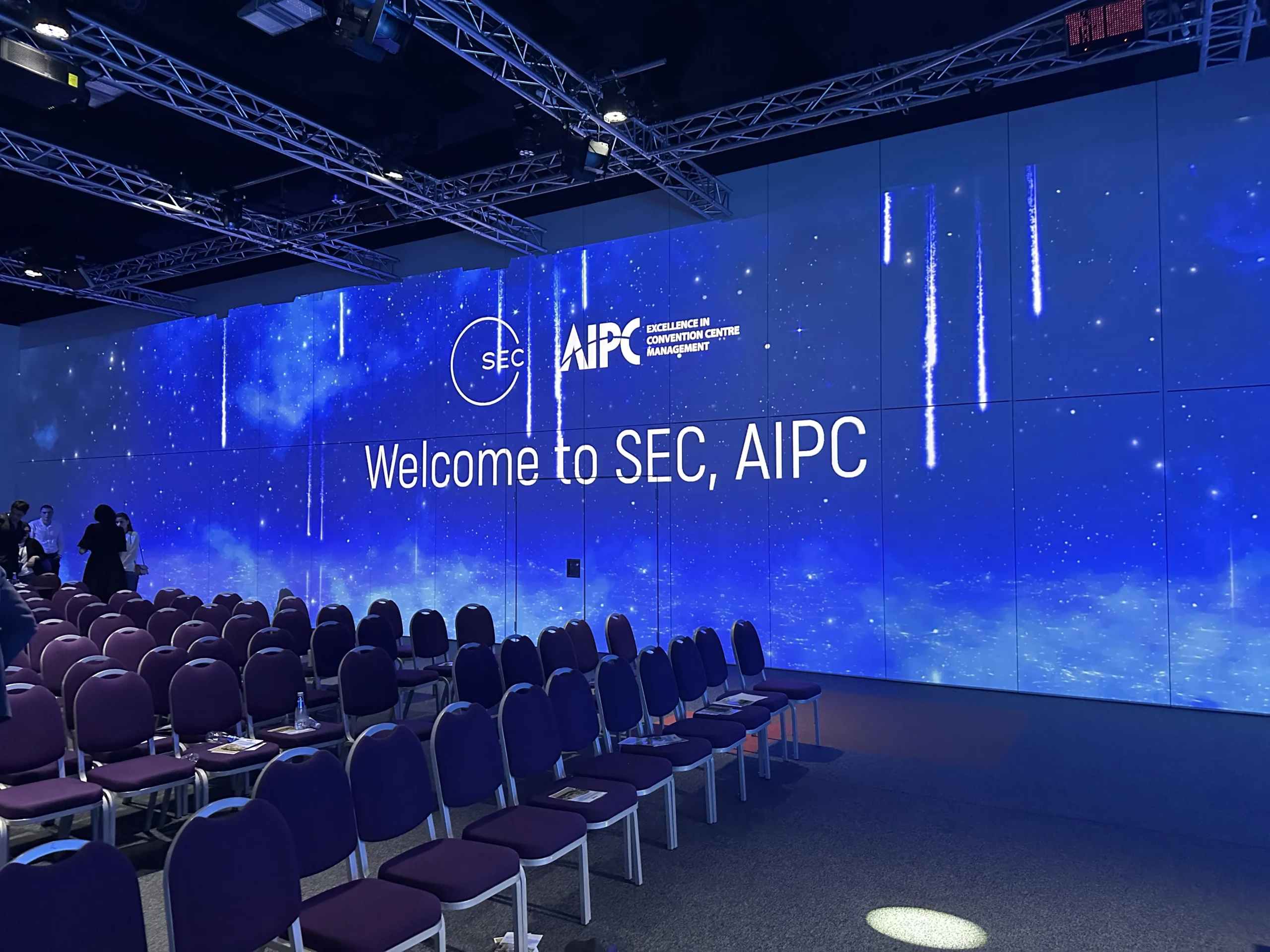
Education played a key part in this year’s show, and the organiser was proud to note at least 50 per cent of the speakers were China-based. The programme featured guest speakers from industry associations such as Meetings Professionals International, ICCA, the International Association of Congress Centres (AIPC), international destination management agency MCI, MICE China, the University of Westminster London, Sarawak Convention Bureau, and the Singapore Tourism Board.
RTE regional director for the Asia Pacific, Noor Ahmad Hamid, said the Chinese had their own model for doing things but the challenge is to keep the momentum to mature the industry. He argued education plays a key role.
The education programme received accreditation by the Convention Industry Council, so that Certified Meeting Professionals could attain credits toward further certification by attending seminars.
“Our global portfolio approach means we understand completely that the needs of the industry differ from region to region; what is right for one market is not right for another,” said Moyes. “We can therefore craft programmes which are not only completely relevant, but also provide insight into the impact of global trends on business locally.”
Official backing
CIBTM is officially backed by the Beijing Tourism Administration (BTA) and co-hosted by the CNTA and the Beijing Municipal Government. The show is also part of China Meetings Week, a dedicated week supported by the private sector, regional authorities and international industry associations.
“CNTA’s endorsement propelled the show forward,” says Xu. “It is a clear signal that the government recognises the opportunities to leverage its hospitality and facilities to support the meetings industry.”
Deputy Director General of the BTA and the co-organiser of the event, Gu Xiaoyuan, announced that she expected CIBTM to become the leading MICE event in China and the Asia Pacific region in five years.
“It is an exciting time for the development of the meetings industry in China and we are delighted to be working in partnership with CIBTM and RTE to build Beijing’s brand image in the MICE industry. Our partnership with CIBTM is certainly one that will grow and develop over the long term,” said Gu. “The meetings industry is a strategic pillar for the Beijing Government and in recent years it has instigated a series of initiatives to entice association conferences to come to China. We have also invested in training initiatives for the local industry and invited experts to consult with regions on how to develop their MICE offering.”
RTE claimed the fifth edition of CIBTM as the “largest ever” in terms of floor space, hosted buyer numbers and exhibitors.
According to pre-audited figures, the organiser said indications were that the total number of hosted buyers and trade visitors (near 5,000 visitors in 2009) increased by 16 per cent year-on-year. The show’s hosted buyer programme enlisted 275 buyers including 105 Beijing-based professionals, which was a 19 per cent increase on 2009’s levels overall.
The total floor space increased year-on-year by 20 per cent, to over 7,000sqm and a total of 310 exhibitors represented 26 countries. New to exhibit at this year’s CIBTM was Taiwan, as a country pavilion, and airline marketing group Star Alliance. The Japanese and South Korean national tourism organisations both increased their stand presence.
Star Alliance Co-ordinator Judy Guo said the group hosted around five events in China annually, but this was the first time they had exhibited as a group. “The buyers we met with are not our target market, as we wanted to meet more corporates. However, it was worthwhile to promote our MICE products to the industry and it depends on the leads generated as to whether or not we exhibit again,” she added.
“CIBTM takes place in the most prolifically fast moving market in the world,” said Director of Sales for Jebel Ali International Hotels Dubai, Shane Jameson. “We are here for the long-term and we will not survive without business from China.
On the same stand, Head of Sales and Convention Service for the Dubai Convention Bureau, Karina Lance, said: “Exhibiting means we can start a relationship with key players in the market and China has so much potential.”
CIBTM is UK tourism body Visit London’s second edition as an exhibitor. Its Sales and Marketing Manager for North America and Long Haul, Chris Lynn, said: “The leads we have generated this year are a vast improvement on quality to last year, where we saw no return on investment. We are cautiously optimistic, but we also know that there is a big difference between wanting to host an event in our city and doing it.
“It is slightly scary exhibiting here as it is so different to any other market and it is still at the embryonic stage. So we are in the research stage,” he added.
The Chinese incentive travel sector is the largest market for Taiwan. Nangang International Exhibition Center’s client services executive, Sophia Chou, told CMW. Although the hosted buyers were not one hundred per cent useful in terms of leads, she said, she found exhibiting worthwhile at a brand awareness level. “Chinese buyers are hesitant about bringing groups to Taiwan due to visa issues between the two governments. We hope in the near future regulations will be more flexible.”
Xu said RTE is “delighted” with the response and feedback at this year’s show. “In 2009, we launched China Meetings Week and this has clearly increased the profile of the show dramatically, resulting in larger numbers of corporate Chinese buyers, key to the development of the show and its exhibitors.”
It looks as though many in the international meetings industry want a healthy share of this futuristic Chinese meetings pie. Whether simply being there for the sake of being seen will lead to actual business is yet to be seen, however.
As the national meetings industry develops and matures, through education and training, it is likely CIBTM will find its place firmly at the centre of the industry.
CIBTM 2011 will be held at the CNCC, Beijing, 30 August-1 September.