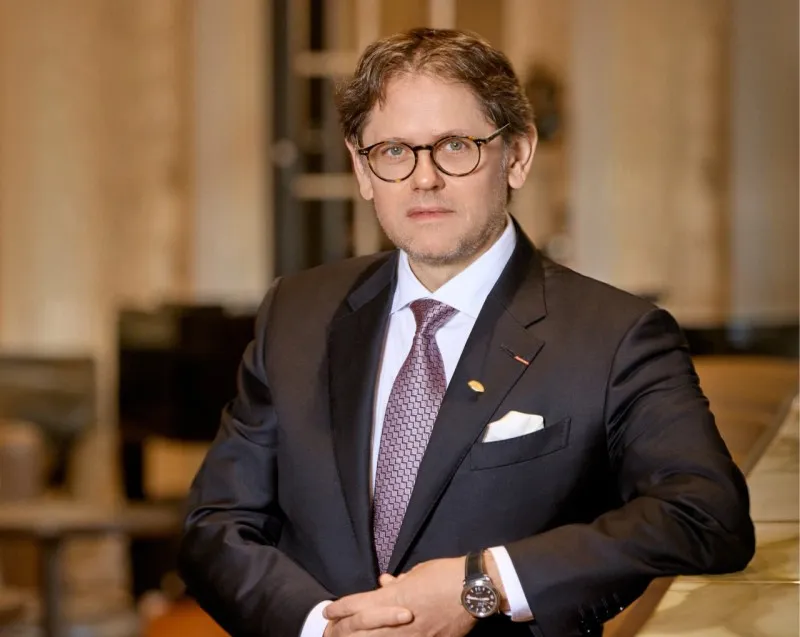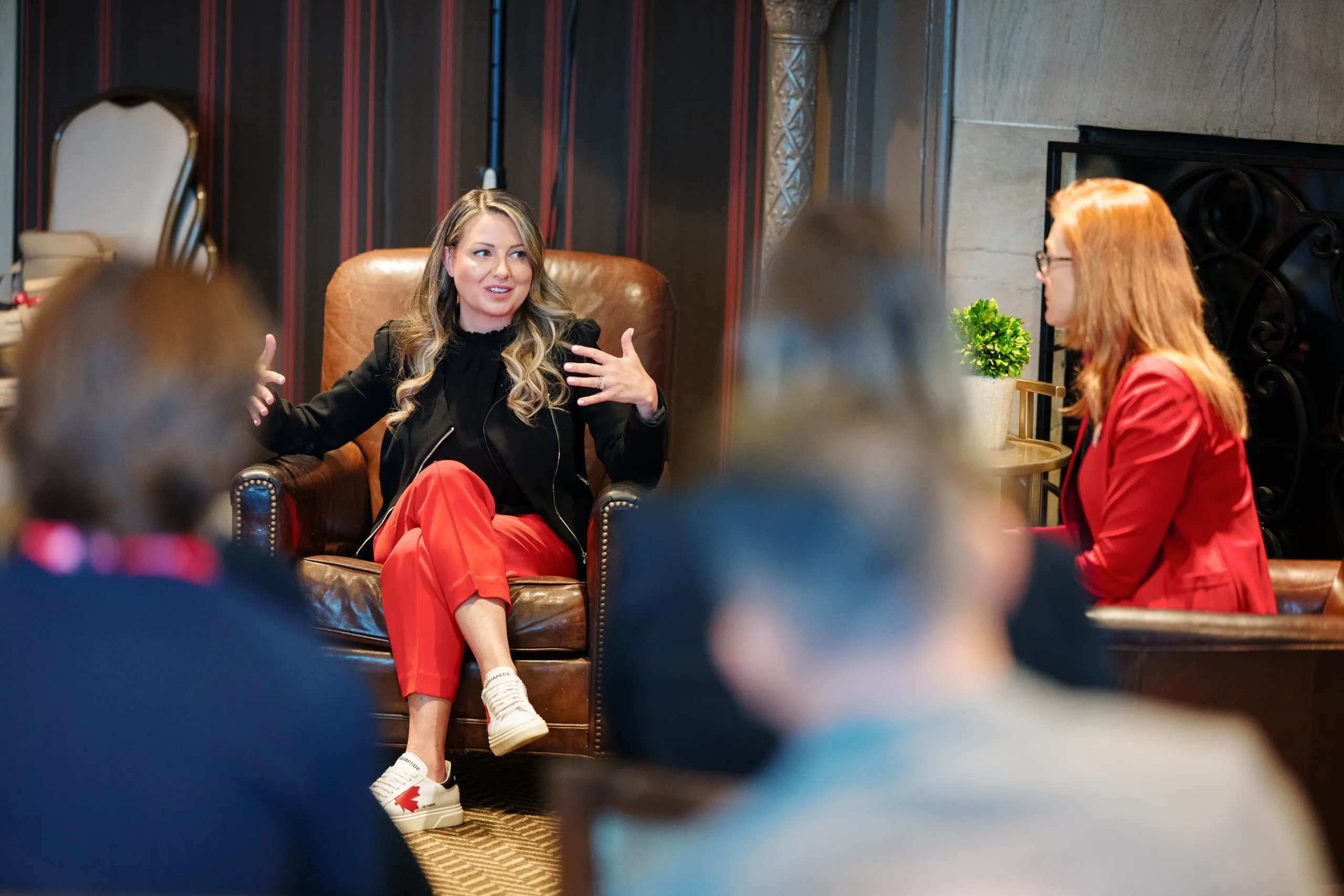
Meaghan Ferrigno came to tourism from data, analytics and finance. Destination Canada‘s interim president and CEO tells Iain Stirling why the host city should be a participant in your event rather than a backdrop, and why business events need to start selling themselves as export trade.
Ferrigno has held three jobs at Destination Canada in five years, and none of them started in tourism. She arrived in the middle of the pandemic as chief data and analytics officer, moved to chief financial officer, and two months ago took the interim chief executive’s chair. She spoke to CMW at Innovate Canada 2026, which ran from 8–11 September in Quebec City with delegates from Google, Informa, IEEE Communications Society, WITSA, INFORMS and Women in Tech Global.
IS: You came into tourism from regulated energy, life sciences, health tech and insurtech. What does that background let you bring to business events?
MF: Good AI requires good data. It’s about making sure the business events sector understands the data, the structure and the business models behind it, so that we can be part of the answer. I’m a data geek, so that connection between good, structured data and better decisions is what I’m hoping to bring.
IS: You joined in the middle of the pandemic. Why then?
MF: What a time to join. It was an incredibly difficult period for the sector, but we also saw an opportunity to think about how we build back differently. We leaned into that opportunity. We wanted to embed intelligence into decision-making across the sector and make those insights accessible to the businesses making decisions about their future. That’s what hooked me.
IS: Did anything about the sector surprise you once you were inside it?
MF: I had attended a lot of events, but I hadn’t been making the connection to the true value in two ways. First, the economic value it can bring, but also the focus it can bring into the priority sectors you want to build for your country.
IS: You’ve spent the last 18 months on the AI and data conference circuit as both speaker and delegate. What do you see from the floor?
MF: We are so excited and passionate. But we’re exhausted when we walk in the door. These are people under more pressure to stay current than at any point in their careers, and organisers are competing for that attention.
IS: So, what should an organiser do about it?
MF: When you start looking at the ecosystem in your event in a relatable hub, your destination no longer is a backdrop. It actually becomes either a partnership or a participant in your event. That means local researchers on your speaker list, and site visits and living labs inside the programme rather than bolted on as an optional afternoon. It changes the format too. It’s not your typical come to the big conference room and sit there for two days. It is more of a festival kind of feeling, with applied workshops, hackathons and curated speaker dinners.
IS: Where has that worked?
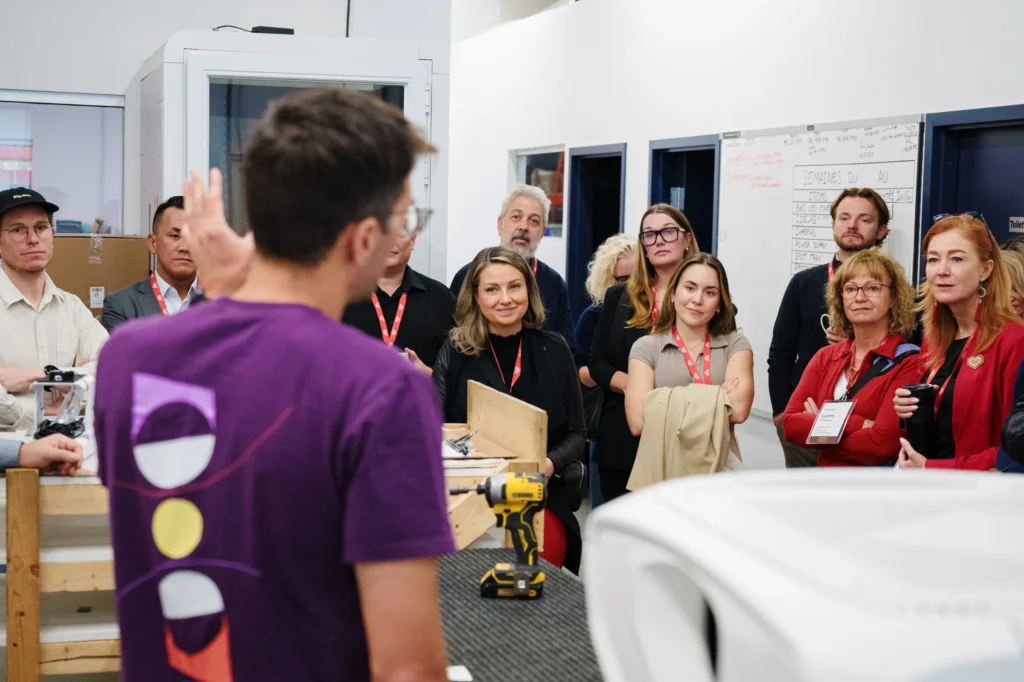
MF: Optica brought its optical fibre communications event to Quebec City and essentially dropped their event into a globally known and well-regarded optics and photonics cluster. Paper submissions went up, committee chairs came out of the local sector, and the tours were expert-led. Proximity changed what they could design. Quebec City is one of seven digital industries centres of excellence we’ve identified, alongside Vancouver, Calgary, Edmonton, Toronto, Ottawa and Montréal. The region has more than 1,500 IoT companies and 11,700 direct jobs, plus 300 laboratories, groups, institutes and research centres and over 5,500 researchers and associates.
IS: What does an event like Innovate Canada do that a show like IMEX doesn’t?
MF: There are so many touch points. There’s always the awareness and brand work that needs to be done, so that planners and companies know what Canada has to offer. Then there are the trade shows, and smaller events like this one to keep pushing the pipeline. This is more targeted, curated and vetted. By the time you get here, there’s a lot of potential. And the value extends beyond the event itself, through the trade, investment and talent opportunities those connections can create.
IS: Your Data Collective is meant to remove the need for a team of analysts. How does that work in practice?
MF: It’s a central brain for the tourism sector: supply and demand data with AI wrapped around it, drawing on 280 sources, and it’s now available to 280,000 tourism businesses nationally. Before, you would have to have a very complex team of data scientists and analysts and analytic specialists. And now you just have to be able to ask a really good question. The analysts still sit behind it, structuring the data so the answer is worth having. Think about a kayak tour operator with a tide chart on their phone, customers waiting and 15 minutes between tours. They don’t have time to dig through the data.
IS: Can you point to a decision it changed?
MF: Bay of Fundy Adventures in New Brunswick wanted to break into the US outdoor explorer market. They doubled their seat capacity in one season, then leaned in again over the off-season and saw a 200% increase. Explore Edmonton were promoting a professional women’s hockey game with a target of 20% out-of-town guests. They tested their media content against the Traveller Twin, which is our modelled version of the guest, and it helped shape the tagline that drove out-of-town visitation, then a second tagline to drive engagement once people were in venue. They almost doubled their out-of-town visitation against budget. Both of them tested the message before they spent the money.
IS: Is there a question the sector should be asking that it isn’t?
MF: It’s really understanding who your best guest is and making sure that best guest fits with your community or destination needs. Then we can help you target them. It’s quite specific, and it changes depending on the business and the outcomes you want.
IS: And where does AI go next for the sector?
MF: We’ve talked a lot about the potential of AI and what it might be able to do. Now we’re into how we put it into practice to start driving outcomes, and how we’re going to do that responsibly.
IS: You’ve completed a legacy study across 15 events. Did anything surprise you?
MF: I thought for sure you would get, here are the three things you need to do and that’s what’s going to get you a legacy. That’s not the case. It really depends on the event and the outcome that’s intended. What surprised me more is that the long-term impact of an event wasn’t well understood. And that’s so critical to showing the value business events can bring to a country and an economic sector. Without that longitudinal tracking, you’re not going to be able to do it. We’re moving away from heads and beds and bums in seats. The economics matter, but so does the legacy we leave behind.
IS: The blueprint from that work launches in the next couple of months. It’s going out free. Why give it away?
MF: Events aren’t always in the same place, and people don’t always travel to the same place every time, so no single destination builds the picture alone. And there are two sides to legacy. There’s the destination, and what gets left behind. But the event also has to want to leave a legacy, whether that’s within their membership or in destination. The event needs to have the mindset too.
IS: Where does sustainability sit in the strategy?
MF: In our 2030 strategy we call it regenerative tourism, and it’s embedded in everything we do. In curating this event, the companies you’ll visit are all B Corps, and you see that purpose-driven alignment. Sustainability was embedded into every aspect of event design all the way to offsetting the remaining carbon emissions to make it carbon neutral. On the leisure side we target highly engaged guests, and those guests have two facets of values: economic value, but also responsible value. When we’re forecasting demand, we look at where we have the capacity to host and grow. So, it’s in every decision, and it’s great to showcase it, because it raises the bar for all events.

IS: Where does the Canadian business events market sit right now?
MF: Sentiment is strong. Both the demand pipeline in our international markets and our US markets are strong. Delegate size is a little bit smaller, but that’s not specific to one market or one sector. I think it’s more about event design, and how more intimate events are coming together. It’s good to see the number of events continuing to grow, and we see that strength across both the US and international markets.
IS: And the bigger commercial ambition?
MF: We are a key economic engine for the country, and we’re the sector of high growth and fast returns. Tourism is going to outpace the general economy of Canada. We’re an export trade, and that’s the bit most people don’t know about, so there’s a lot of positioning to do. Our 2030 strategy launched in 2024 and rests on four drivers: sector advancement, brand leadership, destination development and collective intelligence. We set out to be a top 10 destination driving C$140bn in revenue, we raised the ambition to C$160bn, and we think we’ll get there two years early. On top of that is the government’s target of C$300bn in incremental non-US export trade revenue by 2035, and we think tourism can be nine to 10% of that.
IS: If an organiser takes one thing away from this week, what should it be?
MF: Three questions. Who can you secure from the host sector, where does your event sit in relation to it, and how do you make the introduction.
IS: And if the interim title becomes permanent?
MF: It would be an immense honour.