For years, the value of a destination to meeting planners was relatively straightforward: accessibility, hotel inventory, meeting space, cost and the quality of the attendee experience. Those fundamentals remain essential. But they no longer tell the whole story, as we hear in this report from Destinations International:
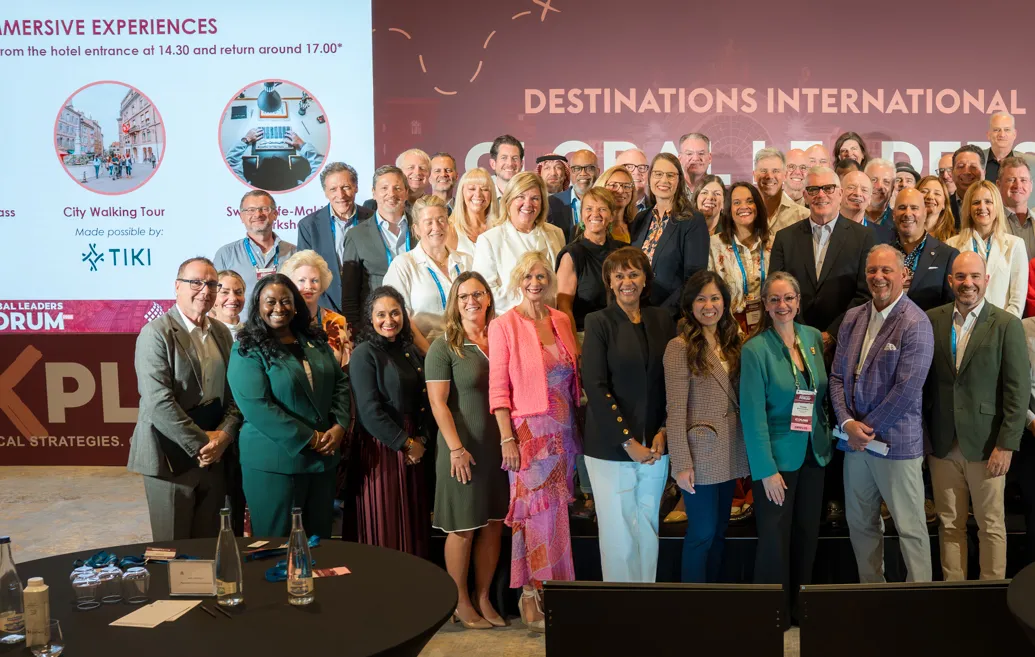
At Destinations International’s recent Global Leaders Forum in Geneva, destination leaders from around the world examined the forces reshaping places and the visitor economy. This included artificial intelligence, geopolitical and economic change, mobility, reputation, investment and changing expectations among residents and visitors.
One conclusion emerged repeatedly: the value of a destination can no longer be measured solely by how many people it attracts.
For meeting and event planners, that shift has important implications.
From host destination to strategic partner
A successful meeting requires far more than a venue and hotel rooms.
Every destination contains its own ecosystem of businesses, universities, research institutions, cultural organisations, entrepreneurs, civic leaders and community organisations. Increasingly, the opportunity is to connect meetings with those assets.
That could mean bringing local experts into a conference programme, connecting an association with leaders in a relevant industry cluster or creating experiences that allow delegates to better understand the community they are visiting.
Destination organisations are uniquely positioned to make those connections.
For planners, that means engaging a destination organisation earlier and differently – not simply asking what space is available but asking what the destination itself can contribute to the objectives of the meeting.
Reputation is part of the product
Another major theme in Geneva was the growing importance of reputation.
People increasingly make decisions about places before they ever experience them first-hand. Perceptions about safety, accessibility, political climate, sustainability and community values can influence where people choose to visit, meet, invest and do business. Artificial intelligence is accelerating that shift.
A planner researching destinations may now begin with ChatGPT, Gemini or another AI platform rather than a traditional search engine or destination website. Attendees may do the same when deciding whether to register.
That means the digital ‘front door’ of a destination is changing.
For planners, the implications are significant. Outdated or inaccurate information about air access, hotel inventory, convention facilities, accessibility or safety can influence decisions before a destination organisation even knows it is being considered.
Destination reputation and digital accuracy are therefore becoming increasingly intertwined – and both are becoming part of the meetings product.
The value of place
Perhaps the most important discussion in Geneva centered on how destinations define their value.
Visitor spending and economic impact remain critical measures. But destinations also facilitate the movement of ideas, knowledge, investment, talent and relationships.
Meetings and events sit directly at the centre of that exchange.
A convention can introduce delegates to local industries and institutions. A scientific congress can connect researchers who might otherwise never meet. A corporate gathering can expose executives to investment opportunities. An association meeting can create relationships with community organisations that continue long after the event concludes.
For planners, this creates an opportunity to think differently about event legacy.
The question becomes not only, ‘What economic impact will our meeting generate?’ but also, ‘What can happen because we brought these people together in this particular place? ‘
A broader definition of success
The Global Leaders Forum also reinforced that destinations themselves are changing.
Destination organisations are increasingly involved in community engagement, economic development, advocacy, accessibility, sustainability, workforce issues and destination stewardship. Their role is expanding because the challenges and opportunities facing destinations increasingly cross traditional organisational boundaries.
That evolution can create significant value for meeting planners.
The strongest destination partnerships increasingly provide not only logistical support but local intelligence, community connections and an understanding of the economic and social dynamics shaping a place.
In an increasingly complex meetings environment, those capabilities matter.
The fundamentals of destination selection will not disappear. Planners will always need the right venue, hotel package, transportation network and budget.
But the competitive advantage of a destination may increasingly be determined by something harder to quantify: what that place makes possible.
For planners, the question is no longer simply whether a destination can accommodate an event: it is what the destination can add to it.