

Guide to Melbourne
For event organisers
Getting from airport to city centre
Venues and Hotels
Finding the venue for you ▶

Melbourne Convention & Exhibition Centre
Melbourne's largest conference and exhibition space by the waterfront. Includes large exhibition halls, plenary spaces, and multiple meeting rooms.
Read more >
Melbourne Convention & Exhibition Centre
Melbourne's largest conference and exhibition space by the waterfront. Includes large exhibition halls, plenary spaces, and multiple meeting rooms.
 Photo: Levantine Hill Estate
 Levantine Hill Estate
Capacity: 500. Ideal for: conferences, gala dinners, corporate retreats. Winery with state-of-the-art event spaces, underground barrel store and 33-room hotel.
 Photo: Hubert Estate
 Hubert Estate
Capacity: 350. Ideal for: corporate retreats, gala dinners, conferences. Contemporary winery one hour from Melbourne.
 Photo: Ashley Veal
 Atlantic Group – The Goods Shed
Capacity: 300. Ideal for: conferences, corporate dinners, cultural events. Features an event hall, 321-seat theatre and outdoor plaza, one hour…
Finding the hotel for you ▶

Crowne Plaza Melbourne
4-star IHG hotel in the CBD. Mid-size meeting and event facilities.
Read more > Photo: Grand Hyatt Melbourne
 Grand Hyatt Melbourne
Large CBD hotel with extensive conference and meeting facilities.
Read more > Photo: lyf on Elizabeth Melbourne
 lyf on Elizabeth Melbourne
Rooms: 90. Co-living style hotel beside Queen Victoria Market with communal kitchen, gym and seven room types.
 Photo: The Langham, Melbourne
 The Langham, Melbourne
Rooms: 387. Five-star hotel on the Yarra with Chuan Spa, indoor pool, award-winning buffet and grand ballroom. 11 meeting rooms.
 Photo: Rendezvous Hotel Melbourne
 Rendezvous Hotel Melbourne
Rooms: 340. Edwardian Baroque hotel dating to 1913, with seven-metre-high ceilings and 11 meeting rooms.
 Photo: Quincy Hotel Melbourne
 Quincy Hotel Melbourne
Rooms: 241. 29-storey hotel with Southeast Asian-influenced interiors, rooftop pool and panoramic city views. 3 meeting rooms.
Stats you should know
95%
of international delegates said they would recommend the city as a place to visit to friends and colleagues after attending a conference
76%
of international delegates believe they will return to Melbourne for a holiday in the next five years
98%
of national delegates would recommend Melbourne as a place to visit to family and colleagues
Latest news from Melbourne


How hands-on is the CVB?
The Melbourne Convention Bureau (MCB) has staff in six countries and networks across local government, industry and academia. Below are a list of services the CVB provides to event organisers.
- Bidding support – providing materials through the bidding process, such as bid documents, presentations and digital content.
- Funding support – connecting organisers with funding programmes. MCB works closely with the Victorian Government on business events funding.
- Supporting documentation – MCB liaises with government and industry leaders to obtain letters of support for your event.
- Local introductions – MCB's team can make introductions to government departments, trade and investment offices, and more.
- Account management – organisers have on-the-ground assistance from an MCB account manager for the duration of the experience.
- General planning support – providing assistance with visas, site inspections, vendor referrals, advice on Australian government regulations and more.
- Promotional/marketing support – promotion and marketing for your event.
Contacts
Melbourne - Head Office
Level 8, 271 Spring Street
Melbourne, VIC Australia 3000
T +61 3 9002 2222
info@melbournecb.com.au
United Kingdom and Europe
Fiona Chappell: T +44 7423 437867
Giles Handford: T +44 7733 661876
europe@melbournecb.com.au
North America
Maria Rivera: T +1 301 802 6254
Theresa DeConinck: T +1 202 251 4916
northamerica@melbournecb.com.au
Southeast Asia
Contact: Kelvin Yin
T +6012 884 8388
kualalumpur@melbournecb.com.au
India
Representation service - Beautiful Planet
Contact: Huzan Fraser
T +91 98201 90753
huzan@beautifulplanet.co.in
Partnered Suppliers
 Photo: Brent Shury
 Crown Melbourne
An integrated precinct offering high-end hotels, dining and venues for conferences, incentives and events.
 Photo: Harry the hirer
 Harry the Hirer
Australia’s leading event hire partner, delivering scalable furniture, structures and services for Melbourne’s major business events.
 Photo: Marvel Stadium
 Marvel Stadium
A landmark Melbourne stadium providing large scale, flexible spaces ideal for conferences, exhibitions and gala events.

Key sectors in Melbourne
Manufacturing and defence
Employed 250,000 people in Victoria as of August 2025, 78% of which were based in Greater Melbourne.
Health tech and medical research
Victoria's health tech industry employs over 50,000 "highly skilled people". Melbourne receives over 40% of Australia's national medical research funding.
Finance and insurance
Over 118,000 work in the sector in Victoria.
Digital technologies
Home to over 25,000 tech businesses and more than half of Australia's top 20 technology companies, second only to Singapore in Asia-Pacific for software company HQs.
Agribusiness
Victoria is Australia's largest agricultural producer and exporter.
Construction
Employs over 300,000 people in Victoria as of August 2025, of which 78% were based in Greater Melbourne.
How sustainable is Melbourne?
Melbourne is an advanced city for event sustainability. The State of Victoria runs on 40% renewable electricity, with a government target of 95% renewables by 2035. Major venues such as Melbourne Convention and Exhibition Centre (MCEC) operate on 100% renewable electricity and have built-in waste, water and energy reduction systems
The City of Melbourne has published a sustainable event planning guide, with advice for organisers and a checklist to maximise event sustainability.
Victoria introduced a ban on several single-use plastic items in February 2023.
Like most long-haul destinations, travel is the major sustainability cost. The MCB works with organisers to offset this carbon cost. Encouraging delegates to extend their stay and experience a holiday as well as a business trip is one way.
The city is compact and walkable. Most major venues, hotels and dining areas sit within the CBD or South Wharf, reducing the need for taxis or private transport.
11th in the world
1st in Asia Pacific
A snapshot
100%
of tram network powered by solar
Highest
concentration of Green Star-rated buildings in Australia
90%
of waste water is recycled for irrigation and industrial use
Local projects organisers can get involved in
Entertaining your delegates in Melbourne
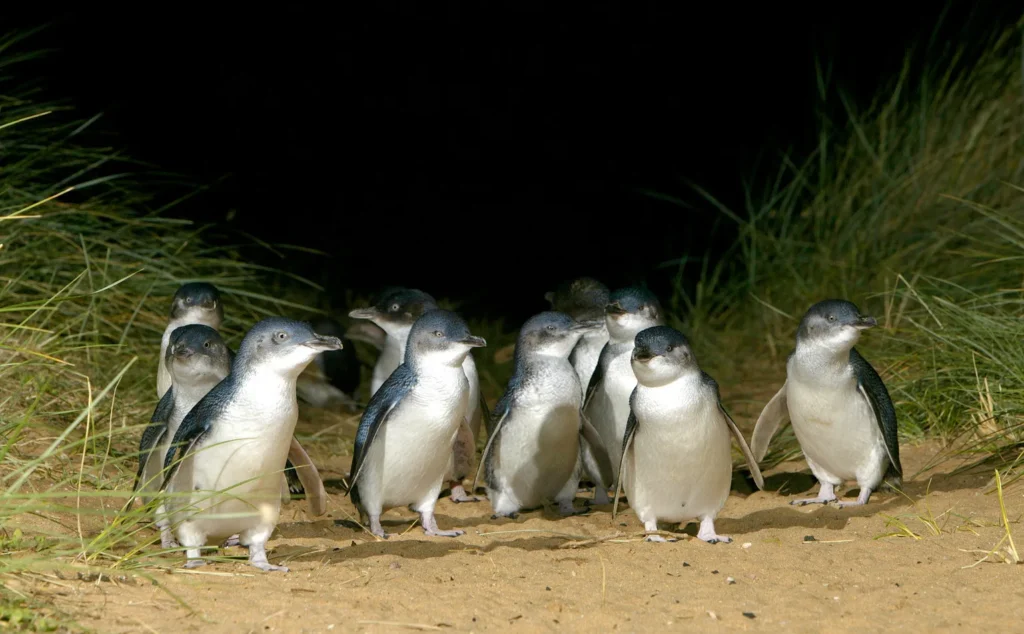
Phillip Island Nature Parks
Coastal nature reserve 90min from Melbourne, home to the world's largest little penguin colony. Also includes the Koala Conservation Reserve and more.
Read more >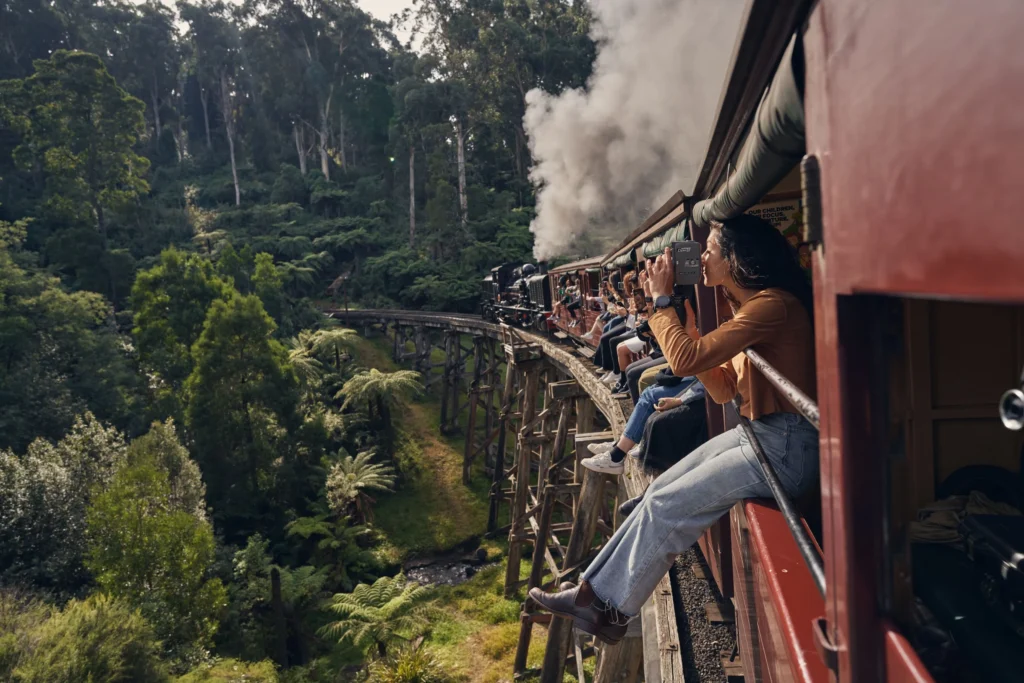
Puffing Billy
Historic narrow-gauge steam railway running through the Dandenong Ranges, ~45min from Melbourne. Operating since 1900.
Read more >
Localing Private City Tours
Private guided city tours tailored to individual groups, with a focus on Melbourne's food, culture and neighbourhoods.
 Photo: Daniela Araos
 Melbourne Zoo
Australia's oldest zoo, established 1862, 4km from the CBD in Royal Park. Home to 320+ species across naturalistic habitats. Regular…
 Photo: Peninsula Hot Springs
 Peninsula Hot Springs
Australia's largest hot springs and wellness destination, on the Mornington Peninsula ~90min from Melbourne. 70+ geothermal bathing experiences across 70…
Things to be Aware Of
Minimal risk
of wildlife incidents
Within the city centre. What's more, the beaches in Victoria are not known for shark attacks. There has not been a fatal shark incident on Melbourne's beaches since 1987. Visitors are nonetheless advised to be cautious, as Australia is home to a number of dangerous wildlife species.
Top 10
Ranking
In the Economist Safe Cities Index. Melbourne is generally considered safe, walkable and well-connected for international delegates.
Useful Information
Visas – All visitors without an Australian or New Zealand passport require a visa to enter Australia. Visit the Victoria government website for details.
Rideshare – Uber and DiDi are the main apps. Ola also operates in Melbourne. Traditional taxis can be hailed or booked via the 13cabs or ingogo apps.
Time difference – Melbourne is 10-11 hours ahead of the UK, 15-17 hours ahead of New York, and 18-19 hours ahead of Los Angeles.
Jaywalking – Technically illegal in Victoria. Fines are occasionally issued, especially when crossing within 20m of a pedestrian crossing. Best to use designated crossings.
Electricity – Type I plug sockets. UK, USA and European visitors will need an adaptor.
Payments – Contactless card payments are widely accepted. A card surcharge of 1-2% is common. Contactless payments are not currently available on public transport (but the tram in the CBD is free to use).
Emergency services – 000 is the national emergency number for police, fire and ambulance.
 Photo: mohit bhandari
Public transport in Melbourne
Melbourne's public transport network covers trams, trains, buses and the underground Metro Tunnel, all operated under the Myki smartcard system. A single card works across all modes – top up online, at stations or at 7-Eleven.
There is a free tram zone, covering the CBD and Docklands. You do not need a Myki card to travel within this zone, but to travel anywhere outside it you will need one. Currently, you cannot use contactless card payments to travel on Melbourne public transport.
Myki cards are available for purchase at the airport, stations and 7-Elevens.
The tram network extends beyond the free zone. In fact, it is one of the largest tram networks in the world, with 250km of track across the city.
The airport is not on the train network. The main options are the SkyBus (runs 24hrs, about 30min to the CBD) or taxi/rideshare (about 25-45min depending on traffic). A direct rail link is under development.
Metro runs
Every 5-10 minutes
during peak periods
Delegates make
70%
of trips through CBD by public transport, walking or cycling
Tram covers
100%
of convention district
When’s the best weather window?
Temperate but unpredictable climate
The most reliable windows for comfortable outdoor conditions are March-May (autumn) and October-November (late spring), with mild temperatures typically between 15-23°C and lower rainfall than winter. June-August is the coolest and wettest period, averaging 8-15°C, though still manageable for indoor-focused programmes.